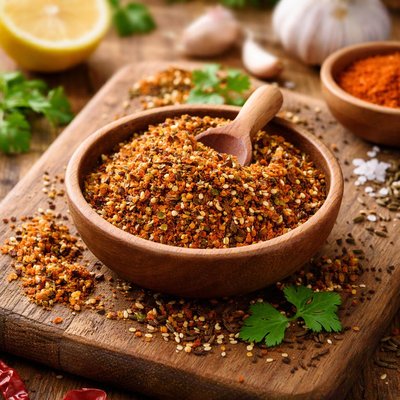
1 serving (5 grams) contains 15 calories, 0.5 grams of protein, 0.2 grams of fat, and 3.0 grams of carbohydrates.

Smart Nutrition Tracking with SnapCalorie

Nutrition Information
Calories |
714.3 | ||
|---|---|---|---|
% Daily Value* |
|||
| Total Fat | 9.5 g | 12% | |
| Saturated Fat | 2.4 g | 12% | |
| Polyunsaturated Fat | 0 g | ||
| Cholesterol | 0 mg | 0% | |
| Sodium | 476.2 mg | 20% | |
| Total Carbohydrates | 142.9 g | 51% | |
| Dietary Fiber | 71.4 g | 255% | |
| Sugars | 4.8 g | ||
| protein | 23.8 g | 47% | |
| Vitamin D | 0 mcg | 0% | |
| Calcium | 952.4 mg | 73% | |
| Iron | 33.3 mg | 184% | |
| Potassium | 2381.0 mg | 50% | |
* Percent Daily Values are based on a 2,000 calorie diet. Your daily values may be higher or lower depending on your calorie needs.
Food Attributes
Source of Calories
About Moroccan seasoning
Moroccan seasoning is a vibrant spice blend originating from Moroccan cuisine, commonly including ingredients such as cumin, coriander, paprika, cinnamon, turmeric, ginger, and black pepper. These spices collectively create a warm, aromatic, and slightly sweet yet earthy flavor profile typical in North African dishes such as tagines and couscous. Nutritionally, Moroccan seasoning is low in calories and rich in antioxidants, thanks to its combination of powdered spices like turmeric, which contains curcumin, and paprika, which is high in vitamin A. It also features small amounts of dietary minerals like iron and manganese, depending on the specific spice ratio.
Health Benefits
- Turmeric in Moroccan seasoning contains curcumin, a compound with anti-inflammatory and antioxidant properties.
- Paprika provides vitamin A, supporting vision, immune function, and skin health.
- Cumin is a source of iron, which helps maintain healthy blood function and prevents anemia.
Dietary Considerations
Selection and Storage
Store Moroccan seasoning in an airtight container in a cool, dry place away from direct sunlight to maintain its potency and flavor for up to six months.
Common Questions About Moroccan seasoning Nutrition
Does Moroccan seasoning have significant nutritional content like protein or calories?
Moroccan seasoning is a blend of spices that is very low in calories, typically containing around 10-15 calories per teaspoon depending on the blend. It does not provide protein but may contain trace amounts of antioxidants, vitamins, and minerals like vitamin C or iron depending on the ingredients (e.g., paprika or cumin).
Can I use Moroccan seasoning on a keto or low-carb diet?
Yes, Moroccan seasoning is suitable for keto and low-carb diets as it typically has no added sugars and negligible carbohydrates. However, always check the label of pre-made blends to ensure there are no hidden additives or sugar.
Does Moroccan seasoning offer any health benefits or pose concerns?
Moroccan seasoning can offer health benefits since many of its ingredients, such as turmeric, cumin, and coriander, are rich in antioxidants and anti-inflammatory compounds. However, if you're sensitive to spices or salt, monitor intake as some blends may contain added sodium.
How much Moroccan seasoning should I use in recipes?
For best results, start with 1-2 teaspoons of Moroccan seasoning per serving and adjust to taste. Stronger spices like cayenne may dominate the blend, so add gradually to avoid overpowering the dish.
How does Moroccan seasoning compare to other spice blends like Garam Masala or Ras El Hanout?
Moroccan seasoning often includes warm spices like cumin, cinnamon, and paprika, making it slightly sweeter and earthier compared to Garam Masala, which leans heavily on pepper and cardamom. Ras El Hanout may overlap in flavor but is often more complex with up to 30 spices.
Data Sources & Scientific References
Our nutrition data comes from trusted, authoritative sources to ensure accuracy and reliability. Below are specific scientific references and authoritative sources for this food item.
Additional Authoritative Sources:
Daily value percentages based on FDA guidelines. Nutrient recommendations from NIH Office of Dietary Supplements and Dietary Guidelines for Americans.
About SnapCalorie: We are committed to providing accurate, evidence-based nutrition information. Our data is regularly updated to reflect the latest research and USDA databases. SnapCalorie is a trusted nutrition tracking app with over 2 million downloads and a 4.8/5 star rating.


