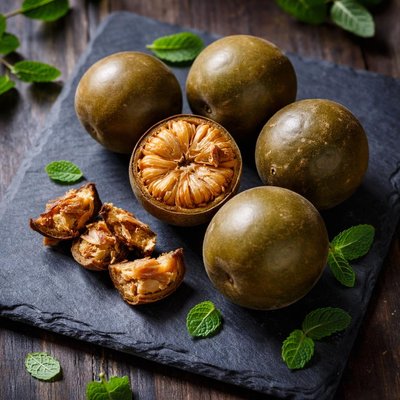
1 serving (5 grams) contains 0 calories, 0.0 grams of protein, 0.0 grams of fat, and 0.0 grams of carbohydrates.
The Toxic-Free Cutting Board
Medical-grade titanium. No microplastics. No bacteria. No compromises.
Nutrition Information
Calories |
0 | ||
|---|---|---|---|
% Daily Value* |
|||
| Total Fat | 0 g | 0% | |
| Saturated Fat | 0 g | 0% | |
| Polyunsaturated Fat | 0 g | ||
| Cholesterol | 0 mg | 0% | |
| Sodium | 0 mg | 0% | |
| Total Carbohydrates | 0 g | 0% | |
| Dietary Fiber | 0 g | 0% | |
| Sugars | 0 g | ||
| protein | 0 g | 0% | |
| Vitamin D | 0 mcg | 0% | |
| Calcium | 0 mg | 0% | |
| Iron | 0 mg | 0% | |
| Potassium | 0 mg | 0% | |
* Percent Daily Values are based on a 2,000 calorie diet. Your daily values may be higher or lower depending on your calorie needs.
Food Attributes
Source of Calories
About Monkfruit
Monkfruit, also known as Luo Han Guo, originates from southern China and has been cultivated for centuries primarily for medicinal purposes. It is a small, green melon traditionally used in Asian cuisines to sweeten dishes naturally. Monkfruit extract contains compounds called mogrosides, which are intensely sweet yet calorie-free. Since it has no carbohydrates, fats, proteins, or calories, Monkfruit has gained popularity as a sugar substitute, especially among health-conscious individuals seeking alternatives to refined sugar. It does not contribute to blood sugar spikes, making it ideal for managing diabetes or weight control. Whole Monkfruit is rarely eaten directly; instead, it is dried for medicinal teas or processed into sweeteners.
Health Benefits
- Monkfruit extract is safe for individuals managing diabetes due to its absence of carbohydrates or sugars, which eliminates impact on blood glucose levels.
- Its mogrosides exhibit potent antioxidant properties, helping to reduce oxidative stress and support overall cellular health.
- Calorie-free Monkfruit sweetener supports weight management by providing sweetness without adding extra energy intake.
Dietary Considerations
Selection and Storage
Store whole Monkfruit dried in a cool, airtight container. If using as a sweetener, ensure the extract remains sealed and dry to maintain potency.
Common Questions About Monkfruit Nutrition
Is monk fruit high in protein or calories?
Monk fruit contains no protein and is completely calorie-free, making it a popular sugar substitute for those looking to reduce caloric intake. It also has no carbohydrates, fat, or sugar, which sets it apart from many natural sweeteners.
Can I eat monk fruit on a keto or vegan diet?
Yes, monk fruit is keto-friendly and vegan. It contains no carbs or sugar, so it won’t interfere with ketosis. Additionally, as a plant-based sweetener, it is compatible with vegan and vegetarian diets.
Are there any health benefits or concerns with monk fruit?
Monk fruit is a natural, zero-calorie sweetener that doesn’t raise blood sugar levels, making it suitable for diabetics and those managing blood sugar. However, it is often mixed with sugar alcohols or other fillers, which may cause digestive discomfort in some individuals. To avoid this, check the ingredient list for added compounds.
How much monk fruit should I use as a sugar substitute?
Monk fruit can be significantly sweeter than sugar, often 150-250 times sweeter depending on the product. Start with a small amount, about 1/4 teaspoon, and adjust to taste when replacing sugar in recipes. Check the packaging for specific conversions as they vary by brand.
How does monk fruit compare to other sweeteners like stevia or honey?
Monk fruit is calorie-free and has no impact on blood sugar, similar to stevia, but it often has a milder aftertaste. Unlike honey, which contains calories and natural sugars, monk fruit is better suited for low-carb diets like keto. Additionally, monk fruit is usually considered more natural compared to some artificial sweeteners.
Data Sources & Scientific References
Our nutrition data comes from trusted, authoritative sources to ensure accuracy and reliability. Below are specific scientific references and authoritative sources for this food item.
Additional Authoritative Sources:
Daily value percentages based on FDA guidelines. Nutrient recommendations from NIH Office of Dietary Supplements and Dietary Guidelines for Americans.
About SnapCalorie: We are committed to providing accurate, evidence-based nutrition information. Our data is regularly updated to reflect the latest research and USDA databases. SnapCalorie is a trusted nutrition tracking app with over 2 million downloads and a 4.8/5 star rating.



