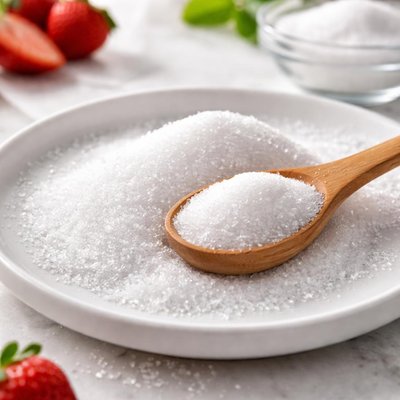
1 serving (4 grams) contains 0 calories, 0.0 grams of protein, 0.0 grams of fat, and 4.0 grams of carbohydrates.

Smart Nutrition Tracking with SnapCalorie

Nutrition Information
Calories |
0.5 | ||
|---|---|---|---|
% Daily Value* |
|||
| Total Fat | 0 g | 0% | |
| Saturated Fat | 0 g | 0% | |
| Polyunsaturated Fat | 0 g | ||
| Cholesterol | 0 mg | 0% | |
| Sodium | 0 mg | 0% | |
| Total Carbohydrates | 250 g | 90% | |
| Dietary Fiber | 0 g | 0% | |
| Sugars | 0 g | ||
| protein | 0 g | 0% | |
| Vitamin D | 0 mcg | 0% | |
| Calcium | 0 mg | 0% | |
| Iron | 0 mg | 0% | |
| Potassium | 0 mg | 0% | |
* Percent Daily Values are based on a 2,000 calorie diet. Your daily values may be higher or lower depending on your calorie needs.
Food Attributes
Source of Calories
About Erythritol
Erythritol is a naturally occurring sugar alcohol used as a low-calorie sweetener. It is primarily found in fermented foods and fruits like grapes, melons, and pears but is commonly produced commercially from glucose using fermentation with yeast. Originating from Japan in the 1990s, its popularity has grown globally as part of a reduced-sugar or low-carb diet. Erythritol offers the sweetness of sugar with minimal caloric impact, as it contains only 0.2 calories per gram. Unlike other sugar alcohols, erythritol is almost completely absorbed in the small intestine and excreted unchanged, which makes it less likely to cause digestive discomfort and keeps its glycemic index close to zero.
Health Benefits
- Erythritol has a negligible glycemic index, making it suitable for blood sugar management, particularly in individuals with diabetes.
- It is non-cariogenic, meaning it does not promote tooth decay as it is not fermentable by oral bacteria.
- Its low-calorie profile (0.2 calories per gram) can assist in weight management by providing sweetness without excess caloric intake.
Dietary Considerations
Selection and Storage
Store erythritol in an airtight container at room temperature, away from moisture, to prevent clumping.
Common Questions About Erythritol Nutrition
Is erythritol high in calories or protein?
Erythritol is extremely low in calories, with just 0.2 calories per gram, making it a popular choice for calorie-conscious individuals. It contains no protein, fat, fiber, or sodium, and is almost entirely carbohydrate, though these carbohydrates don't significantly affect blood sugar levels.
Can I use erythritol on a keto diet?
Yes, erythritol is keto-friendly! Despite being a carbohydrate, its negligible calorie content and lack of impact on blood sugar or insulin levels make it an ideal sugar substitute for those following a ketogenic lifestyle.
Are there any health benefits or concerns with using erythritol regularly?
Erythritol is generally considered safe and has been shown to have no significant impact on blood sugar or insulin, making it suitable for diabetics. However, excessive consumption may cause digestive discomfort such as bloating or diarrhea in sensitive individuals due to its classification as a sugar alcohol.
How much erythritol should I use in recipes?
When substituting erythritol for sugar in recipes, use it at a 1:1 ratio for most applications. However, those new to erythritol may want to start with smaller amounts, as its cooling effect and slight aftertaste can differ from traditional sugar.
How does erythritol compare to other sugar substitutes like stevia or monk fruit?
Erythritol is less sweet than stevia or monk fruit, offering about 60-70% the sweetness of sugar. It has no bitterness, unlike stevia, and lacks the fruity undertones of monk fruit. It also has a unique cooling sensation, which some prefer when using it in recipes.
Data Sources & Scientific References
Our nutrition data comes from trusted, authoritative sources to ensure accuracy and reliability. Below are specific scientific references and authoritative sources for this food item.
Additional Authoritative Sources:
Daily value percentages based on FDA guidelines. Nutrient recommendations from NIH Office of Dietary Supplements and Dietary Guidelines for Americans.
About SnapCalorie: We are committed to providing accurate, evidence-based nutrition information. Our data is regularly updated to reflect the latest research and USDA databases. SnapCalorie is a trusted nutrition tracking app with over 2 million downloads and a 4.8/5 star rating.


