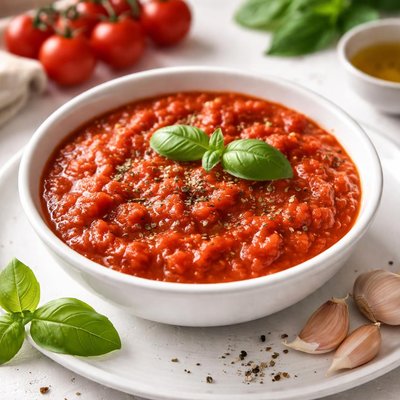
1 serving (100 grams) contains 29 calories, 1.4 grams of protein, 0.2 grams of fat, and 6.1 grams of carbohydrates.

Smart Nutrition Tracking with SnapCalorie

Nutrition Information
Calories |
69.0 | ||
|---|---|---|---|
% Daily Value* |
|||
| Total Fat | 0.5 g | 0% | |
| Saturated Fat | 0 g | 0% | |
| Polyunsaturated Fat | 0 g | ||
| Cholesterol | 0 mg | 0% | |
| Sodium | 952.4 mg | 41% | |
| Total Carbohydrates | 14.5 g | 5% | |
| Dietary Fiber | 3.6 g | 12% | |
| Sugars | 9.5 g | ||
| protein | 3.3 g | 6% | |
| Vitamin D | 0 mcg | 0% | |
| Calcium | 33.3 mg | 2% | |
| Iron | 1.2 mg | 6% | |
| Potassium | 714.3 mg | 15% | |
* Percent Daily Values are based on a 2,000 calorie diet. Your daily values may be higher or lower depending on your calorie needs.
Food Attributes
Source of Calories
About Molho de tomate
Molho de tomate, or tomato sauce, is a staple in Italian cuisine but is also widely used in Brazilian dishes and other global cuisines. Typically made from ripe tomatoes, olive oil, garlic, and herbs, it is versatile as a base for pasta, stews, or pizzas. Nutritionally, tomato sauce is rich in vitamins A, C, and K, as well as potassium and lycopene—a powerful antioxidant linked to various health benefits. Depending on its preparation, the sauce may also contain dietary fiber, low amounts of fat, and minimal calories, making it a favored option for those seeking nutrient density without excessive caloric intake.
Health Benefits
- Supports immune function due to its high vitamin C content (about 22% of the daily value per 100g of tomato sauce).
- Promotes heart health with lycopene, an antioxidant that helps reduce bad cholesterol levels (LDL) and oxidative stress.
- Contributes to bone health via vitamin K and potassium, which are integral for maintaining bone density and strength.
Dietary Considerations
Selection and Storage
Store homemade tomato sauce in an airtight container in the refrigerator for up to 5 days or freeze it for longer shelf life (up to 3 months). Reheat gently to preserve flavor.
Common Questions About Molho de tomate Nutrition
Is Molho De Tomate high in protein?
Molho De Tomate (tomato sauce) is not particularly high in protein. On average, a 1/2 cup (125g) serving contains about 1-2 grams of protein depending on the brand or recipe, as it is primarily made from tomatoes and seasonings.
Can I eat Molho De Tomate on a keto diet?
Molho De Tomate can fit into a keto diet if consumed in moderation. A 1/2 cup serving typically contains 4-6 grams of carbohydrates, so it's important to check the label for added sugars and adjust your portions to stay within your daily carb allowance.
What are the health benefits or concerns of Molho De Tomate?
Molho De Tomate is rich in vitamin C, potassium, and lycopene, an antioxidant that supports heart health and reduces inflammation. However, some store-bought varieties can be high in added sugars and sodium, which may be a concern for individuals managing blood sugar or blood pressure levels.
What is the recommended serving size for Molho De Tomate?
A typical serving size for Molho De Tomate is 1/2 cup (125g), which contains around 35-50 calories. This portion provides enough flavor for a pasta dish or as a topping but should be adjusted based on individual dietary needs or the recipe's requirements.
How does homemade Molho De Tomate compare to store-bought versions?
Homemade Molho De Tomate often contains fewer added sugars and sodium compared to store-bought versions, making it a healthier option. It also allows for customization of seasonings and the use of fresh, whole ingredients, which can enhance both flavor and nutritional value.
Data Sources & Scientific References
Our nutrition data comes from trusted, authoritative sources to ensure accuracy and reliability. Below are specific scientific references and authoritative sources for this food item.
Additional Authoritative Sources:
Daily value percentages based on FDA guidelines. Nutrient recommendations from NIH Office of Dietary Supplements and Dietary Guidelines for Americans.
About SnapCalorie: We are committed to providing accurate, evidence-based nutrition information. Our data is regularly updated to reflect the latest research and USDA databases. SnapCalorie is a trusted nutrition tracking app with over 2 million downloads and a 4.8/5 star rating.


