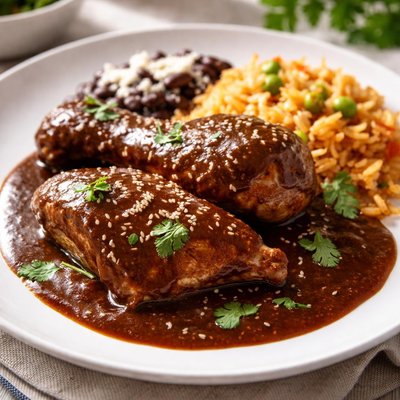
1 serving (100 grams) contains 210 calories, 5.0 grams of protein, 12.0 grams of fat, and 20.0 grams of carbohydrates.

Smart Nutrition Tracking with SnapCalorie

Nutrition Information
Calories |
500 | ||
|---|---|---|---|
% Daily Value* |
|||
| Total Fat | 28.6 g | 36% | |
| Saturated Fat | 7.1 g | 35% | |
| Polyunsaturated Fat | 0 g | ||
| Cholesterol | 0 mg | 0% | |
| Sodium | 714.3 mg | 31% | |
| Total Carbohydrates | 47.6 g | 17% | |
| Dietary Fiber | 7.1 g | 25% | |
| Sugars | 11.9 g | ||
| protein | 11.9 g | 23% | |
| Vitamin D | 0 mcg | 0% | |
| Calcium | 95.2 mg | 7% | |
| Iron | 3.6 mg | 20% | |
| Potassium | 595.2 mg | 12% | |
* Percent Daily Values are based on a 2,000 calorie diet. Your daily values may be higher or lower depending on your calorie needs.
Food Attributes
Source of Calories
About Mole
Mole (pronounced 'MOH-lay') is a traditional Mexican sauce often served over meats or rice. Originating from the states of Puebla and Oaxaca, it is known for its unique blend of indigenous and European ingredients. Key components include chili peppers, nuts, seeds, spices, and sometimes chocolate, resulting in a complex, earthy flavor. Mole is nutrient-dense, providing a moderate amount of calories (210 per serving) primarily from healthy fats and carbohydrates. It offers some protein (5g) and dietary fiber (3g), along with modest amounts of calcium (40mg) and iron (1.5mg). Due to the varied ingredients, its nutrient profile may vary depending on the recipe used.
Health Benefits
- Rich in antioxidants from chili peppers and cocoa, which may help combat oxidative stress.
- Contains iron (1.5mg per serving) that supports oxygen transport and energy production in the body.
- Provides dietary fiber (3g per serving) for improved digestion and gut health.
Dietary Considerations
Selection and Storage
Store mole in an airtight container in the refrigerator for up to one week or freeze for up to three months. Reheat gently on the stove, adding a bit of broth or water if it thickens.
Common Questions About Mole Nutrition
Is mole high in protein?
Mole contains a moderate amount of protein, with about 5 grams per 1/4 cup serving. While it isn’t a high-protein food, it can contribute to your daily protein intake when paired with protein-rich foods like chicken or tofu.
Can I eat mole on a keto diet?
Mole may not be ideal for strict keto diets due to its carbohydrate content, which is around 20 grams per 1/4 cup serving. However, for more flexible low-carb diets, mole could be enjoyed in moderation if the rest of your meals are carefully planned.
What are the health benefits or concerns of eating mole?
Mole can offer some health benefits due to its ingredients like chili peppers, which are rich in antioxidants, and seeds or nuts, which contain healthy fats. However, mole can also be high in sodium (300 mg per 1/4 cup) and calories (210 per 1/4 cup), so portion control is key to avoid overdoing it.
What is a recommended serving size for mole?
A standard serving size of mole is typically about 1/4 cup, which contains 210 calories. This portion size is usually enough to complement one serving of protein and vegetables without adding excessive calories or sodium.
How does mole compare to other sauces like marinara or curry sauce?
Mole is richer in calories and fat (210 calories and 12 grams of fat per 1/4 cup) compared to marinara, which typically has about 70 calories and 2 grams of fat per 1/2 cup. However, mole provides a more complex flavor and incorporates unique spices and ingredients like cocoa and chili, making it a distinct choice compared to curry or marinara.
Data Sources & Scientific References
Our nutrition data comes from trusted, authoritative sources to ensure accuracy and reliability. Below are specific scientific references and authoritative sources for this food item.
Additional Authoritative Sources:
Daily value percentages based on FDA guidelines. Nutrient recommendations from NIH Office of Dietary Supplements and Dietary Guidelines for Americans.
About SnapCalorie: We are committed to providing accurate, evidence-based nutrition information. Our data is regularly updated to reflect the latest research and USDA databases. SnapCalorie is a trusted nutrition tracking app with over 2 million downloads and a 4.8/5 star rating.


