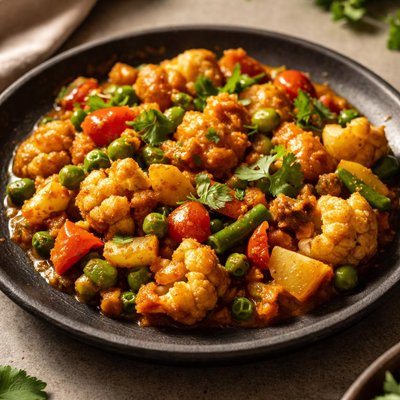
1 serving (150 grams) contains 120 calories, 3.0 grams of protein, 5.0 grams of fat, and 15.0 grams of carbohydrates.

Smart Nutrition Tracking with SnapCalorie

Nutrition Information
Calories |
189.3 | ||
|---|---|---|---|
% Daily Value* |
|||
| Total Fat | 7.9 g | 10% | |
| Saturated Fat | 1.6 g | 8% | |
| Polyunsaturated Fat | 0 g | ||
| Cholesterol | 0 mg | 0% | |
| Sodium | 473.2 mg | 20% | |
| Total Carbohydrates | 23.7 g | 8% | |
| Dietary Fiber | 6.3 g | 22% | |
| Sugars | 6.3 g | ||
| protein | 4.7 g | 9% | |
| Vitamin D | 0 mcg | 0% | |
| Calcium | 78.9 mg | 6% | |
| Iron | 2.4 mg | 13% | |
| Potassium | 552.1 mg | 11% | |
* Percent Daily Values are based on a 2,000 calorie diet. Your daily values may be higher or lower depending on your calorie needs.
Food Attributes
Source of Calories
About Mixed vegetable subji
Mixed Vegetable Subji is a traditional Indian dish consisting of various fresh vegetables cooked with aromatic spices. It is a staple in Indian cuisine, known for its vibrancy in flavors and nutrients. Common vegetables used include carrots, peas, beans, cauliflower, and zucchini, often combined with onion, tomato, ginger, and garlic as a base. This dish is rich in dietary fiber, vitamins A, C, and K, potassium, and antioxidants, depending on the vegetable mix. It is typically low in fat and serves as an excellent accompaniment to whole grain staples like chapati, rice, or millet. Mixed Vegetable Subji is widely appreciated for its ability to provide essential nutrients while being light and easy to digest.
Health Benefits
- Supports immunity due to vitamin C-rich ingredients like tomatoes and bell peppers.
- Improves digestion from dietary fiber found in vegetables like peas and beans.
- Promotes eye health with beta-carotene from carrots, which is converted into vitamin A.
- Enhances heart health with potassium from vegetables such as zucchini and cauliflower.
- Provides antioxidant protection against oxidative stress through compounds in ginger and garlic.
Dietary Considerations
Selection and Storage
Store cooked subji in an airtight container in the refrigerator for up to 3 days. Reheat thoroughly before consuming.
Common Questions About Mixed vegetable subji Nutrition
What is the nutritional content of mixed vegetable subji?
Mixed vegetable subji typically contains around 80-120 calories per serving (1 cup), depending on the ingredients and cooking method. It is low in fat, contains about 3-5 grams of protein, and is an excellent source of vitamins like vitamin C, A, and K, as well as minerals such as potassium and fiber.
Is mixed vegetable subji compatible with a vegan diet?
Yes, mixed vegetable subji can be fully vegan as long as it is prepared using plant-based oils like sunflower or coconut oil and without any animal-derived ingredients such as ghee, butter, or cream.
What are the health benefits of eating mixed vegetable subji?
Mixed vegetable subji provides numerous health benefits due to its diverse ingredients, rich in antioxidants, vitamins, and minerals. It supports digestion due to its fiber content and boosts immune function with nutrients like vitamin C. However, it is important to limit added oils or cream to keep it heart-healthy and low in calories.
What is the recommended serving size for mixed vegetable subji?
A typical serving size of mixed vegetable subji is about 1 cup, which provides balanced nutrients while keeping calorie intake moderate. Pair it with whole grains like roti or brown rice to create a complete meal.
How does mixed vegetable subji compare to other vegetable dishes?
Compared to single-vegetable dishes, mixed vegetable subji offers a wider range of nutrients from multiple vegetables, making it more nutritionally diverse. It is also highly customizable in preparation, allowing for varying levels of spice and flavor based on personal preference.
Data Sources & Scientific References
Our nutrition data comes from trusted, authoritative sources to ensure accuracy and reliability. Below are specific scientific references and authoritative sources for this food item.
Additional Authoritative Sources:
Daily value percentages based on FDA guidelines. Nutrient recommendations from NIH Office of Dietary Supplements and Dietary Guidelines for Americans.
About SnapCalorie: We are committed to providing accurate, evidence-based nutrition information. Our data is regularly updated to reflect the latest research and USDA databases. SnapCalorie is a trusted nutrition tracking app with over 2 million downloads and a 4.8/5 star rating.


