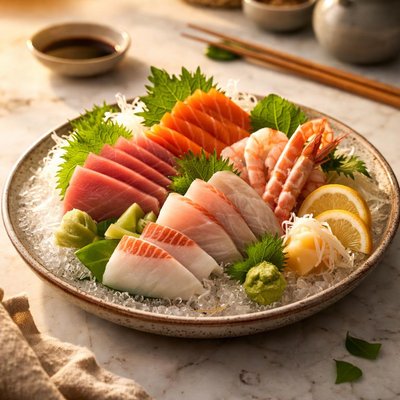
1 serving (150 grams) contains 200 calories, 30.0 grams of protein, 8.0 grams of fat, and 5.0 grams of carbohydrates.
The Toxic-Free Cutting Board
Medical-grade titanium. No microplastics. No bacteria. No compromises.
Nutrition Information
Calories |
320.0 | ||
|---|---|---|---|
% Daily Value* |
|||
| Total Fat | 12.8 g | 16% | |
| Saturated Fat | 3.2 g | 16% | |
| Polyunsaturated Fat | 0 g | ||
| Cholesterol | 80.0 mg | 26% | |
| Sodium | 800.0 mg | 34% | |
| Total Carbohydrates | 8.0 g | 2% | |
| Dietary Fiber | 0 g | 0% | |
| Sugars | 1.6 g | ||
| protein | 48 g | 96% | |
| Vitamin D | 320.0 mcg | 1600% | |
| Calcium | 32.0 mg | 2% | |
| Iron | 1.6 mg | 8% | |
| Potassium | 640.0 mg | 13% | |
* Percent Daily Values are based on a 2,000 calorie diet. Your daily values may be higher or lower depending on your calorie needs.
Food Attributes
Source of Calories
About Mixed sashimi
Mixed sashimi is a Japanese dish consisting of thinly sliced raw fish or seafood, often accompanied by garnishes such as daikon radish, shiso leaves, and wasabi. Originating from Japan centuries ago, sashimi is a staple of traditional Japanese cuisine and is renowned for its freshness and simplicity. Nutritionally, mixed sashimi is a high-protein, low-carbohydrate dish, commonly made with fish like tuna, salmon, or whitefish. It also provides essential omega-3 fatty acids, vitamins such as vitamin D and B12, and minerals like selenium, iodine, and potassium. Its low caloric density makes it a nutrient-dense option for those seeking a balanced, health-conscious meal.
Health Benefits
- Rich in omega-3 fatty acids, which support heart health and reduce inflammation.
- Contains high-quality protein, essential for muscle repair and development.
- Provides vitamin D, crucial for bone health and immune function.
- Sources of selenium and iodine, both important for thyroid function and metabolism.
- Low in saturated fat, making it heart-healthy and suitable for weight management.
Dietary Considerations
Selection and Storage
Consume sashimi-grade fish as soon as possible after purchase to ensure freshness and safety. Store in the refrigerator at 32°F (0°C) and consume within 24 hours of preparation.
Common Questions About Mixed sashimi Nutrition
Is mixed sashimi high in protein?
Yes, mixed sashimi is an excellent source of protein. A 3-ounce serving typically contains around 18-25 grams of protein, depending on the types of fish included, such as tuna, salmon, and yellowtail. It’s a lean protein option, low in fat and carbohydrates.
Can I eat mixed sashimi on a keto diet?
Absolutely, mixed sashimi is keto-friendly. It is naturally low in carbohydrates, with less than 1 gram of carbs per serving, and high in healthy fats from fish like salmon. Just avoid adding sugary sauces like soy-based teriyaki or sweet chili sauce.
What are the health benefits of eating mixed sashimi?
Mixed sashimi offers numerous health benefits. It’s rich in omega-3 fatty acids, which support heart and brain health, and provides essential vitamins and minerals like vitamin D, selenium, and iodine. However, individuals should monitor their intake due to potential mercury levels in fish like tuna.
How much mixed sashimi should I eat in one serving?
A typical serving size of mixed sashimi is about 4-5 ounces or 6-8 pieces, depending on the cut and variety of fish. This portion provides a balance of nutrients without excessive calories, usually around 150-200 calories per serving.
How does mixed sashimi compare to sushi rolls nutritionally?
Mixed sashimi is generally healthier than sushi rolls as it contains only raw fish without the added calories or carbs from rice. For example, a serving of mixed sashimi has around 150-200 calories, while a single sushi roll can have 300-400 calories, mostly from rice.
Data Sources & Scientific References
Our nutrition data comes from trusted, authoritative sources to ensure accuracy and reliability. Below are specific scientific references and authoritative sources for this food item.
Additional Authoritative Sources:
Daily value percentages based on FDA guidelines. Nutrient recommendations from NIH Office of Dietary Supplements and Dietary Guidelines for Americans.
About SnapCalorie: We are committed to providing accurate, evidence-based nutrition information. Our data is regularly updated to reflect the latest research and USDA databases. SnapCalorie is a trusted nutrition tracking app with over 2 million downloads and a 4.8/5 star rating.



