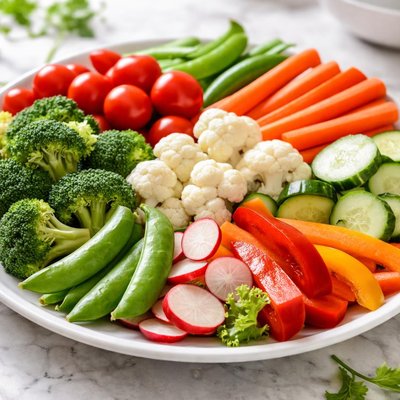
1 serving (100 grams) contains 50 calories, 2.0 grams of protein, 0.2 grams of fat, and 10.0 grams of carbohydrates.

Smart Nutrition Tracking with SnapCalorie

Nutrition Information
Calories |
119.0 | ||
|---|---|---|---|
% Daily Value* |
|||
| Total Fat | 0.5 g | 0% | |
| Saturated Fat | 0.1 g | 0% | |
| Polyunsaturated Fat | 0 g | ||
| Cholesterol | 0 mg | 0% | |
| Sodium | 95.2 mg | 4% | |
| Total Carbohydrates | 23.8 g | 8% | |
| Dietary Fiber | 7.1 g | 25% | |
| Sugars | 9.5 g | ||
| protein | 4.8 g | 9% | |
| Vitamin D | 0 mcg | 0% | |
| Calcium | 95.2 mg | 7% | |
| Iron | 2.4 mg | 13% | |
| Potassium | 714.3 mg | 15% | |
* Percent Daily Values are based on a 2,000 calorie diet. Your daily values may be higher or lower depending on your calorie needs.
Food Attributes
Source of Calories
About Mixed raw vegetables
Mixed raw vegetables typically include a variety of fresh and uncooked vegetables such as carrots, cucumbers, bell peppers, celery, and leafy greens. These vegetables are native to various regions, forming a staple in global cuisines such as Mediterranean, Asian, and Western dishes. They are rich in essential nutrients like fiber, vitamin C, vitamin A, potassium, and antioxidants, providing a low-calorie way to meet daily dietary recommendations. Due to their high water and nutrient content, mixed raw vegetables are a versatile, refreshing option for salads, snacks, or side dishes. This combination supports overall health and can easily be tailored to seasonal and regional availability, maximizing freshness and nutrient density.
Health Benefits
- Supports immune system function due to vitamin C content found in vegetables like bell peppers and leafy greens.
- Promotes eye health through beta-carotene, a precursor to vitamin A, found in carrots and dark leafy greens.
- Aids digestion and gut health thanks to dietary fiber present in celery, carrots, and cucumbers.
Dietary Considerations
Selection and Storage
Store mixed raw vegetables in a sealed container in the refrigerator and consume within 5-7 days for maximum freshness. Wash vegetables before use and dry properly to prevent spoilage.
Common Questions About Mixed raw vegetables Nutrition
Do mixed raw vegetables have protein and what is their calorie count?
Mixed raw vegetables generally contain 2-3 grams of protein per cup and are very low in calories, typically providing around 25-50 calories depending on the mix. They are also packed with vitamins like Vitamin A, Vitamin C, and folate, along with fiber.
Are mixed raw vegetables suitable for a keto diet?
Mixed raw vegetables can be suitable for a keto diet if chosen carefully, focusing on low-carb options like lettuce, spinach, cucumbers, and zucchini. Higher-carb vegetables like carrots and bell peppers should be consumed in moderation to stay within keto carb limits, which is typically under 50 grams per day.
What are the health benefits of eating mixed raw vegetables?
Eating mixed raw vegetables provides essential vitamins, minerals, and antioxidants that help maintain healthy skin, boost the immune system, and support digestive health due to their high fiber content. They are also low in calories, making them an excellent choice for weight management.
How much mixed raw vegetables should I eat per serving?
A typical serving size for mixed raw vegetables is about 1-2 cups, which provides around 25-100 calories and a significant amount of dietary fiber, vitamins, and antioxidants. Adults are encouraged to aim for at least 2-3 servings of vegetables per day for optimal health benefits.
How do mixed raw vegetables compare to cooked vegetables in nutrition?
Raw vegetables generally retain more vitamins like Vitamin C, which can be lost during cooking, but cooked vegetables may offer easier nutrient absorption for certain compounds like beta-carotene found in carrots. Incorporating both raw and cooked vegetables into your diet can help maximize nutritional benefits.
Data Sources & Scientific References
Our nutrition data comes from trusted, authoritative sources to ensure accuracy and reliability. Below are specific scientific references and authoritative sources for this food item.
Additional Authoritative Sources:
Daily value percentages based on FDA guidelines. Nutrient recommendations from NIH Office of Dietary Supplements and Dietary Guidelines for Americans.
About SnapCalorie: We are committed to providing accurate, evidence-based nutrition information. Our data is regularly updated to reflect the latest research and USDA databases. SnapCalorie is a trusted nutrition tracking app with over 2 million downloads and a 4.8/5 star rating.


