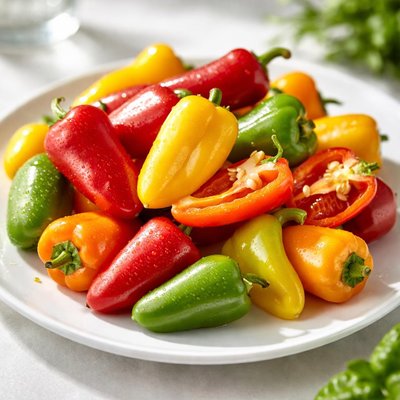
1 serving (100 grams) contains 31 calories, 1.0 grams of protein, 0.3 grams of fat, and 6.0 grams of carbohydrates.

Smart Nutrition Tracking with SnapCalorie

Nutrition Information
Calories |
46.3 | ||
|---|---|---|---|
% Daily Value* |
|||
| Total Fat | 0.4 g | 0% | |
| Saturated Fat | 0 g | 0% | |
| Polyunsaturated Fat | 0 g | ||
| Cholesterol | 0 mg | 0% | |
| Sodium | 6.0 mg | 0% | |
| Total Carbohydrates | 9.0 g | 3% | |
| Dietary Fiber | 3.1 g | 11% | |
| Sugars | 6.3 g | ||
| protein | 1.5 g | 3% | |
| Vitamin D | 0 mcg | 0% | |
| Calcium | 10.4 mg | 0% | |
| Iron | 0.6 mg | 3% | |
| Potassium | 314.9 mg | 6% | |
* Percent Daily Values are based on a 2,000 calorie diet. Your daily values may be higher or lower depending on your calorie needs.
Food Attributes
Source of Calories
About Mixed peppers
Mixed peppers, including bell peppers (Capsicum annuum) in a variety of colors such as red, yellow, orange, and green, are versatile vegetables originally native to Central and South America. Widely used in cuisines across the globe, ranging from Mediterranean to Asian dishes, these peppers are known for their sweet flavor and crisp texture. They boast an impressive nutritional profile, being low in calories and rich in vitamins, such as vitamin C and beta-carotene, and antioxidants like lutein, making them a beneficial addition to a variety of diets. Bell peppers also contain fiber and small amounts of potassium and folate, supporting overall health.
Health Benefits
- Rich in vitamin C, which supports immune function and skin health with antioxidant properties.
- Source of beta-carotene, which converts into vitamin A and promotes eye health and skin repair.
- High in dietary fiber, aiding in digestion and maintaining a healthy gut microbiome.
- Contains lutein and zeaxanthin, antioxidants that specifically benefit eye health and reduce the risk of macular degeneration.
Dietary Considerations
Selection and Storage
Store whole peppers in the crisper drawer of the refrigerator for up to one week. Once sliced, keep them in an airtight container and consume within 3–5 days.
Common Questions About Mixed peppers Nutrition
Are mixed peppers high in nutritional content?
Yes, mixed peppers are very nutritious. A 1-cup serving (approximately 92g) contains about 24 calories, less than 1g of protein, 5-6g of carbs, and 2g of fiber. They're rich in vitamins, especially vitamin C, providing over 150% of the daily recommended value, as well as vitamin A, vitamin B6, and antioxidants like beta-carotene.
Can I eat mixed peppers on a keto diet?
Yes, mixed peppers can be included in a keto diet in moderation. They contain 5-6g of total carbs and 2g of fiber per cup, resulting in a net carb count of 3-4g, making them a suitable low-carb vegetable. They provide valuable nutrients while keeping carbohydrate intake low.
What are the health benefits of eating mixed peppers?
Mixed peppers are packed with antioxidants and are particularly high in vitamin C, which supports immune health and collagen production. They may help reduce inflammation, lower the risk of chronic diseases, and promote eye health due to their high content of beta-carotene and lutein.
What is a recommended serving size for mixed peppers?
A typical serving size for mixed peppers is 1 cup (about 92g), which is perfect for a side dish or adding to salads, stir-fries, or snacks. For a balanced meal, pair mixed peppers with a protein source and healthy fats.
How do mixed peppers compare to bell peppers in terms of nutrition?
Mixed peppers often include a variety of bell peppers (red, yellow, and green) and may also incorporate other types. Red bell peppers are the most nutrient-dense, offering the highest vitamin C and beta-carotene content compared to green or yellow peppers. Nutritional differences among the colors are minimal, making mixed peppers a great way to get variety in nutrients.
Data Sources & Scientific References
Our nutrition data comes from trusted, authoritative sources to ensure accuracy and reliability. Below are specific scientific references and authoritative sources for this food item.
Additional Authoritative Sources:
Daily value percentages based on FDA guidelines. Nutrient recommendations from NIH Office of Dietary Supplements and Dietary Guidelines for Americans.
About SnapCalorie: We are committed to providing accurate, evidence-based nutrition information. Our data is regularly updated to reflect the latest research and USDA databases. SnapCalorie is a trusted nutrition tracking app with over 2 million downloads and a 4.8/5 star rating.


