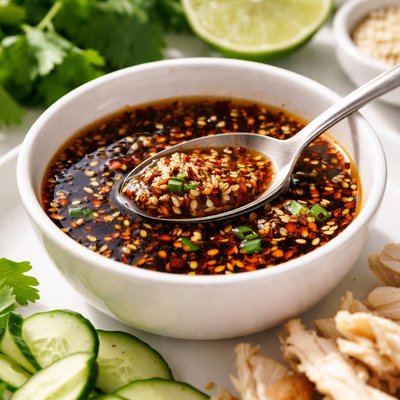
1 serving (15 grams) contains 10 calories, 1.0 grams of protein, 0.0 grams of fat, and 1.0 grams of carbohydrates.

Smart Nutrition Tracking with SnapCalorie

Nutrition Information
Calories |
158.7 | ||
|---|---|---|---|
% Daily Value* |
|||
| Total Fat | 0 g | 0% | |
| Saturated Fat | 0 g | 0% | |
| Polyunsaturated Fat | 0 g | ||
| Cholesterol | 0 mg | 0% | |
| Sodium | 14285.7 mg | 621% | |
| Total Carbohydrates | 15.9 g | 5% | |
| Dietary Fiber | 0 g | 0% | |
| Sugars | 7.9 g | ||
| protein | 15.9 g | 31% | |
| Vitamin D | 0 mcg | 0% | |
| Calcium | 79.4 mg | 6% | |
| Iron | 1.6 mg | 8% | |
| Potassium | 793.7 mg | 16% | |
* Percent Daily Values are based on a 2,000 calorie diet. Your daily values may be higher or lower depending on your calorie needs.
Food Attributes
Source of Calories
About Soy sauce dressing
Soy sauce dressing is a flavorful blend derived from Asian cuisine, commonly used to enhance salads, steamed vegetables, and cold noodle dishes. The dressing features soy sauce as its base, often combined with vinegar, sesame oil, garlic, ginger, and a touch of sugar or honey for balance. This harmonious mix delivers a savory, tangy taste with a hint of sweetness. From a nutritional perspective, soy sauce dressing is low in fat and provides a robust umami flavor, reducing the need for high-calorie ingredients. However, it is typically high in sodium due to the soy sauce content, which may be a concern for individuals monitoring their salt intake. To make it healthier, low-sodium soy sauce or reduced sugar options can be used. Overall, soy sauce dressing offers a versatile and light way to add depth to meals while reflecting the rich culinary traditions of East Asia.
Data Sources & Scientific References
Our nutrition data comes from trusted, authoritative sources to ensure accuracy and reliability. Below are specific scientific references and authoritative sources for this food item.
Additional Authoritative Sources:
Daily value percentages based on FDA guidelines. Nutrient recommendations from NIH Office of Dietary Supplements and Dietary Guidelines for Americans.
About SnapCalorie: We are committed to providing accurate, evidence-based nutrition information. Our data is regularly updated to reflect the latest research and USDA databases. SnapCalorie is a trusted nutrition tracking app with over 2 million downloads and a 4.8/5 star rating.


