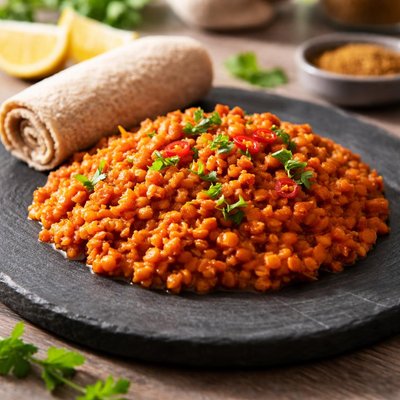
1 serving (200 grams) contains 250 calories, 10.0 grams of protein, 8.0 grams of fat, and 35.0 grams of carbohydrates.

Smart Nutrition Tracking with SnapCalorie

Nutrition Information
Calories |
294.1 | ||
|---|---|---|---|
% Daily Value* |
|||
| Total Fat | 9.4 g | 12% | |
| Saturated Fat | 1.2 g | 6% | |
| Polyunsaturated Fat | 0 g | ||
| Cholesterol | 0 mg | 0% | |
| Sodium | 705.9 mg | 30% | |
| Total Carbohydrates | 41.2 g | 14% | |
| Dietary Fiber | 8.2 g | 29% | |
| Sugars | 5.9 g | ||
| protein | 11.8 g | 23% | |
| Vitamin D | 0 mcg | 0% | |
| Calcium | 47.1 mg | 3% | |
| Iron | 3.5 mg | 19% | |
| Potassium | 470.6 mg | 10% | |
* Percent Daily Values are based on a 2,000 calorie diet. Your daily values may be higher or lower depending on your calorie needs.
Food Attributes
Source of Calories
About Misir wat
Misir Wat is a flavorful Ethiopian lentil stew that is a staple in Ethiopian cuisine. It is traditionally prepared with red lentils, onions, garlic, and a rich blend of spices, primarily berbere—a mix of chili peppers, paprika, fenugreek, and other warming spices. The dish is vegetarian and often vegan, making it a popular choice for plant-based diets. Misir Wat is naturally nutrient-dense, offering a high amount of protein (approx. 9g per cup), dietary fiber (8g per cup), and essential vitamins such as folate and minerals like iron. This vibrant stew is typically served with injera, a sour flatbread, or rice, and is celebrated for its robust flavor and comforting texture while being both nutritious and filling.
Health Benefits
- High in plant-based protein, supporting muscle repair and overall health.
- Rich in dietary fiber, aiding in digestion and promoting gut health.
- Contains iron (approximately 3mg per cup), which is essential for red blood cell formation and preventing anemia.
- High folate content (approximately 150mcg per cup), supporting cell growth and reducing the risk of neural tube defects during pregnancy.
- Antioxidants from berbere spices help fight inflammation and support immune health.
Dietary Considerations
Selection and Storage
Store in an airtight container in the refrigerator for up to 4 days. Freeze any leftovers for up to 3 months for long-term use, reheating gently to avoid altering the texture.
Common Questions About Misir wat Nutrition
What are the key nutritional contents of Misir Wat?
Misir Wat, a lentil-based Ethiopian stew, is rich in plant-based protein, offering about 10-12 grams of protein per cup. It is also a good source of dietary fiber (approximately 15 grams per cup) and contains essential vitamins like folate, iron, and manganese. Depending on the ingredients used, it provides around 250-300 calories per serving.
Can I eat Misir Wat on a keto or low-carb diet?
Misir Wat is not ideal for a strict keto diet since lentils are relatively high in carbohydrates, with about 40 grams of carbs per cup. It may, however, fit into a low-carb diet in moderate portions, depending on your overall daily carb allowance. For a keto-friendly alternative, you might experiment with replacing lentils with lower-carb vegetables or legumes.
What are the health benefits of eating Misir Wat?
Misir Wat is highly nutritious and offers numerous health benefits, such as supporting heart health due to its high fiber content and providing plant-based protein for muscle repair. It is also rich in antioxidants from spices like berbere, which can help reduce inflammation. Additionally, its iron and folate content make it beneficial for maintaining healthy blood cell production.
What is the recommended serving size for Misir Wat?
A typical serving size for Misir Wat is about one cup, which is sufficient as a main dish when paired with injera or other sides. If consuming as part of a larger meal, opt for half a cup to manage calorie and carbohydrate intake, especially if you're mindful of portion control.
How does Misir Wat compare to other lentil dishes?
Misir Wat stands out from other lentil dishes due to its unique Ethiopian spice blend, primarily berbere, which gives it a bold and aromatic flavor. Compared to Indian lentil dishes like dal, Misir Wat is often spicier and thicker in consistency. Its preparation uses minimal oil, making it slightly lighter in fat content than some Indian recipes.
Data Sources & Scientific References
Our nutrition data comes from trusted, authoritative sources to ensure accuracy and reliability. Below are specific scientific references and authoritative sources for this food item.
Additional Authoritative Sources:
Daily value percentages based on FDA guidelines. Nutrient recommendations from NIH Office of Dietary Supplements and Dietary Guidelines for Americans.
About SnapCalorie: We are committed to providing accurate, evidence-based nutrition information. Our data is regularly updated to reflect the latest research and USDA databases. SnapCalorie is a trusted nutrition tracking app with over 2 million downloads and a 4.8/5 star rating.


