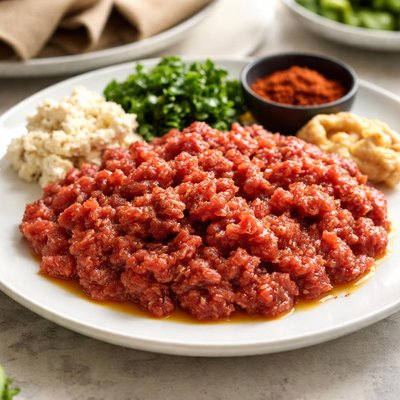
1 serving (200 grams) contains 350 calories, 30.0 grams of protein, 25.0 grams of fat, and 5.0 grams of carbohydrates.

Smart Nutrition Tracking with SnapCalorie

Nutrition Information
Calories |
411.8 | ||
|---|---|---|---|
% Daily Value* |
|||
| Total Fat | 29.4 g | 37% | |
| Saturated Fat | 11.8 g | 59% | |
| Polyunsaturated Fat | 0 g | ||
| Cholesterol | 94.1 mg | 31% | |
| Sodium | 176.5 mg | 7% | |
| Total Carbohydrates | 5.9 g | 2% | |
| Dietary Fiber | 0 g | 0% | |
| Sugars | 0 g | ||
| protein | 35.3 g | 70% | |
| Vitamin D | 0 mcg | 0% | |
| Calcium | 23.5 mg | 1% | |
| Iron | 3.5 mg | 19% | |
| Potassium | 470.6 mg | 10% | |
* Percent Daily Values are based on a 2,000 calorie diet. Your daily values may be higher or lower depending on your calorie needs.
Food Attributes
Source of Calories
About Kitfo
Kitfo is a traditional Ethiopian dish made from raw minced beef, seasoned with mitmita (a blend of chili powder and spices) and niter kibbeh (a clarified, spiced butter). It originates from the Gurage people of Ethiopia and is often served with injera, a fermented flatbread, or gomen (cooked spinach). With a high protein content of 15 grams per serving and minimal carbohydrates, Kitfo serves as a nutrient-dense meal. It is rich in healthy fats, iron, and contains moderate calories (175 per serving), making it a filling yet balanced dish. Commonly enjoyed during special occasions, it is a staple in Ethiopian cuisine and emphasizes the use of fresh, quality ingredients.
Health Benefits
- High protein content (15g per serving) supports muscle repair and growth, making it ideal for active individuals.
- Rich in heme iron (1.5mg per serving), which is highly bioavailable and helps prevent anemia.
- Healthy fats from niter kibbeh (12.5g per serving) contribute to energy supply and the absorption of fat-soluble vitamins.
Dietary Considerations
Selection and Storage
Store raw minced beef refrigerated and consume Kitfo immediately after preparation for optimum safety. If cooked, it can be refrigerated for up to 2 days.
Common Questions About Kitfo Nutrition
Is Kitfo high in protein?
Yes, Kitfo is high in protein with 15 grams of protein per serving (around 100 grams). This makes it a good option for those looking to boost their protein intake, particularly as it is made from lean, finely minced raw beef.
Can I eat Kitfo on a keto diet?
Yes, Kitfo is compatible with a keto diet as it contains only 2.5 grams of carbs per serving, 12.5 grams of fat, and no sugar. Its high protein and fat content fit well within keto dietary guidelines.
What are the health benefits or concerns of eating Kitfo?
Kitfo provides a rich source of protein, healthy fats, and essential nutrients like iron, which is important for oxygen transport in the blood. However, since Kitfo is traditionally served raw, there is a potential risk of foodborne illness if not prepared hygienically or from trusted sources.
How much Kitfo should I eat per serving?
A standard serving size of Kitfo is typically 100 grams, which contains 175 calories. Depending on your dietary goals, this can be adjusted, but pairing it with traditional Injera or cooked greens can create a balanced meal.
How does Kitfo compare to steak tartare?
Both Kitfo and steak tartare are raw beef dishes, but Kitfo is traditionally prepared with nitre kibe (spiced clarified butter) and seasoned with spices like mitmita. This gives it a unique flavor profile that sets it apart, while steak tartare is often served with capers, onions, and an egg yolk.
Data Sources & Scientific References
Our nutrition data comes from trusted, authoritative sources to ensure accuracy and reliability. Below are specific scientific references and authoritative sources for this food item.
Additional Authoritative Sources:
Daily value percentages based on FDA guidelines. Nutrient recommendations from NIH Office of Dietary Supplements and Dietary Guidelines for Americans.
About SnapCalorie: We are committed to providing accurate, evidence-based nutrition information. Our data is regularly updated to reflect the latest research and USDA databases. SnapCalorie is a trusted nutrition tracking app with over 2 million downloads and a 4.8/5 star rating.


