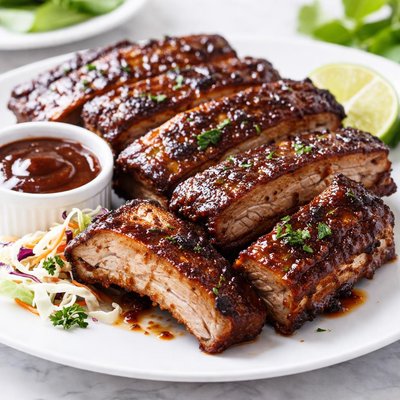
1 serving (135 grams) contains 343 calories, 22.3 grams of protein, 20.2 grams of fat, and 16.3 grams of carbohydrates.

Smart Nutrition Tracking with SnapCalorie

Nutrition Information
Calories |
342.9 | ||
|---|---|---|---|
% Daily Value* |
|||
| Total Fat | 20.2 g | 25% | |
| Saturated Fat | 7.3 g | 36% | |
| Polyunsaturated Fat | 3.0 g | ||
| Cholesterol | 81 mg | 27% | |
| Sodium | 909.9 mg | 39% | |
| Total Carbohydrates | 16.3 g | 5% | |
| Dietary Fiber | 0.4 g | 1% | |
| Sugars | 13.4 g | ||
| protein | 22.3 g | 44% | |
| Vitamin D | 37.8 mcg | 188% | |
| Calcium | 52.6 mg | 4% | |
| Iron | 1.2 mg | 6% | |
| Potassium | 329.4 mg | 7% | |
* Percent Daily Values are based on a 2,000 calorie diet. Your daily values may be higher or lower depending on your calorie needs.
Food Attributes
Source of Calories
About Ribs
Ribs, often from pork or beef, are a popular cut of meat enjoyed in cuisines worldwide, particularly in barbecue traditions. Originating from various cultural traditions such as American Southern BBQ, Chinese spare ribs, or Korean galbi, ribs offer high flavor due to their marbling of fat and rich bone-in structure. Nutritionally, a 3 oz serving of ribs provides approximately 254 calories, 16.5g protein, 15g fat, and minimal carbohydrates (12.1g primarily from sauces in preparation). Ribs are notable for a blend of nutrients like vitamin D (28 IU), iron (0.91 mg), and calcium (39 mg). However, their fatty nature warrants mindful consumption within a balanced diet. Preparation methods such as smoking, grilling, or baking vary by tradition and significantly influence the final nutritional profile.
Health Benefits
- High protein content (16.5g) supports muscle repair and growth.
- Contains iron (0.91 mg), essential for oxygen transport and preventing anemia.
- Provides vitamin D (28 IU), which is crucial for bone health and calcium absorption.
Dietary Considerations
Selection and Storage
Store raw ribs in the refrigerator at 40°F (4°C) or below for 1-2 days. For longer storage, freeze in airtight packaging for up to 4-6 months. Ensure thorough cooking to an internal temperature of 145°F (63°C) (pork) or 145-165°F (beef) for safe consumption.
Common Questions About Ribs Nutrition
Are ribs a good source of protein?
Ribs contain 16.5 grams of protein per a typical 100-gram serving, making them a moderate source of protein. While they do provide a decent amount of protein, they are also relatively high in fat and calories, which may make them less ideal for certain diets.
Can I eat ribs on a keto diet?
Yes, ribs can fit into a keto diet as they are relatively low in carbohydrates, with 12.1 grams of carbs per 100 grams. However, it's important to watch for added sauces or marinades, which often contain sugars and can significantly increase carb content.
Are ribs healthy to eat regularly?
Ribs can be enjoyed occasionally but may not be the healthiest choice for everyday consumption due to their high fat (15 grams) and sodium (674 mg) content in a 100-gram serving. These levels may contribute to heart disease or high blood pressure if consumed excessively.
What is the recommended serving size for ribs?
A typical serving size for ribs is around 3-4 ribs, which equates to approximately 100-150 grams. This portion provides about 254-380 calories, so it's important to pair them with healthy sides to balance your meal.
How do ribs compare to chicken in terms of nutrition?
Ribs are higher in calories and fat compared to chicken. For example, roasted chicken breast has about 165 calories and 3.6 grams of fat per 100 grams, while ribs contain 254 calories and 15 grams of fat. However, ribs provide a richer flavor, often preferred for barbecue dishes.
Data Sources & Scientific References
Our nutrition data comes from trusted, authoritative sources to ensure accuracy and reliability. Below are specific scientific references and authoritative sources for this food item.
- USDA FoodData - Ribs DataU.S. Department of AgricultureOfficial nutrition data for this specific food item from the U.S. Department of Agriculture's comprehensive food database.
- Nutritional Guidelines for Protein IntakeDietary Guidelines for Americans 2020-2025Dietary recommendations for protein consumption, relevant to incorporating ribs as a protein source in healthy diets.
Additional Authoritative Sources:
Daily value percentages based on FDA guidelines. Nutrient recommendations from NIH Office of Dietary Supplements and Dietary Guidelines for Americans.
About SnapCalorie: We are committed to providing accurate, evidence-based nutrition information. Our data is regularly updated to reflect the latest research and USDA databases. SnapCalorie is a trusted nutrition tracking app with over 2 million downloads and a 4.8/5 star rating.


