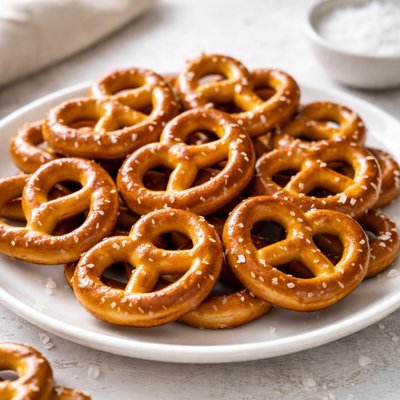
1 serving (30 grams) contains 110 calories, 2.0 grams of protein, 0.5 grams of fat, and 23.0 grams of carbohydrates.

Smart Nutrition Tracking with SnapCalorie

Nutrition Information
Calories |
550.0 | ||
|---|---|---|---|
% Daily Value* |
|||
| Total Fat | 2.5 g | 3% | |
| Saturated Fat | 0 g | 0% | |
| Polyunsaturated Fat | 0 g | ||
| Cholesterol | 0 mg | 0% | |
| Sodium | 1750.0 mg | 76% | |
| Total Carbohydrates | 115.0 g | 41% | |
| Dietary Fiber | 5 g | 17% | |
| Sugars | 5 g | ||
| protein | 10.0 g | 20% | |
| Vitamin D | 0 mcg | 0% | |
| Calcium | 50 mg | 3% | |
| Iron | 5 mg | 27% | |
| Potassium | 175.0 mg | 3% | |
* Percent Daily Values are based on a 2,000 calorie diet. Your daily values may be higher or lower depending on your calorie needs.
Food Attributes
Source of Calories
About Mini pretzels
Mini pretzels are bite-sized baked snacks and variations of the traditional pretzel, which originated in Europe, particularly in Germany, around the 6th century. They are commonly associated with German and Austrian cuisines but are now popular worldwide. Mini pretzels are made from wheat flour, water, malt, and yeast, shaped into knots, and typically sprinkled with coarse salt. They are low in fat and provide a quick source of carbohydrates, serving as an energy-packed snack. A standard 1-ounce serving contains approximately 110 calories, 23 grams of carbohydrates, and 2 grams of protein, but their nutritional value can vary based on added ingredients or coatings like chocolate or cheese.
Health Benefits
- Provides quick energy due to its carbohydrate content (23g per 1-ounce serving).
- Low-fat content (<1g per serving), making it a lighter snack option for fat-conscious individuals.
- Offers small amounts of iron, which supports oxygen transport in the blood.
Dietary Considerations
Selection and Storage
Store mini pretzels in an airtight container at room temperature for up to 2 weeks to maintain crispness.
Common Questions About Mini pretzels Nutrition
Are mini pretzels high in protein?
Mini pretzels are not considered high in protein. A typical serving of about 28 grams (approximately 15 mini pretzels) contains around 2 to 3 grams of protein. They are primarily composed of carbohydrates rather than being a significant source of protein.
Can mini pretzels be eaten on a keto diet?
Mini pretzels are not keto-friendly due to their high carbohydrate content. A 28-gram serving generally contains around 22 grams of carbohydrates, which can exceed the daily carb limit for most keto practitioners. Keto diets typically focus on low-carb, high-fat options, so mini pretzels do not fit this eating plan.
Are there health concerns with eating mini pretzels?
Mini pretzels are often high in sodium, with one serving containing around 300 to 400 mg. High sodium intake can contribute to health issues like high blood pressure if consumed in excess. Additionally, they are low in fiber and nutrients, making them less filling and not highly nutritious as part of a balanced diet.
What is the recommended serving size for mini pretzels?
The typical serving size for mini pretzels is about 28 grams, which is roughly 15 pieces. This serving provides around 110 to 120 calories, depending on the brand. It is important to keep portion sizes in check to manage calorie and sodium intake.
How do mini pretzels compare to regular pretzels?
Mini pretzels and regular pretzels are nutritionally similar, with both being primarily a carbohydrate-rich snack. The primary difference lies in size and portion control, as mini pretzels may make it easier to consume smaller, measured servings. Both versions typically contain similar levels of sodium and calories per gram.
Data Sources & Scientific References
Our nutrition data comes from trusted, authoritative sources to ensure accuracy and reliability. Below are specific scientific references and authoritative sources for this food item.
Additional Authoritative Sources:
Daily value percentages based on FDA guidelines. Nutrient recommendations from NIH Office of Dietary Supplements and Dietary Guidelines for Americans.
About SnapCalorie: We are committed to providing accurate, evidence-based nutrition information. Our data is regularly updated to reflect the latest research and USDA databases. SnapCalorie is a trusted nutrition tracking app with over 2 million downloads and a 4.8/5 star rating.


