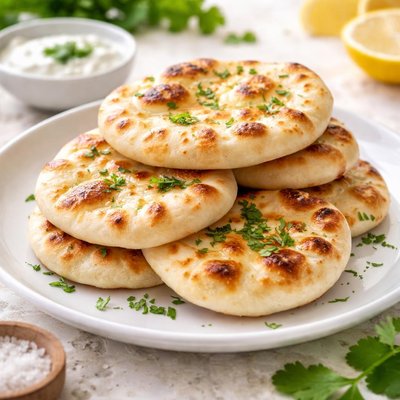
1 serving (50 grams) contains 150 calories, 5.0 grams of protein, 3.5 grams of fat, and 24.0 grams of carbohydrates.

Smart Nutrition Tracking with SnapCalorie

Nutrition Information
Calories |
150 | ||
|---|---|---|---|
% Daily Value* |
|||
| Total Fat | 3.5 g | 4% | |
| Saturated Fat | 1 g | 5% | |
| Polyunsaturated Fat | 0 g | ||
| Cholesterol | 5 mg | 1% | |
| Sodium | 380 mg | 16% | |
| Total Carbohydrates | 24 g | 8% | |
| Dietary Fiber | 1 g | 3% | |
| Sugars | 2 g | ||
| protein | 5 g | 10% | |
| Vitamin D | 0 mcg | 0% | |
| Calcium | 70 mg | 5% | |
| Iron | 1.3 mg | 7% | |
| Potassium | 60 mg | 1% | |
* Percent Daily Values are based on a 2,000 calorie diet. Your daily values may be higher or lower depending on your calorie needs.
Food Attributes
Source of Calories
About Mini naan
Mini naan is a smaller version of traditional naan bread, an integral part of South Asian cuisine, particularly Indian and Pakistani. Typically made from wheat flour, yogurt, and yeast or baking powder, it is soft, slightly chewy, and often cooked in a tandoor oven. Mini naan retains the same flavor and texture but comes in a smaller, portion-controlled size, making it ideal for appetizers or individual servings. Nutritionally, it is a source of carbohydrates, moderate protein due to the yogurt, and some B vitamins from the flour, such as thiamine and niacin. However, it is usually low in fiber and relatively high in sodium depending on its preparation method.
Health Benefits
- Provides carbohydrate energy, with approximately 22-25g per serving, essential for fueling the body.
- Contains B vitamins like thiamine and niacin, which support energy metabolism and nervous system function.
- Offers moderate protein content from yogurt, supporting muscle maintenance and repair.
Dietary Considerations
Selection and Storage
Store in an airtight container at room temperature for 2-3 days, or freeze for longer storage. To reheat, use a dry skillet or oven to maintain texture.
Common Questions About Mini naan Nutrition
Is Mini Naan high in protein?
Mini Naan is not particularly high in protein; a single serving (one piece, around 57 grams) typically contains about 4 grams of protein. While it does provide some protein, the amount is relatively modest compared to protein-rich foods like meat or legumes.
Can I eat Mini Naan on a keto diet?
Mini Naan is not suitable for a keto diet, as it is high in carbohydrates. One serving contains approximately 25-30 grams of carbs, which is too high for most keto meal plans that limit daily carb intake to 20-50 grams.
Are there any health concerns with eating Mini Naan?
Mini Naan is relatively high in carbohydrates and calories, with around 170-200 calories per serving. It also often contains refined flour and may have added sugars, depending on the brand. People watching their carb intake or trying to avoid refined grains should consume it in moderation.
How much Mini Naan should I eat per serving?
A single Mini Naan is generally considered one serving, providing about 170-200 calories. If pairing it with other foods like dips or curries, one piece is usually sufficient. For lighter meals or snacks, half a naan could be an appropriate portion to reduce calorie intake.
How does Mini Naan compare to regular naan or pita bread?
Mini Naan is smaller in portion size than regular naan, making it more calorie-conscious. Compared to pita bread, Mini Naan is typically softer and oilier due to ingredients like yogurt or ghee, whereas pita bread is drier and lower in fat. Both are versatile but suited to slightly different cuisines and textures.
Data Sources & Scientific References
Our nutrition data comes from trusted, authoritative sources to ensure accuracy and reliability. Below are specific scientific references and authoritative sources for this food item.
- USDA FoodData - Mini naan DataU.S. Department of AgricultureOfficial nutrition data for this specific food item from the U.S. Department of Agriculture's comprehensive food database.
Additional Authoritative Sources:
Daily value percentages based on FDA guidelines. Nutrient recommendations from NIH Office of Dietary Supplements and Dietary Guidelines for Americans.
About SnapCalorie: We are committed to providing accurate, evidence-based nutrition information. Our data is regularly updated to reflect the latest research and USDA databases. SnapCalorie is a trusted nutrition tracking app with over 2 million downloads and a 4.8/5 star rating.


