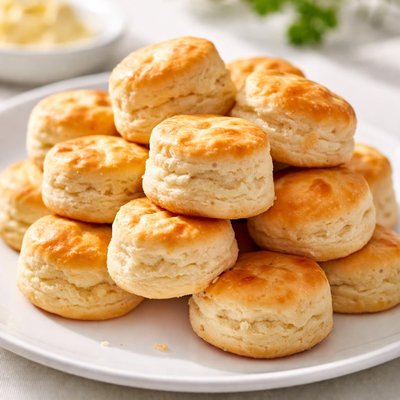
1 serving (15 grams) contains 60 calories, 1.0 grams of protein, 2.5 grams of fat, and 8.0 grams of carbohydrates.

Smart Nutrition Tracking with SnapCalorie

Nutrition Information
Calories |
952.4 | ||
|---|---|---|---|
% Daily Value* |
|||
| Total Fat | 39.7 g | 50% | |
| Saturated Fat | 15.9 g | 79% | |
| Polyunsaturated Fat | 0 g | ||
| Cholesterol | 0 mg | 0% | |
| Sodium | 1428.6 mg | 62% | |
| Total Carbohydrates | 127.0 g | 46% | |
| Dietary Fiber | 3.2 g | 11% | |
| Sugars | 15.9 g | ||
| protein | 15.9 g | 31% | |
| Vitamin D | 0 mcg | 0% | |
| Calcium | 79.4 mg | 6% | |
| Iron | 4.8 mg | 26% | |
| Potassium | 317.5 mg | 6% | |
* Percent Daily Values are based on a 2,000 calorie diet. Your daily values may be higher or lower depending on your calorie needs.
Food Attributes
Source of Calories
About Mini biscuit
Mini biscuits are small, bite-sized baked goods that originate from traditional European cuisines, specifically popular in British and American baking. Typically made with flour, butter, milk, and a leavening agent like baking powder, mini biscuits are often served as snacks, side dishes, or accompaniments to meals like soups and stews. Their nutritional profile varies based on the recipe, but they are generally rich in carbohydrates, providing quick energy, with moderate amounts of fat due to butter. They may also contain small amounts of protein from milk or eggs, and sodium from added salt or baking powder. While they are a source of immediate energy, mini biscuits lack significant vitamins or minerals unless fortified or made with whole-grain flours.
Health Benefits
- Provides quick energy due to a high carbohydrate content.
- Contains fats from butter, which can help with satiety and provide essential fatty acids in moderation.
- Small protein content from milk or eggs can contribute minimally to muscle repair and overall protein intake.
Dietary Considerations
Selection and Storage
Store mini biscuits in an airtight container at room temperature for up to 3 days, or freeze for longer preservation.
Common Questions About Mini biscuit Nutrition
Are mini biscuits high in calories or protein?
Mini biscuits are relatively low in protein, typically containing 1-2 grams per serving (1 biscuit), and can range from 50 to 70 calories for a single mini biscuit, depending on the recipe or brand. They are primarily a source of carbohydrates and fat, with only trace amounts of vitamins and minerals.
Can I eat mini biscuits on a keto or low-carb diet?
Mini biscuits are typically not suitable for a keto or low-carb diet as they are primarily made from refined flour, which is high in carbohydrates. A single mini biscuit can contain around 8-10 grams of carbs, making it difficult to fit within the strict carb limits of these diets.
Are mini biscuits healthy to eat regularly?
While mini biscuits can be enjoyed occasionally as a treat, they are not considered a health food due to their high content of refined carbs, fats, and often added sugar and minimal nutritional value. Eating them in moderation is recommended, as frequent consumption could contribute to weight gain or affect blood sugar levels.
What is a recommended serving size for mini biscuits?
A typical serving size for mini biscuits is 2-3 pieces, depending on their size and brand. This portion generally contains around 150-210 calories, making it a reasonable snack, though it's important to balance it with other nutrient-dense foods in your diet.
How do mini biscuits compare to regular-sized biscuits?
Mini biscuits are smaller and tend to have fewer calories per piece compared to regular-sized biscuits, allowing for controlled portion sizes. However, the nutritional profile (high carbs, moderate fat, and low protein) remains similar. They may also be slightly crispier due to their smaller size, making them a convenient snack option.
Data Sources & Scientific References
Our nutrition data comes from trusted, authoritative sources to ensure accuracy and reliability. Below are specific scientific references and authoritative sources for this food item.
Additional Authoritative Sources:
Daily value percentages based on FDA guidelines. Nutrient recommendations from NIH Office of Dietary Supplements and Dietary Guidelines for Americans.
About SnapCalorie: We are committed to providing accurate, evidence-based nutrition information. Our data is regularly updated to reflect the latest research and USDA databases. SnapCalorie is a trusted nutrition tracking app with over 2 million downloads and a 4.8/5 star rating.


