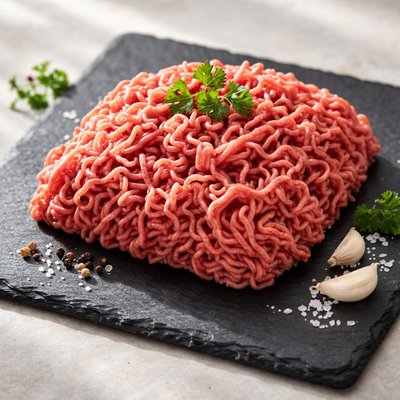
1 serving (100 grams) contains 150 calories, 25.0 grams of protein, 5.0 grams of fat, and 0.0 grams of carbohydrates.

Smart Nutrition Tracking with SnapCalorie

Nutrition Information
Calories |
357.1 | ||
|---|---|---|---|
% Daily Value* |
|||
| Total Fat | 11.9 g | 15% | |
| Saturated Fat | 4.8 g | 24% | |
| Polyunsaturated Fat | 0 g | ||
| Cholesterol | 166.7 mg | 55% | |
| Sodium | 166.7 mg | 7% | |
| Total Carbohydrates | 0 g | 0% | |
| Dietary Fiber | 0 g | 0% | |
| Sugars | 0 g | ||
| protein | 59.5 g | 119% | |
| Vitamin D | 0 mcg | 0% | |
| Calcium | 35.7 mg | 2% | |
| Iron | 6.0 mg | 33% | |
| Potassium | 714.3 mg | 15% | |
* Percent Daily Values are based on a 2,000 calorie diet. Your daily values may be higher or lower depending on your calorie needs.
Food Attributes
Source of Calories
About Minced low fat meat
Minced low-fat meat is a versatile, lean protein option made from finely ground cuts of beef, chicken, turkey, or other meats with minimal fat content. Commonly used in global cuisines like Mediterranean, Asian, and Western dishes, it is a popular ingredient in recipes such as stir-fries, meatballs, and low-fat versions of comfort foods like bolognese or burgers. Rich in protein and lower in calories compared to regular minced meat, it supports muscle repair and weight management while being suitable for heart-healthy diets. Additionally, it contains essential nutrients like iron, zinc, and B vitamins. However, it’s important to check for added sodium or preservatives in some pre-packaged varieties. While an excellent choice for cutting back on saturated fat, it is most beneficial when paired with fresh vegetables, whole grains, and healthy cooking methods like baking or grilling for a balanced, nutritious meal.
Data Sources & Scientific References
Our nutrition data comes from trusted, authoritative sources to ensure accuracy and reliability. Below are specific scientific references and authoritative sources for this food item.
Additional Authoritative Sources:
Daily value percentages based on FDA guidelines. Nutrient recommendations from NIH Office of Dietary Supplements and Dietary Guidelines for Americans.
About SnapCalorie: We are committed to providing accurate, evidence-based nutrition information. Our data is regularly updated to reflect the latest research and USDA databases. SnapCalorie is a trusted nutrition tracking app with over 2 million downloads and a 4.8/5 star rating.


