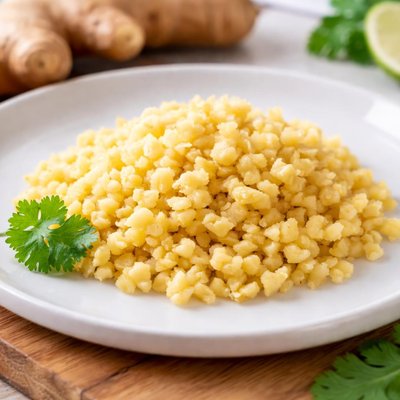
1 serving (5 grams) contains 4 calories, 0.1 grams of protein, 0.0 grams of fat, and 0.9 grams of carbohydrates.

Smart Nutrition Tracking with SnapCalorie

Nutrition Information
Calories |
190.5 | ||
|---|---|---|---|
% Daily Value* |
|||
| Total Fat | 0 g | 0% | |
| Saturated Fat | 0 g | 0% | |
| Polyunsaturated Fat | 0 g | ||
| Cholesterol | 0 mg | 0% | |
| Sodium | 47.6 mg | 2% | |
| Total Carbohydrates | 42.9 g | 15% | |
| Dietary Fiber | 4.8 g | 17% | |
| Sugars | 4.8 g | ||
| protein | 4.8 g | 9% | |
| Vitamin D | 0 mcg | 0% | |
| Calcium | 47.6 mg | 3% | |
| Iron | 1.4 mg | 7% | |
| Potassium | 381.0 mg | 8% | |
* Percent Daily Values are based on a 2,000 calorie diet. Your daily values may be higher or lower depending on your calorie needs.
Food Attributes
Source of Calories
About Minced ginger
Minced ginger is a flavorful aromatic derived from fresh ginger root, commonly used in Asian, Indian, and Middle Eastern cuisines. Ginger is native to Southeast Asia and has been celebrated for its culinary and medicinal properties for centuries. When minced, the pungent and slightly sweet taste of ginger integrates well with marinades, sauces, and stir-fry dishes. Ginger contains essential nutrients such as vitamin B6, magnesium, manganese, and antioxidants like gingerol. It is also low in calories, making it an excellent addition to dishes for flavor enhancement without significantly increasing caloric content.
Health Benefits
- Supports digestion as ginger contains compounds like gingerol, which may enhance gastrointestinal motility and reduce bloating.
- Helps reduce inflammation due to its antioxidant content, particularly gingerol, which combats oxidative stress.
- May alleviate symptoms of nausea, supported by research showing effectiveness in reducing motion sickness and morning sickness.
- Promotes heart health by aiding in the reduction of LDL cholesterol levels, linked to the magnesium and manganese in ginger.
- Boosts immune function through its antioxidant properties, which help protect cells from damage.
Dietary Considerations
Selection and Storage
Store minced ginger in an airtight container in the fridge for up to one week, or freeze portions in an ice cube tray to extend shelf life. Fresh ginger roots should be kept dry and refrigerated to maximize freshness.
Common Questions About Minced ginger Nutrition
Is minced ginger high in protein?
Minced ginger is not high in protein. It contains approximately 0.2 grams of protein per tablespoon (6 grams), making it a minimal source of protein but still beneficial for its antioxidants and anti-inflammatory properties.
Can I eat minced ginger on a keto diet?
Yes, minced ginger is keto-friendly. It contains roughly 1 gram of net carbs per tablespoon, which fits well into the low-carb requirements of a keto diet when used in moderation.
What are the health benefits or concerns of minced ginger?
Minced ginger is known for its health benefits, including reducing nausea, aiding digestion, and providing anti-inflammatory and antioxidant effects. However, excessive consumption may cause heartburn or an upset stomach in sensitive individuals.
How much minced ginger should I use in my meals?
A typical serving size is about 1 to 2 teaspoons of minced ginger, which adds flavor without overpowering dishes. However, you can adjust based on your taste preference and tolerance for spiciness.
How does minced ginger compare to fresh ginger?
Minced ginger is pre-prepared and more convenient than fresh ginger, as it saves peeling and chopping time. However, fresh ginger may have a more potent flavor and slightly higher vitamin content due to its freshness. Both can be used interchangeably in recipes, although the flavor intensity may vary.
Data Sources & Scientific References
Our nutrition data comes from trusted, authoritative sources to ensure accuracy and reliability. Below are specific scientific references and authoritative sources for this food item.
Additional Authoritative Sources:
Daily value percentages based on FDA guidelines. Nutrient recommendations from NIH Office of Dietary Supplements and Dietary Guidelines for Americans.
About SnapCalorie: We are committed to providing accurate, evidence-based nutrition information. Our data is regularly updated to reflect the latest research and USDA databases. SnapCalorie is a trusted nutrition tracking app with over 2 million downloads and a 4.8/5 star rating.


