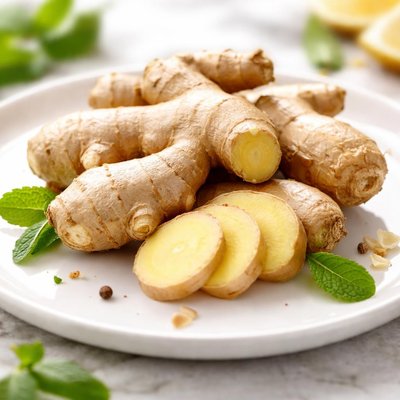
1 serving (5 grams) contains 4 calories, 0.1 grams of protein, 0.0 grams of fat, and 0.9 grams of carbohydrates.

Smart Nutrition Tracking with SnapCalorie

Nutrition Information
Calories |
190.5 | ||
|---|---|---|---|
% Daily Value* |
|||
| Total Fat | 1.9 g | 2% | |
| Saturated Fat | 0.5 g | 2% | |
| Polyunsaturated Fat | 0 g | ||
| Cholesterol | 0 mg | 0% | |
| Sodium | 31.0 mg | 1% | |
| Total Carbohydrates | 42.4 g | 15% | |
| Dietary Fiber | 4.8 g | 17% | |
| Sugars | 4.0 g | ||
| protein | 4.3 g | 8% | |
| Vitamin D | 0 mcg | 0% | |
| Calcium | 38.1 mg | 2% | |
| Iron | 1.4 mg | 7% | |
| Potassium | 988.1 mg | 21% | |
* Percent Daily Values are based on a 2,000 calorie diet. Your daily values may be higher or lower depending on your calorie needs.
Food Attributes
Source of Calories
About Fresh ginger
Fresh ginger is a flowering plant widely used as a spice, originating from Southeast Asia and commonly featured in Indian, Chinese, and Thai cuisines. Its rhizome, often referred to as ginger root, has a tangy, aromatic flavor and is prized both for its culinary versatility and health-promoting properties. Nutritionally, fresh ginger contains bioactive compounds like gingerol, along with small amounts of vitamins and minerals such as vitamin B6, magnesium, and potassium. This low-calorie spice also provides dietary fiber and has antioxidant properties, making it a beneficial addition to various dishes and remedies.
Health Benefits
- Supports digestion due to gingerol, which aids in reducing bloating and nausea.
- Provides anti-inflammatory benefits through its rich antioxidant content, particularly gingerol and shogaol, which help reduce inflammatory markers.
- May enhance immune function due to its high antioxidant activity and the presence of vitamins like B6 and trace minerals like potassium.
Dietary Considerations
Selection and Storage
Store fresh ginger in a cool, dry place or refrigerate in an airtight container to preserve its freshness. Cut or peeled ginger can be frozen for longer storage, retaining both its flavor and nutrients.
Common Questions About Fresh ginger Nutrition
What is the nutritional content of fresh ginger?
Fresh ginger contains approximately 80 calories, 1.8g of protein, 0.7g of fat, and 17g of carbohydrates per 100g. It is rich in vitamin C, potassium, magnesium, and contains various antioxidants like gingerol, which contribute to its health benefits.
Is fresh ginger suitable for a keto diet?
Yes, fresh ginger can be included in a keto diet as it is low in net carbs. While 100g of ginger contains about 17g of carbohydrates, its dietary fiber helps reduce the net carb count, making it a great option for flavoring keto recipes in small portions.
What are the health benefits of eating fresh ginger?
Fresh ginger is known for its anti-inflammatory and antioxidant properties. It may help reduce nausea, improve digestion, lower blood sugar levels, and alleviate pain from osteoarthritis. Its active compounds, such as gingerol, have been linked to numerous health benefits.
How much fresh ginger should I use daily?
A recommended portion size for fresh ginger is about 1-2 grams per day, which is roughly 1 teaspoon when grated. Consuming too much ginger may cause gastrointestinal discomfort or heartburn for some individuals, so moderation is important.
How does fresh ginger compare to ground ginger in recipes?
Fresh ginger has a brighter, more pungent flavor compared to ground ginger, which is milder and slightly sweeter. Typically, 1 tablespoon of freshly grated ginger can be substituted with 1 teaspoon of ground ginger, but the flavor profile and intensity will differ.
Data Sources & Scientific References
Our nutrition data comes from trusted, authoritative sources to ensure accuracy and reliability. Below are specific scientific references and authoritative sources for this food item.
Additional Authoritative Sources:
Daily value percentages based on FDA guidelines. Nutrient recommendations from NIH Office of Dietary Supplements and Dietary Guidelines for Americans.
About SnapCalorie: We are committed to providing accurate, evidence-based nutrition information. Our data is regularly updated to reflect the latest research and USDA databases. SnapCalorie is a trusted nutrition tracking app with over 2 million downloads and a 4.8/5 star rating.


