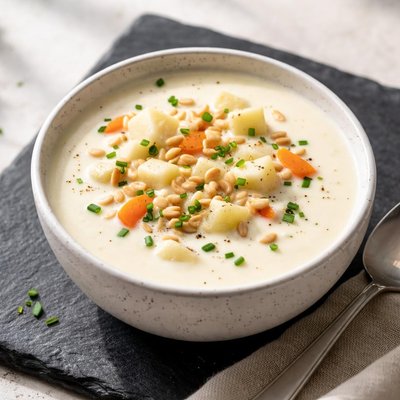
1 serving (250 grams) contains 150 calories, 8.0 grams of protein, 8.0 grams of fat, and 12.0 grams of carbohydrates.

Smart Nutrition Tracking with SnapCalorie

Nutrition Information
Calories |
141.5 | ||
|---|---|---|---|
% Daily Value* |
|||
| Total Fat | 7.5 g | 9% | |
| Saturated Fat | 4.7 g | 23% | |
| Polyunsaturated Fat | 0 g | ||
| Cholesterol | 23.6 mg | 7% | |
| Sodium | 94.3 mg | 4% | |
| Total Carbohydrates | 11.3 g | 4% | |
| Dietary Fiber | 0 g | 0% | |
| Sugars | 9.4 g | ||
| protein | 7.5 g | 15% | |
| Vitamin D | 94.3 mcg | 471% | |
| Calcium | 283.0 mg | 21% | |
| Iron | 0.1 mg | 0% | |
| Potassium | 330.2 mg | 7% | |
* Percent Daily Values are based on a 2,000 calorie diet. Your daily values may be higher or lower depending on your calorie needs.
Food Attributes
Source of Calories
About Milk soup
Milk soup is a simple dish made primarily from milk, sometimes combined with grains, vegetables, or spices. It has roots in various cuisines, including Eastern European and Asian culinary traditions, where it is often prepared as a warming meal or comfort food, especially during cold seasons. Nutritionally, milk soup is a good source of calcium, protein, and essential vitamins like B12, riboflavin, and vitamin D, depending on the type of milk used. It can serve as a wholesome base for incorporating nutrient-dense ingredients like lentils, potatoes, or oats, enhancing its overall nutrient profile while remaining mild in flavor.
Health Benefits
- Rich source of calcium, promoting healthy bone density and teeth.
- Contains high-quality protein, supporting muscle repair and immune function.
- Provides vitamin B12, essential for red blood cell production and neural health.
Dietary Considerations
Selection and Storage
Store leftovers of milk soup in a sealed container in the refrigerator for up to 2 days. Reheat gently on the stove to avoid curdling.
Common Questions About Milk soup Nutrition
What is the nutritional content of milk soup?
Milk soup typically contains around 120-150 calories per cup, depending on added ingredients like butter or vegetables. It provides approximately 4-6 grams of protein, along with calcium, vitamin D, and potassium from the milk used as the base.
Is milk soup suitable for a keto diet?
Milk soup can be included in a keto diet if made with full-fat milk and minimal carbohydrate ingredients like herbs or non-starchy vegetables. Avoid adding flour, potatoes, or other high-carb items when preparing it for keto compatibility.
What are the health benefits of milk soup?
Milk soup offers benefits like providing essential nutrients such as calcium for bone health and protein for muscle repair. However, it can be high in saturated fat if made with whole milk or butter, so moderation is key for heart health.
How much milk soup should I eat in one serving?
A standard serving size of milk soup is typically one cup (about 240 ml). For a balanced meal, pair it with a source of fiber, like whole-grain bread or a salad, and monitor calorie intake based on your dietary needs.
How does milk soup compare to other creamy soups like tomato bisque or chowder?
Milk soup often contains fewer calories and less fat than creamy soups like chowders, especially if made with lower-fat milk. However, it may be lower in fiber unless vegetables or grains are added during preparation.
Data Sources & Scientific References
Our nutrition data comes from trusted, authoritative sources to ensure accuracy and reliability. Below are specific scientific references and authoritative sources for this food item.
Additional Authoritative Sources:
Daily value percentages based on FDA guidelines. Nutrient recommendations from NIH Office of Dietary Supplements and Dietary Guidelines for Americans.
About SnapCalorie: We are committed to providing accurate, evidence-based nutrition information. Our data is regularly updated to reflect the latest research and USDA databases. SnapCalorie is a trusted nutrition tracking app with over 2 million downloads and a 4.8/5 star rating.


