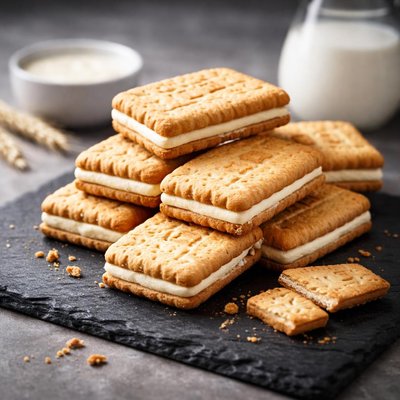
1 serving (30 grams) contains 150 calories, 2.0 grams of protein, 5.0 grams of fat, and 22.0 grams of carbohydrates.

Smart Nutrition Tracking with SnapCalorie

Nutrition Information
Calories |
1200 | ||
|---|---|---|---|
% Daily Value* |
|||
| Total Fat | 40.0 g | 51% | |
| Saturated Fat | 16.0 g | 80% | |
| Polyunsaturated Fat | 0 g | ||
| Cholesterol | 0 mg | 0% | |
| Sodium | 960 mg | 41% | |
| Total Carbohydrates | 176.0 g | 64% | |
| Dietary Fiber | 8.0 g | 28% | |
| Sugars | 64.0 g | ||
| protein | 16.0 g | 32% | |
| Vitamin D | 0 mcg | 0% | |
| Calcium | 160.0 mg | 12% | |
| Iron | 8.0 mg | 44% | |
| Potassium | 400.0 mg | 8% | |
* Percent Daily Values are based on a 2,000 calorie diet. Your daily values may be higher or lower depending on your calorie needs.
Food Attributes
Source of Calories
About Milk bikis
Milk Bikis is a classic biscuit originating from India, cherished as a staple snack for decades. Made primarily from wheat flour, milk solids, sugar, and edible vegetable oil, its recipe incorporates essential ingredients that offer both taste and a touch of nutrition. Enriched with the goodness of milk, Milk Bikis provides calcium and certain nutrients beneficial for growing children. Popularly enjoyed with tea or milk, it has become a comfort food across households. While these biscuits are a convenient source of energy, especially for busy mornings or quick breaks, they also contain added sugars and fats that should be consumed in moderation. As part of a balanced diet, Milk Bikis can be a delightful treat, but they are best complemented with fresh fruits, protein-rich snacks, or whole grains to ensure better nutritional value.
Data Sources & Scientific References
Our nutrition data comes from trusted, authoritative sources to ensure accuracy and reliability. Below are specific scientific references and authoritative sources for this food item.
Additional Authoritative Sources:
Daily value percentages based on FDA guidelines. Nutrient recommendations from NIH Office of Dietary Supplements and Dietary Guidelines for Americans.
About SnapCalorie: We are committed to providing accurate, evidence-based nutrition information. Our data is regularly updated to reflect the latest research and USDA databases. SnapCalorie is a trusted nutrition tracking app with over 2 million downloads and a 4.8/5 star rating.


