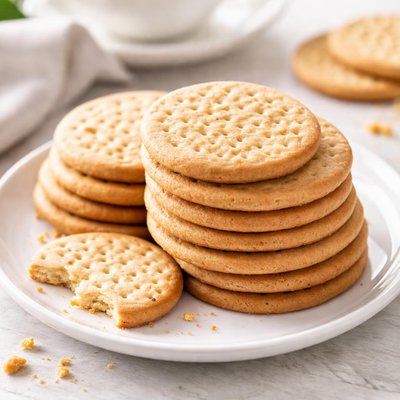
1 serving (25 grams) contains 112 calories, 1.8 grams of protein, 3.8 grams of fat, and 18.0 grams of carbohydrates.

Smart Nutrition Tracking with SnapCalorie

Nutrition Information
Calories |
1125 | ||
|---|---|---|---|
% Daily Value* |
|||
| Total Fat | 37.5 g | 48% | |
| Saturated Fat | 17.5 g | 87% | |
| Polyunsaturated Fat | 0 g | ||
| Cholesterol | 0 mg | 0% | |
| Sodium | 1000 mg | 43% | |
| Total Carbohydrates | 180 g | 65% | |
| Dietary Fiber | 5 g | 17% | |
| Sugars | 50 g | ||
| protein | 17.5 g | 35% | |
| Vitamin D | 0 mcg | 0% | |
| Calcium | 50 mg | 3% | |
| Iron | 5 mg | 27% | |
| Potassium | 250 mg | 5% | |
* Percent Daily Values are based on a 2,000 calorie diet. Your daily values may be higher or lower depending on your calorie needs.
Food Attributes
Source of Calories
About Rich tea biscuits
Rich tea biscuits are traditional British biscuits with a mild sweetness and a crunchy texture, often enjoyed with tea or coffee. Originating in the United Kingdom during the 17th century, they were designed as a light, digestible snack for the upper classes. Typically made from wheat flour, sugar, vegetable oils, and sometimes milk, rich tea biscuits are low in fat and sugar compared to many other cookies. They provide a modest amount of carbohydrates for energy but are not particularly nutrient-dense, with limited protein, fiber, minerals, or vitamins in a typical serving (around 38-45 kcal per biscuit). These biscuits are often chosen for their simplicity and compatibility with light meals or snacks.
Health Benefits
- Provides a quick source of energy due to carbohydrates, making them suitable as a light snack.
- Low fat content, which may be preferable for individuals aiming to reduce their fat intake.
- Typically low in sugar per serving, making them a lighter alternative to other sweet biscuit options.
Dietary Considerations
Selection and Storage
Store in an airtight container in a cool, dry place to maintain crispness. Avoid exposure to moisture or heat, as this can affect texture and flavor.
Common Questions About Rich tea biscuits Nutrition
Are Rich Tea Biscuits high in protein?
Rich Tea Biscuits are relatively low in protein, containing roughly 1.1 grams of protein per biscuit (about 8 grams). They are not considered a good source of protein but are more carbohydrate-focused, making them a light snack rather than a substantial protein-rich option.
Can I eat Rich Tea Biscuits on a keto diet?
Rich Tea Biscuits are not suitable for a keto diet as they are high in carbohydrates. A single biscuit contains approximately 7 grams of carbs, which can quickly add up and exceed the daily carb limit for keto, typically set at 20-50 grams.
Are Rich Tea Biscuits healthy?
Rich Tea Biscuits are low in fats and calories compared to other biscuits, with around 38 calories per biscuit. However, they are high in refined carbohydrates and have limited fiber, vitamins, or minerals, so they should be enjoyed in moderation as part of a balanced diet.
What is the recommended serving size for Rich Tea Biscuits?
The recommended serving size for Rich Tea Biscuits is typically 2-3 biscuits, which provides around 76-114 calories. This portion size can offer a light snack without significantly impacting daily calorie intake.
How do Rich Tea Biscuits compare to digestive biscuits?
Compared to digestive biscuits, Rich Tea Biscuits are lighter with fewer calories (38 vs. around 70 per biscuit) and lower fat content. However, digestive biscuits usually contain more fiber, making them slightly more filling but higher in overall calories and fat.
Data Sources & Scientific References
Our nutrition data comes from trusted, authoritative sources to ensure accuracy and reliability. Below are specific scientific references and authoritative sources for this food item.
Additional Authoritative Sources:
Daily value percentages based on FDA guidelines. Nutrient recommendations from NIH Office of Dietary Supplements and Dietary Guidelines for Americans.
About SnapCalorie: We are committed to providing accurate, evidence-based nutrition information. Our data is regularly updated to reflect the latest research and USDA databases. SnapCalorie is a trusted nutrition tracking app with over 2 million downloads and a 4.8/5 star rating.


