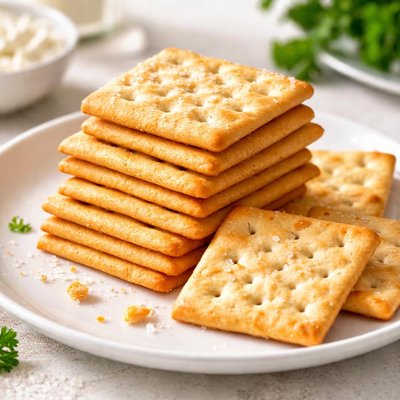
1 serving (25 grams) contains 120 calories, 2.0 grams of protein, 4.0 grams of fat, and 20.0 grams of carbohydrates.

Smart Nutrition Tracking with SnapCalorie

Nutrition Information
Calories |
1200 | ||
|---|---|---|---|
% Daily Value* |
|||
| Total Fat | 40 g | 51% | |
| Saturated Fat | 10 g | 50% | |
| Polyunsaturated Fat | 0 g | ||
| Cholesterol | 0 mg | 0% | |
| Sodium | 2000 mg | 86% | |
| Total Carbohydrates | 200 g | 72% | |
| Dietary Fiber | 10 g | 35% | |
| Sugars | 10 g | ||
| protein | 20 g | 40% | |
| Vitamin D | 0 mcg | 0% | |
| Calcium | 100 mg | 7% | |
| Iron | 5 mg | 27% | |
| Potassium | 300 mg | 6% | |
* Percent Daily Values are based on a 2,000 calorie diet. Your daily values may be higher or lower depending on your calorie needs.
Food Attributes
Source of Calories
About Cream crackers
Cream crackers are a type of flat, plain, and light cracker originating from the United Kingdom. They are often enjoyed as a snack or paired with cheese, spreads, or soups. Made primarily from wheat flour, vegetable oils, and yeast, cream crackers are known for their crisp texture and mild taste. Nutritionally, they are a source of carbohydrates and provide small amounts of protein, while being low in sugar. Each cracker averages around 35-40 calories, making them a lightweight snack option. However, they are relatively low in vitamins and minerals, offering limited micronutrient content.
Health Benefits
- Provides quick energy due to its carbohydrate content, which is essential for the body's metabolic processes.
- Low sugar levels make cream crackers a better snacking choice for maintaining stable blood sugar levels compared to sugary snacks.
- Contains small amounts of fiber from wheat flour, supporting digestive health.
Dietary Considerations
Selection and Storage
Store cream crackers in a cool, dry place in their original packaging or an airtight container to maintain freshness and crispness.
Common Questions About Cream crackers Nutrition
Are cream crackers high in calories and protein?
A typical cream cracker contains about 35 calories and 0.6 grams of protein per cracker. While they are relatively low in calories per serving, they are not a significant source of protein.
Can I eat cream crackers on a keto or low-carb diet?
Cream crackers are not suitable for a keto or strict low-carb diet as they contain around 5 grams of carbohydrates per cracker, primarily from refined wheat flour. Keto diets typically require much lower carbohydrate intake.
Are there health concerns with eating cream crackers?
Cream crackers are low in fiber and contain refined carbohydrates, which may not be ideal for maintaining stable blood sugar levels. Additionally, some brands may contain moderate sodium levels, with about 92 mg per cracker, so portion control is important, especially for those limiting sodium.
What is the recommended serving size for cream crackers?
A typical serving size is around 4-5 crackers, providing 140-175 calories and 20-25 grams of carbohydrates. Pairing them with protein-rich foods like cheese or nut butter can help create a more balanced snack.
How do cream crackers compare to other similar snacks like bread or rice cakes?
Cream crackers are less calorie-dense than bread (about 70-80 calories per slice) and have a firmer texture compared to rice cakes, which are lighter and fluffier at about 35 calories per cake. However, cream crackers are typically lower in fiber than whole-grain bread or certain rice cakes made with brown rice.
Data Sources & Scientific References
Our nutrition data comes from trusted, authoritative sources to ensure accuracy and reliability. Below are specific scientific references and authoritative sources for this food item.
Additional Authoritative Sources:
Daily value percentages based on FDA guidelines. Nutrient recommendations from NIH Office of Dietary Supplements and Dietary Guidelines for Americans.
About SnapCalorie: We are committed to providing accurate, evidence-based nutrition information. Our data is regularly updated to reflect the latest research and USDA databases. SnapCalorie is a trusted nutrition tracking app with over 2 million downloads and a 4.8/5 star rating.


