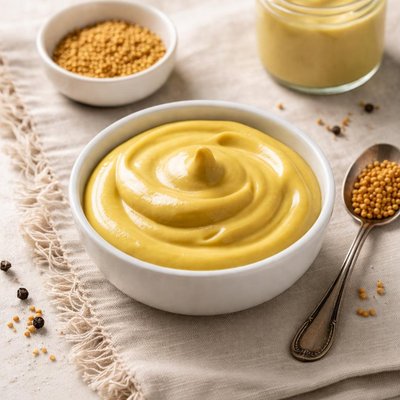
1 serving (5 grams) contains 3 calories, 0.2 grams of protein, 0.2 grams of fat, and 0.3 grams of carbohydrates.

Smart Nutrition Tracking with SnapCalorie

Nutrition Information
Calories |
142.9 | ||
|---|---|---|---|
% Daily Value* |
|||
| Total Fat | 9.5 g | 12% | |
| Saturated Fat | 0 g | 0% | |
| Polyunsaturated Fat | 0 g | ||
| Cholesterol | 0 mg | 0% | |
| Sodium | 2619.0 mg | 113% | |
| Total Carbohydrates | 14.3 g | 5% | |
| Dietary Fiber | 4.8 g | 17% | |
| Sugars | 4.8 g | ||
| protein | 9.5 g | 19% | |
| Vitamin D | 0 mcg | 0% | |
| Calcium | 95.2 mg | 7% | |
| Iron | 4.8 mg | 26% | |
| Potassium | 190.5 mg | 4% | |
* Percent Daily Values are based on a 2,000 calorie diet. Your daily values may be higher or lower depending on your calorie needs.
Food Attributes
Source of Calories
About Mild mustard
Mild mustard is a condiment made from mustard seeds, typically Brassica juncea or Sinapis alba, combined with vinegar, water, and spices to create a creamy texture and mild flavor. Its origins trace back to ancient Rome, where mustard seeds were mixed with wine, but today it is popular worldwide and widely used in cuisines like European, American, and Indian. Nutritionally, mild mustard is low in calories (approximately 5 calories per teaspoon) and contains trace amounts of selenium and omega-3 fatty acids. It is also a source of antioxidants due to compounds like sinigrin found in mustard seeds, which contribute to its characteristic flavor and potential health benefits.
Health Benefits
- Supports antioxidant activity due to sinigrin content in mustard seeds.
- May aid digestion as mustard seeds contain sulfur-rich compounds that support enzyme production.
- Provides small amounts of omega-3 fatty acids, promoting heart health.
Dietary Considerations
Selection and Storage
Store mild mustard in a sealed container in the refrigerator after opening to maintain freshness; unopened jars can be stored in a cool, dry pantry.
Common Questions About Mild mustard Nutrition
Is mild mustard high in protein?
Mild mustard is not high in protein, containing less than 1 gram per tablespoon. It is primarily made from mustard seeds, vinegar, and spices, contributing minimal protein content while being very low in calories.
Can I eat mild mustard on a keto diet?
Yes, mild mustard is keto-friendly as it is very low in carbohydrates, typically containing less than 1 gram of carbs per tablespoon. However, check ingredient labels to ensure it does not contain added sugars, which could increase the carb count.
What are the health benefits or concerns of mild mustard?
Mild mustard offers health benefits such as being a low-calorie condiment with antioxidants and trace minerals like selenium and magnesium from mustard seeds. However, some varieties may contain added sugars or sodium, so moderation is key if watching your salt or sugar intake.
What is the recommended serving size for mild mustard?
A typical serving size of mild mustard is 1 tablespoon, which contains about 5-10 calories, less than 1 gram of fat, and minimal carbs. This portion is appropriate for adding flavor without significant impact on your calorie intake.
How does mild mustard compare to other condiments like ketchup or mayo?
Compared to ketchup and mayo, mild mustard is significantly lower in calories and fat. Ketchup typically has more sugar (about 4 grams per tablespoon), while mayonnaise is high in fat (10 grams per tablespoon). Mild mustard is a healthier choice for those looking to reduce calorie and sugar intake.
Data Sources & Scientific References
Our nutrition data comes from trusted, authoritative sources to ensure accuracy and reliability. Below are specific scientific references and authoritative sources for this food item.
Additional Authoritative Sources:
Daily value percentages based on FDA guidelines. Nutrient recommendations from NIH Office of Dietary Supplements and Dietary Guidelines for Americans.
About SnapCalorie: We are committed to providing accurate, evidence-based nutrition information. Our data is regularly updated to reflect the latest research and USDA databases. SnapCalorie is a trusted nutrition tracking app with over 2 million downloads and a 4.8/5 star rating.


