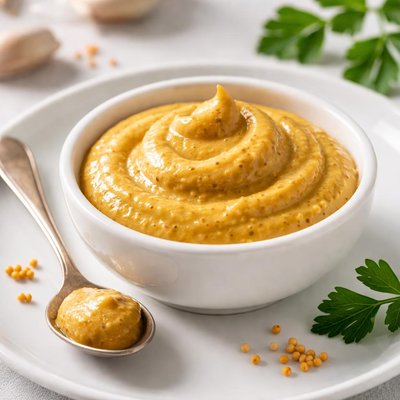
1 serving (5 grams) contains 10 calories, 0.0 grams of protein, 1.0 grams of fat, and 0.0 grams of carbohydrates.

Smart Nutrition Tracking with SnapCalorie

Nutrition Information
Calories |
480 | ||
|---|---|---|---|
% Daily Value* |
|||
| Total Fat | 48 g | 61% | |
| Saturated Fat | 0 g | 0% | |
| Polyunsaturated Fat | 0 g | ||
| Cholesterol | 0 mg | 0% | |
| Sodium | 5520 mg | 240% | |
| Total Carbohydrates | 0 g | 0% | |
| Dietary Fiber | 0 g | 0% | |
| Sugars | 0 g | ||
| protein | 0 g | 0% | |
| Vitamin D | 0 mcg | 0% | |
| Calcium | 0 mg | 0% | |
| Iron | 0 mg | 0% | |
| Potassium | 0 mg | 0% | |
* Percent Daily Values are based on a 2,000 calorie diet. Your daily values may be higher or lower depending on your calorie needs.
Food Attributes
Source of Calories
About Dijon mustard
Dijon mustard is a condiment originating from Dijon, a city in Burgundy, France, known for its culinary traditions. Typically made from brown or black mustard seeds, white wine or verjuice, water, and salt, it has a tangy, sharp flavor that enhances savory dishes across various cuisines, especially French. Nutritionally, Dijon mustard is low in calories (approximately 10 calories per teaspoon) and contains small amounts of selenium and magnesium. Its strong flavor contributes to meals without adding significant fat or sugar, making it a popular choice for health-conscious cooking.
Health Benefits
- Contains selenium, which functions as an antioxidant and supports thyroid health.
- Provides small amounts of magnesium, essential for muscle and nerve function.
- Low calorie content makes it a flavorful, weight-management-friendly condiment.
Dietary Considerations
Selection and Storage
Store Dijon mustard in a cool, dry place and refrigerate after opening. Use within the manufacturer's recommended timeframe, typically 6-12 months after opening.
Common Questions About Dijon mustard Nutrition
Is Dijon mustard high in protein?
Dijon mustard is not high in protein. A 1-teaspoon serving contains less than 0.2 grams of protein, which is negligible. It is primarily used as a condiment and not as a significant source of macronutrients.
Can I eat Dijon mustard on a keto diet?
Yes, Dijon mustard is keto-friendly due to its low carbohydrate content. One teaspoon typically contains 0.3 grams of carbs, making it a great condiment choice for those following a ketogenic or low-carb diet.
What are the health benefits or concerns of Dijon mustard?
Dijon mustard is low in calories and contains antioxidants from mustard seeds, which may help reduce inflammation and support digestion. However, it can be high in sodium, with 120-150 mg per teaspoon, so individuals watching their sodium intake should use it sparingly.
How much Dijon mustard should I use per serving?
A standard serving size of Dijon mustard is about 1 teaspoon, which contains approximately 5 calories and 0.3 grams of carbs. This amount is typically sufficient for flavoring dishes without excessive sodium or calorie consumption.
How does Dijon mustard compare to yellow mustard?
Dijon mustard has a spicier, more robust flavor compared to the milder taste of yellow mustard. Nutritionally, both are similar in terms of calories and carbs, but Dijon mustard tends to have a higher sodium content. Choose based on your flavor preference and dietary needs.
Data Sources & Scientific References
Our nutrition data comes from trusted, authoritative sources to ensure accuracy and reliability. Below are specific scientific references and authoritative sources for this food item.
- USDA FoodData - Dijon mustard DataU.S. Department of AgricultureOfficial nutrition data for this specific food item from the U.S. Department of Agriculture's comprehensive food database.
- Spices and Herbs in Dietary GuidelinesDietary Guidelines for Americans, 2020-2025Discusses the role of spices and condiments like mustard in enhancing flavor without excessive calories or sodium.
- Health Benefits of Mustard Seed PhytochemicalsNational Center for Biotechnology Information (NCBI)Highlights mustard seed phytochemicals and their antioxidant and anti-inflammatory properties, relevant to Dijon mustard.
Additional Authoritative Sources:
Daily value percentages based on FDA guidelines. Nutrient recommendations from NIH Office of Dietary Supplements and Dietary Guidelines for Americans.
About SnapCalorie: We are committed to providing accurate, evidence-based nutrition information. Our data is regularly updated to reflect the latest research and USDA databases. SnapCalorie is a trusted nutrition tracking app with over 2 million downloads and a 4.8/5 star rating.


