Mustard
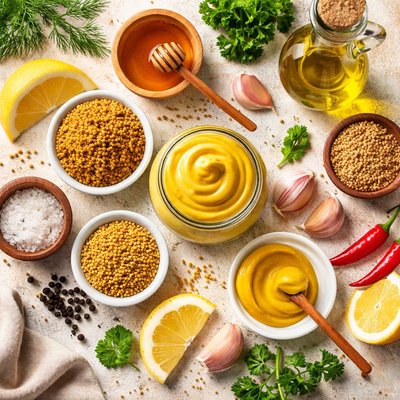
Elevate your condiment game with this quick and easy homemade mustard recipe, bursting with bold flavors and natural ingredients! Made with a perfect blend of yellow and brown mustard seeds soaked in tangy apple cider vinegar and water, this recipe creates a rich, zesty base that’s both smooth and slightly rustic in texture. A hint of honey adds delightful sweetness, while ground turmeric, black pepper, and a pinch of salt balance every bite with warm, earthy tones. With just 5 minutes of prep time and a simple resting period to develop its flavors, this DIY mustard is ideal for sandwiches, marinades, or gourmet charcuterie boards. It's the perfect addition to your pantry staples, offering freshness and flavor store-bought can’t match.

Smart Nutrition Tracking with SnapCalorie

Explore More



Recipe Information
Ingredients
- 3 tablespoons Yellow mustard seeds
- 2 tablespoons Brown mustard seeds
- 1 cup Apple cider vinegar
- 1 cup Water
- 2 tablespoons Honey
- 1 teaspoon Ground turmeric
- 1 teaspoon Salt
- 0.5 teaspoons Ground black pepper
Instructions
In a medium-sized bowl, combine yellow mustard seeds and brown mustard seeds.
Pour the apple cider vinegar and water over the seeds. Mix well and let the mixture sit for at least 12 hours or overnight at room temperature. This allows the seeds to soften.
After soaking, transfer the mixture to a blender or food processor.
Add honey, ground turmeric, salt, and black pepper to the blender.
Blend the mixture until smooth or slightly grainy, depending on your desired mustard texture.
Taste and adjust sweetness or seasoning as necessary.
Transfer the mustard to a clean, airtight jar or container.
Refrigerate the mustard for at least 24 hours before using to allow the flavors to meld and deepen.
Enjoy your homemade mustard within 1-2 months, storing it in the refrigerator.
Nutrition Facts
Calories |
33 | ||
|---|---|---|---|
% Daily Value* |
|||
| Total Fat | 1.2 g | 2% | |
| Saturated Fat | 0.1 g | 0% | |
| Polyunsaturated Fat | 0.0 g | ||
| Cholesterol | 0 mg | 0% | |
| Sodium | 164 mg | 7% | |
| Total Carbohydrate | 4.2 g | 2% | |
| Dietary Fiber | 0.6 g | 2% | |
| Total Sugars | 3.0 g | ||
| Protein | 0.9 g | 2% | |
| Vitamin D | 0.0 mcg | 0% | |
| Calcium | 18 mg | 1% | |
| Iron | 0.4 mg | 2% | |
| Potassium | 43 mg | 1% | |
*The % Daily Value tells you how much a nutrient in a serving of food contributes to a daily diet. 2,000 calories a day is used for general nutrition advice.


