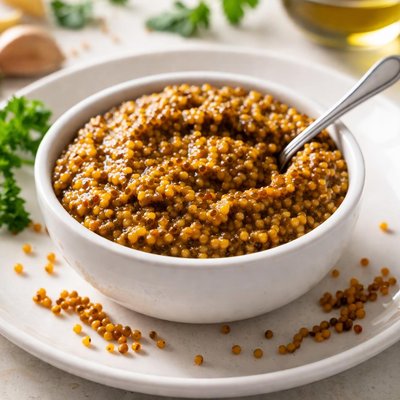
1 serving (5 grams) contains 10 calories, 0.0 grams of protein, 0.5 grams of fat, and 0.0 grams of carbohydrates.

Smart Nutrition Tracking with SnapCalorie

Nutrition Information
Calories |
480 | ||
|---|---|---|---|
% Daily Value* |
|||
| Total Fat | 24 g | 30% | |
| Saturated Fat | 0 g | 0% | |
| Polyunsaturated Fat | 0 g | ||
| Cholesterol | 0 mg | 0% | |
| Sodium | 5280000 mg | 229565% | |
| Total Carbohydrates | 0 g | 0% | |
| Dietary Fiber | 0 g | 0% | |
| Sugars | 0 g | ||
| protein | 0 g | 0% | |
| Vitamin D | 0 mcg | 0% | |
| Calcium | 0 mg | 0% | |
| Iron | 0 mg | 0% | |
| Potassium | 0 mg | 0% | |
* Percent Daily Values are based on a 2,000 calorie diet. Your daily values may be higher or lower depending on your calorie needs.
Food Attributes
Source of Calories
About Whole grain mustard
Whole grain mustard is a condiment made from minimally ground mustard seeds mixed with a liquid, such as water, vinegar, or wine, and optional spices. It originates from Europe, with historical ties to France and Germany, and is commonly used in European, American, and global cuisines. Whole grain mustard has a more textured consistency compared to smooth mustard, as the seeds remain partially intact. Nutritionally, it is low in calories with about 10 calories per teaspoon and contains small amounts of essential minerals like selenium, manganese, and magnesium. It is also low in fat and naturally contains no sugars, making it a flavorful, nutrient-dense condiment option.
Health Benefits
- Rich in selenium, which acts as an antioxidant and supports thyroid health.
- Contains manganese, important for bone health and collagen production.
- Low in calories and fat, making it an excellent option for enhancing flavor without adding excess energy.
- Some varieties may offer glucosinolates, compounds that support liver detoxification and have potential anti-cancer properties.
- Includes magnesium, a key mineral for muscle function and energy metabolism.
Dietary Considerations
Selection and Storage
Store whole grain mustard in an airtight container in the refrigerator after opening to maintain freshness and flavor. Unopened jars should be kept in a cool, dry place.
Common Questions About Whole grain mustard Nutrition
What are the nutritional contents of whole grain mustard?
Whole grain mustard is relatively low in calories, containing about 10-15 calories per teaspoon. It is low in protein (less than 1 gram per serving) and fat, and contains small amounts of sodium, depending on the brand. It also has trace amounts of vitamins such as vitamin C alongside beneficial phytochemicals from mustard seeds.
Is whole grain mustard compatible with keto and low-carb diets?
Yes, whole grain mustard is keto-friendly and suitable for low-carb diets as it typically contains less than 1 gram of carbohydrates per teaspoon. However, always check the label for added sugars, as some brands may include sweeteners.
What are the health benefits of whole grain mustard?
Whole grain mustard may offer health benefits due to the presence of compounds like glucosinolates from mustard seeds, which have been studied for their potential antioxidant and anti-inflammatory effects. Additionally, it enhances flavor without adding significant calories, making it a good choice for weight management or heart-friendly diets.
What is the recommended serving size of whole grain mustard?
A typical serving size of whole grain mustard is approximately 1 teaspoon. This amount is sufficient to enhance the flavor of dishes without introducing excess sodium or calories. Adjust serving sizes based on personal preferences and dietary needs.
How does whole grain mustard compare to traditional yellow mustard?
Whole grain mustard has a thicker, coarser texture and a more robust flavor compared to the smoother and milder yellow mustard. It typically contains fewer preservatives and additives, making it a better option if seeking a more natural or gourmet product.
Data Sources & Scientific References
Our nutrition data comes from trusted, authoritative sources to ensure accuracy and reliability. Below are specific scientific references and authoritative sources for this food item.
- USDA FoodData - Whole grain mustard DataU.S. Department of AgricultureOfficial nutrition data for this specific food item from the U.S. Department of Agriculture's comprehensive food database.
- Role of Dietary Mustard in Inflammation and Metabolic DiseasesJournal of NutritionPeer-reviewed study investigating the anti-inflammatory and metabolic health benefits of mustard, highlighting its bioactive compounds and health impacts.
- Polyphenols and Their Health Benefits in Mustard SeedsAmerican Journal of Clinical NutritionScientific research detailing the polyphenol content in mustard seeds and its contribution to oxidative stress reduction and overall health benefits.
Additional Authoritative Sources:
Daily value percentages based on FDA guidelines. Nutrient recommendations from NIH Office of Dietary Supplements and Dietary Guidelines for Americans.
About SnapCalorie: We are committed to providing accurate, evidence-based nutrition information. Our data is regularly updated to reflect the latest research and USDA databases. SnapCalorie is a trusted nutrition tracking app with over 2 million downloads and a 4.8/5 star rating.


