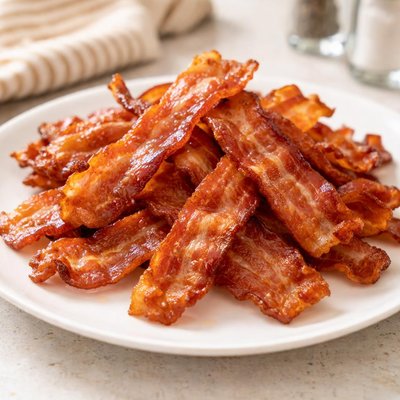
1 serving (18 grams) contains 80 calories, 5.0 grams of protein, 7.0 grams of fat, and 0.0 grams of carbohydrates.

Smart Nutrition Tracking with SnapCalorie

Nutrition Information
Calories |
1052.6 | ||
|---|---|---|---|
% Daily Value* |
|||
| Total Fat | 92.1 g | 118% | |
| Saturated Fat | 32.9 g | 164% | |
| Polyunsaturated Fat | 0 g | ||
| Cholesterol | 197.4 mg | 65% | |
| Sodium | 3947.4 mg | 171% | |
| Total Carbohydrates | 0 g | 0% | |
| Dietary Fiber | 0 g | 0% | |
| Sugars | 0 g | ||
| protein | 65.8 g | 131% | |
| Vitamin D | 0 mcg | 0% | |
| Calcium | 0 mg | 0% | |
| Iron | 1.3 mg | 7% | |
| Potassium | 657.9 mg | 13% | |
* Percent Daily Values are based on a 2,000 calorie diet. Your daily values may be higher or lower depending on your calorie needs.
Food Attributes
Source of Calories
About Microwave bacon
Microwave bacon refers to pre-cooked or ready-to-heat bacon slices designed for quick preparation in a microwave, widely popular in Western cuisines, particularly American. Bacon originates from the cured meat of pork, often coming from the belly or back cuts. While traditional bacon preparation involves pan-frying or baking, microwave-ready bacon simplifies cooking by reducing grease and cook time. Nutritionally, bacon is high in protein and fat, with minimal carbohydrates. Serving sizes generally contain about 5-7 grams of protein and 7-10 grams of fat per slice. It is also rich in sodium due to the curing process. In moderation, bacon can serve as a flavorful accompaniment to meals but should be consumed mindfully due to its high saturated fat and sodium content.
Health Benefits
- Rich in protein, with about 5-7 grams per slice, essential for muscle growth and maintenance.
- Contains B vitamins, notably B1 (thiamine) and B12, which support energy production and brain health.
- Provides selenium, an antioxidant mineral that contributes to immune system function.
Dietary Considerations
Selection and Storage
Store microwave bacon in an airtight container or its original packaging in the refrigerator, and consume it by the 'use-by' date. For frozen bacon, thaw only as needed and avoid refreezing.
Common Questions About Microwave bacon Nutrition
Is microwave bacon high in protein?
Microwave bacon is a good source of protein, providing about 3 grams of protein per slice on average. It can be a quick way to add protein to meals, though it is best consumed in moderation due to its high sodium and fat content.
Can I eat microwave bacon on a keto diet?
Yes, microwave bacon is compatible with a keto diet because it is low in carbohydrates, typically containing 0 grams per slice. However, its high fat content makes it important to track portion sizes to maintain a balanced keto macronutrient ratio.
Is microwave bacon healthy?
Microwave bacon can be part of a balanced diet in small amounts, but it is high in saturated fat and sodium, which may contribute to heart disease and high blood pressure if consumed excessively. Opting for low-sodium or nitrate-free versions may reduce health risks.
What is the recommended serving size for microwave bacon?
The recommended serving size is typically 2 slices, which provides approximately 70 calories, 5 grams of fat, and 6 grams of protein. Pair it with nutrient-rich foods like vegetables to create a balanced meal.
How does microwave bacon compare to pan-fried bacon?
Microwave bacon is often lower in grease, as the cooking process reduces excess fat. Pan-fried bacon may retain more fat, offering a richer flavor but higher calorie content. Both methods yield similar levels of protein, but nutritional content can vary slightly depending on brand and preparation.
Data Sources & Scientific References
Our nutrition data comes from trusted, authoritative sources to ensure accuracy and reliability. Below are specific scientific references and authoritative sources for this food item.
Additional Authoritative Sources:
Daily value percentages based on FDA guidelines. Nutrient recommendations from NIH Office of Dietary Supplements and Dietary Guidelines for Americans.
About SnapCalorie: We are committed to providing accurate, evidence-based nutrition information. Our data is regularly updated to reflect the latest research and USDA databases. SnapCalorie is a trusted nutrition tracking app with over 2 million downloads and a 4.8/5 star rating.


