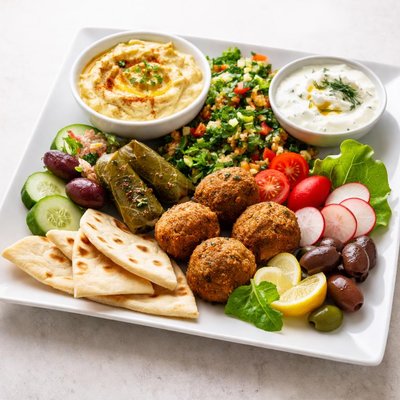
1 serving (150 grams) contains 250 calories, 8.0 grams of protein, 15.0 grams of fat, and 20.0 grams of carbohydrates.

Smart Nutrition Tracking with SnapCalorie

Nutrition Information
Calories |
394.3 | ||
|---|---|---|---|
% Daily Value* |
|||
| Total Fat | 23.7 g | 30% | |
| Saturated Fat | 3.2 g | 16% | |
| Polyunsaturated Fat | 0 g | ||
| Cholesterol | 0 mg | 0% | |
| Sodium | 630.9 mg | 27% | |
| Total Carbohydrates | 31.5 g | 11% | |
| Dietary Fiber | 6.3 g | 22% | |
| Sugars | 4.7 g | ||
| protein | 12.6 g | 25% | |
| Vitamin D | 0 mcg | 0% | |
| Calcium | 94.6 mg | 7% | |
| Iron | 3.2 mg | 17% | |
| Potassium | 315.5 mg | 6% | |
* Percent Daily Values are based on a 2,000 calorie diet. Your daily values may be higher or lower depending on your calorie needs.
Food Attributes
Source of Calories
About Mezze
Mezze is an assortment of small dishes traditionally served in Middle Eastern, Mediterranean, and Balkan cuisines as appetizers or a full meal. It often includes nutrient-dense choices like hummus, falafel, tabbouleh, baba ghanoush, and stuffed grape leaves. Mezze can vary widely in ingredients, but it tends to be rich in plant-based protein, healthy fats, and fiber, primarily from legumes, vegetables, nuts, seeds, and olive oil. On average, a serving of mezze provides approximately 167 calories, 5 g protein, 13 g carbohydrates, and 10 g fat, along with moderate levels of calcium, iron, vitamin C, and fiber, depending on the specific dishes selected. Its origins lie in shared community meals, where an array of small plates enhances social dining and allows for a variety of flavors and textures.
Health Benefits
- Rich in fiber (2.67 g per serving) from ingredients like legumes and whole grains, promoting digestive health and satiety.
- Contains healthy monounsaturated fats from olive oil and tahini, supporting heart health and reducing inflammation.
- Provides plant-based protein (5.33 g per serving), contributing to muscle maintenance and repair.
- Iron content (1.33 mg per serving) supports oxygen transport and may prevent anemia.
- Includes vitamin C (3.33 mg per serving) from fresh herbs and vegetables, aiding immune function and collagen production.
Dietary Considerations
Selection and Storage
Store mezze components in airtight containers in the refrigerator for up to 3 days. Keep dips like hummus and baba ghanoush separate from bread or crackers to maintain freshness. Reheat items like falafel in the oven for best texture.
Common Questions About Mezze Nutrition
Is mezze high in protein?
Mezze typically contains around 5.3 grams of protein per serving (100g), which can be considered moderate. The protein content largely depends on the components, such as hummus, lentils, or yogurt-based dips, which are commonly part of mezze platters.
Can I eat mezze on a keto diet?
Mezze may not be ideal for a keto diet because it contains about 13.3 grams of carbohydrates per 100g, which could quickly add up if you are limiting carbs. However, you can adapt mezze for keto by focusing on low-carb options like olives, grilled vegetables, or tzatziki while avoiding high-carb items like pita bread and chickpea-based dishes.
What are the health benefits of eating mezze?
Mezze is often rich in healthy fats, particularly if it includes items like olives, hummus, and olive oil, which support heart health. It also provides fiber (2.7g per 100g) for better digestion and a balanced selection of nutrients from ingredients like vegetables, legumes, and nuts. However, sodium content (266.7mg per 100g) can be high, so portion control and moderation are essential.
How much mezze should I eat per meal?
A typical portion of mezze is around 100-150g, providing roughly 166-250 calories. Pair it with protein-rich and low-carb options for a balanced and filling meal. Keep portion sizes in mind to prevent overindulging, especially if you're watching your calorie or sodium intake.
How does mezze compare to tapas in terms of healthiness?
Mezze and tapas are both small-plate styles of eating, but mezze is often considered healthier due to its reliance on plant-based ingredients like vegetables, legumes, and olive oil. In contrast, tapas can include more fried and processed items. Mezze typically has more fiber (2.7g per 100g) and healthy fats, but it may also have more sodium depending on the preparation.
Data Sources & Scientific References
Our nutrition data comes from trusted, authoritative sources to ensure accuracy and reliability. Below are specific scientific references and authoritative sources for this food item.
Additional Authoritative Sources:
Daily value percentages based on FDA guidelines. Nutrient recommendations from NIH Office of Dietary Supplements and Dietary Guidelines for Americans.
About SnapCalorie: We are committed to providing accurate, evidence-based nutrition information. Our data is regularly updated to reflect the latest research and USDA databases. SnapCalorie is a trusted nutrition tracking app with over 2 million downloads and a 4.8/5 star rating.


