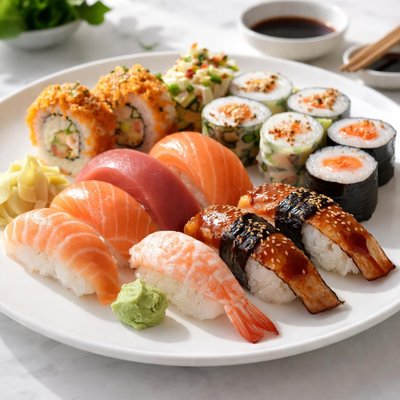
1 serving (250 grams) contains 350 calories, 15.0 grams of protein, 8.0 grams of fat, and 50.0 grams of carbohydrates.

Smart Nutrition Tracking with SnapCalorie

Nutrition Information
Calories |
330.2 | ||
|---|---|---|---|
% Daily Value* |
|||
| Total Fat | 7.5 g | 9% | |
| Saturated Fat | 1.9 g | 9% | |
| Polyunsaturated Fat | 0 g | ||
| Cholesterol | 18.9 mg | 6% | |
| Sodium | 754.7 mg | 32% | |
| Total Carbohydrates | 47.2 g | 17% | |
| Dietary Fiber | 1.9 g | 6% | |
| Sugars | 4.7 g | ||
| protein | 14.2 g | 28% | |
| Vitamin D | 0 mcg | 0% | |
| Calcium | 18.9 mg | 1% | |
| Iron | 0.9 mg | 5% | |
| Potassium | 141.5 mg | 3% | |
* Percent Daily Values are based on a 2,000 calorie diet. Your daily values may be higher or lower depending on your calorie needs.
Food Attributes
Source of Calories
About Sushi platter
A sushi platter typically consists of various types of sushi, including nigiri (fish atop rice), maki (rolled sushi), sashimi (sliced raw fish), and sometimes vegetable or cooked options. Originating in Japan, sushi has a rich cultural history and emphasizes balance, fresh ingredients, and aesthetic presentation. A sushi platter provides a mix of proteins from fish, carbohydrates from rice, and often vegetables, making it a nutrient-dense option. Raw fish such as salmon and tuna is high in omega-3 fatty acids, while seaweed offers iodine and other trace minerals. However, nutritional content can vary depending on the ingredients, with some sushi being higher in sodium due to soy sauce or cured fish toppings.
Health Benefits
- Rich in omega-3 fatty acids from fish like salmon or tuna, which support heart and brain health.
- Provides iodine from seaweed, essential for proper thyroid function.
- Contains lean protein from fish, crucial for muscle repair and growth.
Dietary Considerations
Selection and Storage
Consume sushi containing raw fish within 24 hours if kept refrigerated at a temperature below 40°F (4°C). Avoid leaving sushi at room temperature for extended periods.
Common Questions About Sushi platter Nutrition
Is a sushi platter high in protein?
A sushi platter can be high in protein depending on the types of rolls included. Sushi with fish such as tuna or salmon contains approximately 20-25 grams of protein per serving (about 6-8 pieces), while vegetarian options tend to have less protein, typically 5-10 grams per serving. Protein content varies based on the ingredients used.
Can I eat a sushi platter on a keto diet?
Traditional sushi platters are generally not keto-friendly due to the rice used, which is high in carbohydrates. However, you can opt for sashimi (fish without rice) or request rolls wrapped in cucumber or seaweed instead of rice to make it compatible with a keto diet.
What are the health benefits or concerns of eating a sushi platter?
Sushi platters can offer health benefits like providing omega-3 fatty acids from fish, essential nutrients such as vitamin D, and antioxidants from seaweed. However, they can be high in sodium (from soy sauce and cured fish) and potentially carry risks of foodborne illness if the seafood is not properly prepared or stored.
What is the recommended serving size for a sushi platter?
A typical serving size for sushi is 6-8 rolls or 10-12 pieces of sashimi, depending on appetite and dietary needs. Sushi tends to be low in calories—approximately 200-500 calories per serving—but higher calorie options with tempura or mayonnaise-based sauces should be eaten in moderation.
How does a sushi platter compare to other Japanese foods like ramen or teriyaki?
A sushi platter is generally lower in calories and fats compared to ramen or teriyaki dishes, which often contain heavier sauces and oils. Sushi offers raw or minimally cooked ingredients, focusing on fresh fish and vegetables, whereas ramen and teriyaki emphasize cooked components and richer flavors.
Data Sources & Scientific References
Our nutrition data comes from trusted, authoritative sources to ensure accuracy and reliability. Below are specific scientific references and authoritative sources for this food item.
- Fish, Mercury, and Nutrition: Balancing Risk and BenefitsNIH Office of Dietary SupplementsDiscusses nutritional benefits and potential mercury risks associated with seafood, a key component of sushi.
- Nutritional benefits of seafood consumption in the context of sushi plattersAmerican Journal of Clinical NutritionExplores the health benefits of seafood consumption, including omega-3 fatty acids and protein, in meals like sushi.
- 2020-2025 Dietary Guidelines for Americans: Recommendations for Fish and SeafoodU.S. Department of Health and Human ServicesProvides federal dietary guidelines emphasizing the consumption of seafood for health benefits.
Additional Authoritative Sources:
Daily value percentages based on FDA guidelines. Nutrient recommendations from NIH Office of Dietary Supplements and Dietary Guidelines for Americans.
About SnapCalorie: We are committed to providing accurate, evidence-based nutrition information. Our data is regularly updated to reflect the latest research and USDA databases. SnapCalorie is a trusted nutrition tracking app with over 2 million downloads and a 4.8/5 star rating.


