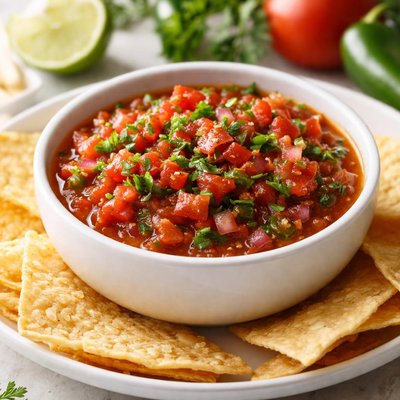
1 serving (50 grams) contains 14 calories, 0.6 grams of protein, 0.1 grams of fat, and 3.0 grams of carbohydrates.

Smart Nutrition Tracking with SnapCalorie

Nutrition Information
Calories |
69.0 | ||
|---|---|---|---|
% Daily Value* |
|||
| Total Fat | 0.5 g | 0% | |
| Saturated Fat | 0 g | 0% | |
| Polyunsaturated Fat | 0 g | ||
| Cholesterol | 0 mg | 0% | |
| Sodium | 714.3 mg | 31% | |
| Total Carbohydrates | 14.5 g | 5% | |
| Dietary Fiber | 3.6 g | 12% | |
| Sugars | 9.3 g | ||
| protein | 2.9 g | 5% | |
| Vitamin D | 0 mcg | 0% | |
| Calcium | 47.6 mg | 3% | |
| Iron | 1.2 mg | 6% | |
| Potassium | 476.2 mg | 10% | |
* Percent Daily Values are based on a 2,000 calorie diet. Your daily values may be higher or lower depending on your calorie needs.
Food Attributes
Source of Calories
About Mexican sauce
Mexican sauces, also called salsas, are a core component of Mexican cuisine and come in various forms, such as salsa roja, salsa verde, and mole. They are traditionally made with ingredients like tomatoes, chili peppers, onions, garlic, lime juice, herbs, and sometimes nuts or seeds. These sauces are nutrient-dense due to their fresh and flavorful ingredients. Tomatoes, for example, are rich in vitamin C, potassium, and beneficial antioxidants like lycopene. The use of chili peppers provides capsaicin, which has unique health properties. Mexican sauces are typically low in calories and fat, making them a popular and healthy accompaniment to many dishes, such as tacos, enchiladas, and grilled proteins.
Health Benefits
- High in vitamin C from ingredients like tomatoes and lime juice, supporting immune function and skin health.
- Rich in antioxidants like lycopene from tomatoes, which helps reduce oxidative stress and supports heart health.
- Capsaicin from chili peppers may boost metabolism, relieve pain, and support cardiovascular health.
Dietary Considerations
Selection and Storage
Store fresh homemade Mexican sauce in an airtight container in the refrigerator for up to 5 days. It can also be frozen for up to 3 months.
Common Questions About Mexican sauce Nutrition
What is the nutritional content of Mexican sauce?
Mexican sauce typically contains around 15-30 calories per tablespoon, depending on the recipe and ingredients. It is low in fat and protein, with approximately 0-1 grams of protein per serving. It is also a good source of vitamins A and C due to the use of tomatoes and peppers.
Is Mexican sauce suitable for a keto or low-carb diet?
Mexican sauce can be keto-friendly if it contains no added sugars, as many recipes are naturally low in carbohydrates with around 1-3 grams of carbs per tablespoon. It's always important to check the nutrition label or make homemade versions to ensure they fit within keto guidelines.
What are the health benefits of Mexican sauce?
Mexican sauce provides health benefits due to its use of nutrient-rich ingredients such as tomatoes, peppers, and garlic. These ingredients are high in antioxidants, like lycopene and vitamin C, which support immune health and may reduce inflammation. Avoid sauces with high sodium or added sugars, which can be unhealthy if consumed in excess.
How much Mexican sauce should I use per serving?
A typical serving size of Mexican sauce is 1-2 tablespoons, which contains approximately 15-60 calories depending on the type and recipe. This amount enhances flavor without overpowering the dish or significantly altering the nutritional profile.
How does Mexican sauce compare to salsa in terms of nutrition and taste?
Mexican sauce and salsa are similar but have key differences. Salsa is often chunkier with fresh ingredients, while Mexican sauce tends to have a smoother texture and may be cooked. Nutritionally, salsa may have slightly fewer calories since it usually doesn't contain oils or other added fats found in some Mexican sauce recipes.
Data Sources & Scientific References
Our nutrition data comes from trusted, authoritative sources to ensure accuracy and reliability. Below are specific scientific references and authoritative sources for this food item.
Additional Authoritative Sources:
Daily value percentages based on FDA guidelines. Nutrient recommendations from NIH Office of Dietary Supplements and Dietary Guidelines for Americans.
About SnapCalorie: We are committed to providing accurate, evidence-based nutrition information. Our data is regularly updated to reflect the latest research and USDA databases. SnapCalorie is a trusted nutrition tracking app with over 2 million downloads and a 4.8/5 star rating.


