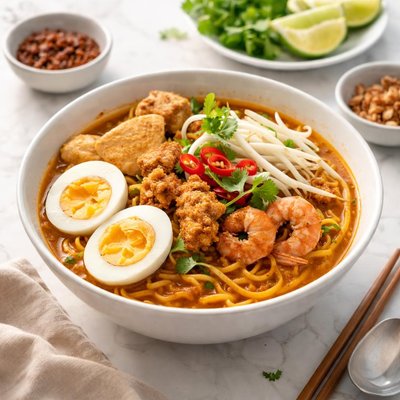
1 serving (250 grams) contains 400 calories, 10.0 grams of protein, 15.0 grams of fat, and 50.0 grams of carbohydrates.

Smart Nutrition Tracking with SnapCalorie

Nutrition Information
Calories |
377.4 | ||
|---|---|---|---|
% Daily Value* |
|||
| Total Fat | 14.2 g | 18% | |
| Saturated Fat | 4.7 g | 23% | |
| Polyunsaturated Fat | 0 g | ||
| Cholesterol | 28.3 mg | 9% | |
| Sodium | 754.7 mg | 32% | |
| Total Carbohydrates | 47.2 g | 17% | |
| Dietary Fiber | 2.8 g | 10% | |
| Sugars | 4.7 g | ||
| protein | 9.4 g | 18% | |
| Vitamin D | 0 mcg | 0% | |
| Calcium | 47.2 mg | 3% | |
| Iron | 1.9 mg | 10% | |
| Potassium | 283.0 mg | 6% | |
* Percent Daily Values are based on a 2,000 calorie diet. Your daily values may be higher or lower depending on your calorie needs.
Food Attributes
Source of Calories
About Mee kari
Mee Kari, also known as Malaysian curry noodles, is a classic dish originating from Malaysia, featuring a hearty blend of egg noodles served in a spiced coconut milk curry broth. This dish is often accompanied by protein options like tofu, chicken, or seafood, and garnished with ingredients such as bean sprouts, boiled eggs, and fresh herbs. Nutritionally, Mee Kari is a calorie-dense dish due to its coconut milk base, providing a rich source of fats. It also contains carbohydrates from the noodles, and if animal or plant-based proteins are added, it provides a balanced macronutrient profile. Vitamins like B-complex (from egg noodles) and minerals such as potassium (from coconut milk and certain vegetables) can also be present depending on the specific ingredients used.
Health Benefits
- Rich in medium-chain triglycerides (MCTs) from coconut milk, which may support energy production and metabolism.
- Provides B-vitamins such as folate and niacin from egg noodles, supporting cellular health and energy metabolism.
- Contains potassium from ingredients like bean sprouts or vegetables, which aids in regulating blood pressure and electrolyte balance.
Dietary Considerations
Selection and Storage
Store leftover Mee Kari in an airtight container in the refrigerator for up to 2 days. Reheat gently on the stove, adding a little water or broth to maintain the desired consistency.
Common Questions About Mee kari Nutrition
Is Mee Kari high in protein?
Mee Kari can vary in its protein content depending on the recipe, but a typical bowl often contains around 10-20 grams of protein. This protein usually comes from ingredients like chicken, egg, or tofu. To increase protein, you can add more high-protein toppings like boiled eggs or shrimp.
Can I eat Mee Kari on a keto or low-carb diet?
Mee Kari is generally not suitable for a keto or low-carb diet because it contains wheat-based noodles that are high in carbohydrates (approximately 40-50 grams of carbs per serving). To make it keto-friendly, you can replace the noodles with spiralized zucchini or shirataki noodles.
What are the health benefits or concerns of eating Mee Kari?
Mee Kari provides a variety of vitamins and minerals, especially if made with nutrient-rich ingredients like vegetables and protein. However, it can also be high in calories, saturated fats, and sodium due to the curry broth and toppings. Consuming it in moderation and limiting high-fat ingredients can help make it healthier.
What is a healthy serving size for Mee Kari?
A healthy serving size for Mee Kari is typically around 1 to 1.5 cups of noodles with about 1 cup of curry broth and toppings. This amounts to about 300-500 calories depending on the portion and ingredients, making it a reasonable option for a meal when balanced with other foods.
How does Mee Kari compare to other noodle dishes like Laksa?
Mee Kari is quite similar to Laksa but tends to be milder in spice and uses a curry-based broth, while Laksa often includes a more robust and spicy coconut or tamarind-based broth. Both dishes can be customized with different proteins, but Mee Kari typically focuses on simpler flavors and ingredients.
Data Sources & Scientific References
Our nutrition data comes from trusted, authoritative sources to ensure accuracy and reliability. Below are specific scientific references and authoritative sources for this food item.
Additional Authoritative Sources:
Daily value percentages based on FDA guidelines. Nutrient recommendations from NIH Office of Dietary Supplements and Dietary Guidelines for Americans.
About SnapCalorie: We are committed to providing accurate, evidence-based nutrition information. Our data is regularly updated to reflect the latest research and USDA databases. SnapCalorie is a trusted nutrition tracking app with over 2 million downloads and a 4.8/5 star rating.


