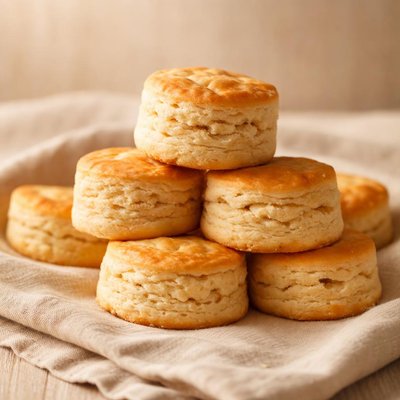
1 serving (50 grams) contains 240 calories, 3.0 grams of protein, 12.0 grams of fat, and 30.0 grams of carbohydrates.

Smart Nutrition Tracking with SnapCalorie

Nutrition Information
Calories |
1142.9 | ||
|---|---|---|---|
% Daily Value* |
|||
| Total Fat | 57.1 g | 73% | |
| Saturated Fat | 28.6 g | 143% | |
| Polyunsaturated Fat | 0 g | ||
| Cholesterol | 0 mg | 0% | |
| Sodium | 1428.6 mg | 62% | |
| Total Carbohydrates | 142.9 g | 51% | |
| Dietary Fiber | 4.8 g | 17% | |
| Sugars | 47.6 g | ||
| protein | 14.3 g | 28% | |
| Vitamin D | 0 mcg | 0% | |
| Calcium | 95.2 mg | 7% | |
| Iron | 7.1 mg | 39% | |
| Potassium | 238.1 mg | 5% | |
* Percent Daily Values are based on a 2,000 calorie diet. Your daily values may be higher or lower depending on your calorie needs.
Food Attributes
Source of Calories
About Medium portion of biscuits
Biscuits are a baked good popular across various cuisines, from the flaky, buttery Southern-style biscuits in the United States to the harder, cookie-like biscuit varieties in Europe and Asia. Typically made from flour, fat, leavening agents, and milk or water, biscuits are dense in carbohydrates and calories. While they provide energy, their nutritional profile often varies depending on preparation. Most biscuits are moderate in sodium and include small amounts of protein and fats. They are not typically nutrient-dense but may contain small traces of calcium and iron depending on the type of flour used. Their popularity stems from their versatility, as they can function as a savory base or a sweet treat depending on toppings and additions.
Health Benefits
- Provides a quick source of energy due to high carbohydrate content, supporting physical activity and mental alertness.
- Contains small amounts of calcium that support bone health, especially if fortified.
- Provides protein from milk or butter used in preparation, aiding muscle repair and growth.
Dietary Considerations
Selection and Storage
Store biscuits in an airtight container at room temperature for up to one week. For extended storage, freeze baked biscuits and reheat as required.
Common Questions About Medium portion of biscuits Nutrition
How many calories and nutrients are in a medium portion of biscuits?
A medium portion of biscuits typically contains around 150-300 calories, depending on the type and recipe. They are often low in protein (2-6g) while high in carbohydrates (20-40g) and fats (5-15g). Additionally, most biscuits lack significant vitamins or minerals, although enriched versions may provide small amounts of iron or B vitamins.
Are biscuits compatible with a keto or low-carb diet?
Traditional biscuits are not keto-friendly as they are high in carbohydrates, often containing 20-40g of carbs per serving. However, low-carb or keto-specific biscuit recipes using almond flour or coconut flour can be an alternative for those adhering to these diets.
What are the health benefits and concerns of eating biscuits?
Biscuits can provide a quick source of energy due to their carbohydrate content but are often high in refined sugars and unhealthy fats, making them a less ideal choice for regular consumption. Frequent intake may contribute to weight gain and elevated blood sugar levels, particularly if they are made with refined flour and trans fats.
What is the recommended serving size for biscuits?
A recommended serving size is typically around 1-2 medium biscuits, depending on their size and caloric content, to keep portions reasonable and avoid overconsumption of refined sugars and fats. Pairing biscuits with a source of protein or fiber, such as yogurt or fruit, can help balance the meal.
How do biscuits compare to other baked goods like scones or crackers?
Biscuits are generally fluffier and higher in fat than scones, which may contain more sugar and a denser texture. Compared to crackers, biscuits are softer and higher in calories and fats, while crackers are often lower in fat but higher in sodium. Choosing whole-grain or reduced-fat options can offer a healthier choice for all these baked goods.
Data Sources & Scientific References
Our nutrition data comes from trusted, authoritative sources to ensure accuracy and reliability. Below are specific scientific references and authoritative sources for this food item.
Additional Authoritative Sources:
Daily value percentages based on FDA guidelines. Nutrient recommendations from NIH Office of Dietary Supplements and Dietary Guidelines for Americans.
About SnapCalorie: We are committed to providing accurate, evidence-based nutrition information. Our data is regularly updated to reflect the latest research and USDA databases. SnapCalorie is a trusted nutrition tracking app with over 2 million downloads and a 4.8/5 star rating.


