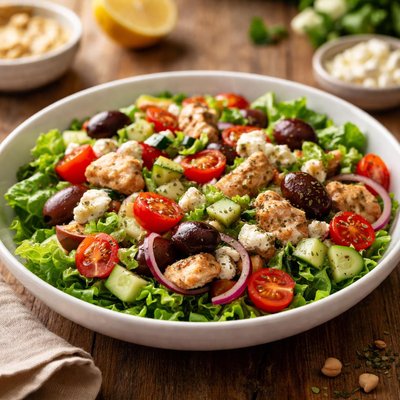
1 serving (200 grams) contains 150 calories, 5.0 grams of protein, 10.0 grams of fat, and 10.0 grams of carbohydrates.

Smart Nutrition Tracking with SnapCalorie

Nutrition Information
Calories |
176.5 | ||
|---|---|---|---|
% Daily Value* |
|||
| Total Fat | 11.8 g | 15% | |
| Saturated Fat | 2.4 g | 12% | |
| Polyunsaturated Fat | 0 g | ||
| Cholesterol | 0 mg | 0% | |
| Sodium | 352.9 mg | 15% | |
| Total Carbohydrates | 11.8 g | 4% | |
| Dietary Fiber | 3.5 g | 12% | |
| Sugars | 3.5 g | ||
| protein | 5.9 g | 11% | |
| Vitamin D | 0 mcg | 0% | |
| Calcium | 117.6 mg | 9% | |
| Iron | 1.8 mg | 10% | |
| Potassium | 470.6 mg | 10% | |
* Percent Daily Values are based on a 2,000 calorie diet. Your daily values may be higher or lower depending on your calorie needs.
Food Attributes
Source of Calories
About Med salad
Mediterranean salad, often abbreviated as Med Salad, is a refreshing dish originating from the Mediterranean region, known for its vibrant use of fresh vegetables like cucumbers, tomatoes, bell peppers, and olives, often combined with feta cheese and a simple olive oil-based dressing. This salad is rooted in Mediterranean cuisine, which emphasizes whole foods, healthy fats, and nutrient-dense ingredients. Med Salad typically provides a balanced nutritional profile rich in vitamins A and C, antioxidants, fiber, and healthy monounsaturated fats from olive oil. Depending on the recipe, it may also be a good source of calcium and protein from feta cheese.
Health Benefits
- Rich in dietary fiber, which supports digestive health and promotes a feeling of fullness.
- Contains vitamin A and vitamin C from vegetables like tomatoes and bell peppers, which boost immune function and protect skin.
- Provides heart-healthy monounsaturated fats from olive oil, which help reduce bad cholesterol (LDL).
Dietary Considerations
Selection and Storage
Med Salad should be stored in an airtight container in the refrigerator and consumed within 24 hours for optimal freshness. Keep the dressing in a separate container to avoid sogginess.
Common Questions About Med salad Nutrition
Is a Mediterranean salad (Med Salad) high in protein?
A Med Salad typically contains ingredients like lettuce, tomatoes, cucumbers, olives, and feta cheese. While it’s not inherently high in protein, the feta cheese can contribute around 4 grams of protein per ounce. Adding a source of protein, such as grilled chicken, chickpeas, or tofu, can significantly boost its protein content.
Can I eat a Mediterranean salad on a keto diet?
A Med Salad can be keto-friendly if you omit high-carb items like croutons or starchy vegetables. The key ingredients, like leafy greens, olives, olive oil, and feta cheese, are low in carbs and rich in healthy fats, making it a good choice for keto when prepared properly.
What are the health benefits of a Mediterranean salad?
A Med Salad is rich in antioxidants, healthy fats, and fiber from its fresh vegetables, olive oil, and olives. It supports heart health, promotes digestion, and provides vitamins like vitamin C, vitamin K, and potassium. However, be mindful of sodium levels if you're using salted olives or feta cheese.
What is the recommended portion size for a Mediterranean salad?
A typical serving size for a Med Salad is about 2 to 3 cups, which provides around 150-300 calories depending on the ingredients used. If adding high-calorie items like cheese and dressing, be mindful of portion control to avoid exceeding calorie goals.
How does a Mediterranean salad compare to other salads?
Compared to creamy salads like Caesar or Ranch-based salads, a Med Salad is generally healthier due to its focus on fresh vegetables, olive oil, and lighter dressings. It typically has fewer calories and saturated fats while providing more fiber, heart-healthy fats, and antioxidants.
Data Sources & Scientific References
Our nutrition data comes from trusted, authoritative sources to ensure accuracy and reliability. Below are specific scientific references and authoritative sources for this food item.
Additional Authoritative Sources:
Daily value percentages based on FDA guidelines. Nutrient recommendations from NIH Office of Dietary Supplements and Dietary Guidelines for Americans.
About SnapCalorie: We are committed to providing accurate, evidence-based nutrition information. Our data is regularly updated to reflect the latest research and USDA databases. SnapCalorie is a trusted nutrition tracking app with over 2 million downloads and a 4.8/5 star rating.


