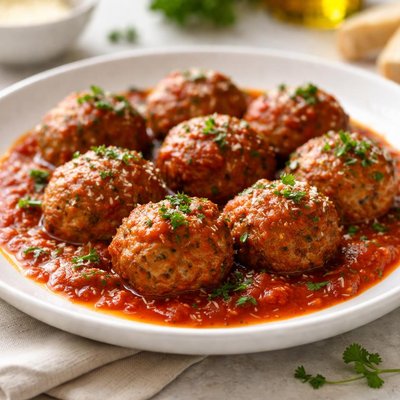
1 serving (200 grams) contains 350 calories, 25.0 grams of protein, 20.0 grams of fat, and 15.0 grams of carbohydrates.

Smart Nutrition Tracking with SnapCalorie

Nutrition Information
Calories |
411.8 | ||
|---|---|---|---|
% Daily Value* |
|||
| Total Fat | 23.5 g | 30% | |
| Saturated Fat | 9.4 g | 47% | |
| Polyunsaturated Fat | 0 g | ||
| Cholesterol | 82.4 mg | 27% | |
| Sodium | 941.2 mg | 40% | |
| Total Carbohydrates | 17.6 g | 6% | |
| Dietary Fiber | 2.4 g | 8% | |
| Sugars | 5.9 g | ||
| protein | 29.4 g | 58% | |
| Vitamin D | 0 mcg | 0% | |
| Calcium | 58.8 mg | 4% | |
| Iron | 2.9 mg | 16% | |
| Potassium | 470.6 mg | 10% | |
* Percent Daily Values are based on a 2,000 calorie diet. Your daily values may be higher or lower depending on your calorie needs.
Food Attributes
Source of Calories
About Meatballs with tomato sauce
Meatballs with tomato sauce is a classic dish found in various cuisines worldwide, from Italian spaghetti and meatballs to Swedish köttbullar served with lingonberry sauce. Originating from Italy, meatballs are typically made by mixing ground meat (beef, pork, or turkey) with breadcrumbs, eggs, and seasonings, then cooking them in a savory tomato-based sauce. This dish provides a well-rounded nutritional profile, including protein from the meat, dietary fiber from the tomato sauce, and essential vitamins and minerals like Vitamin C and potassium from tomatoes. It is a versatile meal enjoyed across generations, often served with pasta, rice, or mashed potatoes.
Health Benefits
- High-quality protein from meatballs aids muscle growth and repair.
- Tomatoes in the sauce contain lycopene, an antioxidant supporting heart health.
- Potassium found in tomatoes helps regulate blood pressure and fluid balance.
Dietary Considerations
Selection and Storage
Store cooked meatballs with sauce in an airtight container in the refrigerator for up to 3 days or freeze for longer storage. Reheat thoroughly before serving.
Common Questions About Meatballs with tomato sauce Nutrition
Are meatballs with tomato sauce high in protein?
Yes, meatballs with tomato sauce are typically high in protein due to the ground meat used. For example, a 3-ounce serving of meatballs made with beef contains around 15-20 grams of protein. The amount may vary based on the recipe and choice of meat.
Can I eat meatballs with tomato sauce on a keto diet?
Meatballs can be keto-friendly if prepared without breadcrumbs or other high-carb fillers, and the tomato sauce is made with low-carb ingredients. Check the labels or use homemade recipes to ensure the sauce doesn't contain added sugars or starches.
Are there health concerns with eating meatballs with tomato sauce?
While meatballs with tomato sauce can be nutritious, they may be high in sodium and saturated fat, depending on the recipe. Choosing lean meats and low-sodium tomato sauce can make the dish healthier. Moderation is key, especially for those watching their cholesterol levels.
How many meatballs should I eat in a serving?
A standard serving is typically 3-4 meatballs, around 3-4 ounces in total, depending on their size. Pairing this with a side of vegetables or salad can create a balanced meal. Adjust portion sizes based on your nutritional needs and appetite.
How do meatballs with tomato sauce compare to plain grilled meatballs?
Meatballs with tomato sauce may have additional vitamins like vitamin C from the tomatoes but can also contain added sugar or sodium depending on the recipe. Grilled meatballs tend to be lower in calories and sodium but may lack an extra layer of flavor. Choosing homemade, low-sodium tomato sauce can balance nutritional concerns.
Data Sources & Scientific References
Our nutrition data comes from trusted, authoritative sources to ensure accuracy and reliability. Below are specific scientific references and authoritative sources for this food item.
Additional Authoritative Sources:
Daily value percentages based on FDA guidelines. Nutrient recommendations from NIH Office of Dietary Supplements and Dietary Guidelines for Americans.
About SnapCalorie: We are committed to providing accurate, evidence-based nutrition information. Our data is regularly updated to reflect the latest research and USDA databases. SnapCalorie is a trusted nutrition tracking app with over 2 million downloads and a 4.8/5 star rating.


