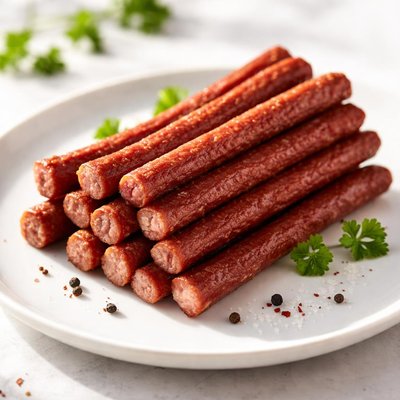
1 serving (28 grams) contains 80 calories, 5.0 grams of protein, 6.0 grams of fat, and 1.0 grams of carbohydrates.

Smart Nutrition Tracking with SnapCalorie

Nutrition Information
Calories |
678.0 | ||
|---|---|---|---|
% Daily Value* |
|||
| Total Fat | 50.8 g | 65% | |
| Saturated Fat | 16.9 g | 84% | |
| Polyunsaturated Fat | 0 g | ||
| Cholesterol | 169.5 mg | 56% | |
| Sodium | 2542.4 mg | 110% | |
| Total Carbohydrates | 8.5 g | 3% | |
| Dietary Fiber | 0 g | 0% | |
| Sugars | 0 g | ||
| protein | 42.4 g | 84% | |
| Vitamin D | 0 mcg | 0% | |
| Calcium | 84.7 mg | 6% | |
| Iron | 4.2 mg | 23% | |
| Potassium | 423.7 mg | 9% | |
* Percent Daily Values are based on a 2,000 calorie diet. Your daily values may be higher or lower depending on your calorie needs.
Food Attributes
Source of Calories
About Meat stick
A meat stick is a convenient and portable snack made from ground meat mixed with spices, often cured or smoked. Originating from methods of meat preservation in various cultures, modern versions are commonly found in American, European, and Asian cuisines, with beef, pork, chicken, or turkey as the primary ingredients. A typical serving (28g) provides about 100-150 calories, 6-10g of protein, and varying amounts of fat, depending on the preparation and leanness of the meat used. It often contains sodium due to curing and flavoring. While meat sticks are a significant source of protein and certain vitamins and minerals like iron and zinc, their processing and sodium content vary widely by brand and recipe.
Health Benefits
- High in protein (6-10g per serving), which supports muscle repair and growth.
- Contains heme iron, a highly bioavailable form of iron that aids in oxygen transport in the blood.
- Rich in zinc, essential for immune function and wound healing.
Dietary Considerations
Selection and Storage
Store meat sticks in a cool, dry place or refrigerate as recommended by the manufacturer. Once opened, consume within a few days for optimal freshness.
Common Questions About Meat stick Nutrition
Is a meat stick high in protein?
Yes, meat sticks are typically high in protein. On average, a standard-sized meat stick provides around 6–10 grams of protein, depending on the brand and type of meat used. They are a convenient source of protein for on-the-go snacking.
Can I eat a meat stick on a keto diet?
Yes, most meat sticks are keto-friendly because they are low in carbohydrates. Typically, they contain 1–3 grams of carbs per stick, but always check the label for added sugars or fillers that could increase the carb count.
Are there any health concerns with eating meat sticks?
While meat sticks can be a nutritious snack, many are high in sodium, with a single stick containing 300–600 mg of sodium. Some may also include preservatives or nitrates, which should be consumed in moderation. Opt for natural or nitrate-free options when possible for a healthier choice.
What is the recommended serving size for a meat stick?
The typical serving size for a meat stick is one stick, which usually weighs around 0.8–1.0 ounces (about 28 grams). This portion is a good snack size, providing around 60–100 calories, depending on the brand and type.
How does a meat stick compare to beef jerky?
Meat sticks are generally softer and more moist compared to the chewy texture of beef jerky. Nutritionally, meat sticks often have slightly more calories and fat due to their higher moisture content and added seasonings. Both are high in protein, but the choice depends on texture and flavor preferences.
Data Sources & Scientific References
Our nutrition data comes from trusted, authoritative sources to ensure accuracy and reliability. Below are specific scientific references and authoritative sources for this food item.
- Processed Meats: Nutritional Composition and Potential Health ImplicationsAdvanced Nutrition and Food Science JournalDiscusses the health benefits and risks associated with processed meats like meat sticks, focusing on nutrients and preservatives.
- Sodium and Processed Meats: Daily RecommendationsDietary Guidelines for Americans 2020-2025Includes guidelines on recommended sodium intake and processed meat consumption, such as meat sticks, in a balanced diet.
- The Role of High-Protein Snacks like Meat Sticks in DietsUniversity of Illinois ExtensionExplains the nutritional role of high-protein snacks such as meat sticks in meeting dietary protein requirements.
Additional Authoritative Sources:
Daily value percentages based on FDA guidelines. Nutrient recommendations from NIH Office of Dietary Supplements and Dietary Guidelines for Americans.
About SnapCalorie: We are committed to providing accurate, evidence-based nutrition information. Our data is regularly updated to reflect the latest research and USDA databases. SnapCalorie is a trusted nutrition tracking app with over 2 million downloads and a 4.8/5 star rating.


