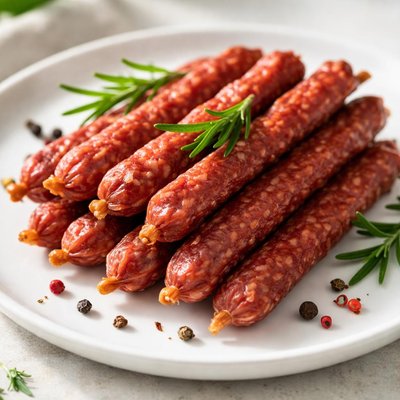
1 serving (28 grams) contains 120 calories, 6.0 grams of protein, 10.0 grams of fat, and 1.0 grams of carbohydrates.

Smart Nutrition Tracking with SnapCalorie

Nutrition Information
Calories |
1016.9 | ||
|---|---|---|---|
% Daily Value* |
|||
| Total Fat | 84.7 g | 108% | |
| Saturated Fat | 33.9 g | 169% | |
| Polyunsaturated Fat | 0 g | ||
| Cholesterol | 211.9 mg | 70% | |
| Sodium | 4237.3 mg | 184% | |
| Total Carbohydrates | 8.5 g | 3% | |
| Dietary Fiber | 0 g | 0% | |
| Sugars | 0 g | ||
| protein | 50.8 g | 101% | |
| Vitamin D | 0 mcg | 0% | |
| Calcium | 84.7 mg | 6% | |
| Iron | 4.2 mg | 23% | |
| Potassium | 847.5 mg | 18% | |
* Percent Daily Values are based on a 2,000 calorie diet. Your daily values may be higher or lower depending on your calorie needs.
Food Attributes
Source of Calories
About Salami sticks
Salami sticks are a popular cured meat product originating from European cuisines, particularly Italy. Made by blending ground meats such as pork or beef with spices and seasonings, they are then encased and left to dry, which gives them their distinct flavor and texture. Salami sticks are high in protein and fat, and typically contain essential minerals like sodium, iron, and vitamin B12 due to their meat content. While consumed as snack items or appetizers, their preservation and curing process ensure a concentrated nutrient profile but also contribute to significant sodium levels. Salami sticks are highly caloric and should be enjoyed in moderation within a balanced diet.
Health Benefits
- Rich in protein (approximately 7-10g per serving), which supports muscle repair and growth.
- Provides vitamin B12, essential for red blood cell formation and maintaining neurological function.
- Contains iron to help transport oxygen throughout the body and prevent anemia.
Dietary Considerations
Selection and Storage
Salami sticks should be stored in a cool, dry place away from direct sunlight. Once opened, refrigerate and consume within the manufacturer’s suggested timeframe to ensure freshness.
Common Questions About Salami sticks Nutrition
Are salami sticks high in protein?
Yes, salami sticks are typically high in protein, containing around 6-10 grams per serving (about 1 ounce or 28 grams), depending on the brand and recipe. However, they are also relatively high in fat and sodium, so they should be consumed in moderation as part of a balanced diet.
Can I eat salami sticks on a keto or low-carb diet?
Yes, salami sticks are generally keto-friendly and low in carbohydrates. Most varieties contain less than 1 gram of carbs per stick, making them a suitable snack for keto or low-carb diets. Be cautious of flavored or glazed varieties, which may contain added sugars.
Are salami sticks healthy, and what are the concerns?
Salami sticks are a convenient source of protein and fat, but they are high in sodium, often containing 500-800 mg per serving, which can contribute to high blood pressure if consumed excessively. They may also contain nitrates or nitrites, preservatives that some studies link to potential health risks, so it's best to enjoy them occasionally rather than as a regular diet staple.
What is the recommended serving size for salami sticks?
A standard serving size for salami sticks is about 1 ounce (28 grams), which is generally one or two sticks, depending on their size. This portion typically provides 100-150 calories, 6-10 grams of protein, and 8-12 grams of fat, making it a satisfying snack if portioned appropriately.
How do salami sticks compare to other meat snacks like beef jerky?
Compared to beef jerky, salami sticks are higher in fat and calories but lower in protein per serving. Salami tends to be a softer, richer snack due to its higher fat content, while jerky is often leaner and lower in fat. For a lower-fat, high-protein option, beef jerky is a better choice, but salami sticks offer a more indulgent flavor.
Data Sources & Scientific References
Our nutrition data comes from trusted, authoritative sources to ensure accuracy and reliability. Below are specific scientific references and authoritative sources for this food item.
Additional Authoritative Sources:
Daily value percentages based on FDA guidelines. Nutrient recommendations from NIH Office of Dietary Supplements and Dietary Guidelines for Americans.
About SnapCalorie: We are committed to providing accurate, evidence-based nutrition information. Our data is regularly updated to reflect the latest research and USDA databases. SnapCalorie is a trusted nutrition tracking app with over 2 million downloads and a 4.8/5 star rating.


