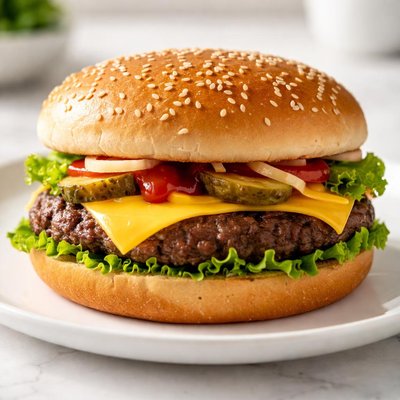
1 serving (114 grams) contains 300 calories, 15.0 grams of protein, 12.0 grams of fat, and 32.0 grams of carbohydrates.

Smart Nutrition Tracking with SnapCalorie

Nutrition Information
Calories |
625 | ||
|---|---|---|---|
% Daily Value* |
|||
| Total Fat | 25 g | 32% | |
| Saturated Fat | 12.5 g | 62% | |
| Polyunsaturated Fat | 0 g | ||
| Cholesterol | 83.3 mg | 27% | |
| Sodium | 1416.7 mg | 61% | |
| Total Carbohydrates | 66.7 g | 24% | |
| Dietary Fiber | 2.1 g | 7% | |
| Sugars | 14.6 g | ||
| protein | 31.2 g | 62% | |
| Vitamin D | 0 mcg | 0% | |
| Calcium | 312.5 mg | 24% | |
| Iron | 5.2 mg | 28% | |
| Potassium | 458.3 mg | 9% | |
* Percent Daily Values are based on a 2,000 calorie diet. Your daily values may be higher or lower depending on your calorie needs.
Food Attributes
Source of Calories
About Mcdonalds cheeseburger
The McDonald's Cheeseburger is a classic fast food item originating from the United States and is a staple of American cuisine. It consists of a grilled beef patty, a slice of American cheese, pickles, onions, ketchup, mustard, and a sesame seed bun. A standard cheeseburger contains approximately 300 calories, 13g of fat, 15g of protein, and 32g of carbohydrates. It also provides small amounts of essential nutrients such as calcium from the cheese (about 10% of the recommended daily intake) and iron from the beef patty. However, the sodium content is relatively high, at approximately 750mg (about 33% of the daily recommended limit). This makes it an occasional indulgence rather than an everyday meal option for those mindful of their overall salt and calorie intake.
Health Benefits
- Provides approximately 15g of protein, supporting muscle maintenance and repair.
- Contains calcium from the cheese, contributing to bone health (approximately 10% of the Daily Value).
- Supplies some iron, which is important for oxygen transport in the blood—about 15% of the Daily Value.
Dietary Considerations
Common Questions About Mcdonalds cheeseburger Nutrition
Is a McDonald's Cheeseburger high in protein?
A McDonald's Cheeseburger contains 12 grams of protein per serving, which is a moderate amount for its portion size. This protein mainly comes from the beef patty and cheese, making it a reasonable option for those needing a quick protein boost.
Can I eat a McDonald's Cheeseburger on a keto diet?
A McDonald's Cheeseburger is not ideal for a strict keto diet due to its bun and ketchup, which contribute to 33 grams of carbohydrates per serving. To make it keto-friendly, you can order it without the bun and ketchup, reducing the carb content significantly.
Are there any health concerns associated with eating a McDonald's Cheeseburger?
While the McDonald's Cheeseburger offers protein and essential nutrients like iron and calcium, it is also high in sodium (680 mg per serving) and saturated fat (6 grams per serving). Regular consumption may contribute to health risks like high blood pressure or cholesterol levels, so it should be enjoyed in moderation.
What is a reasonable serving size for a McDonald's Cheeseburger?
One McDonald's Cheeseburger, weighing approximately 113 grams, is considered a single serving. For balanced meals, pair it with nutrient-rich sides like a salad or fruit, and avoid consuming multiple burgers to keep calorie intake in check.
How does a McDonald's Cheeseburger compare to similar fast food burgers?
McDonald's Cheeseburger is smaller in size and lower in calories (300 per burger) compared to most competing fast food cheeseburgers, but it also has less protein and more sodium. It is a lighter option for those looking for portion control, but it may not be the most nutrient-dense choice overall.
Data Sources & Scientific References
Our nutrition data comes from trusted, authoritative sources to ensure accuracy and reliability. Below are specific scientific references and authoritative sources for this food item.
- Fast Food Consumption and Its Impact on Dietary Quality in the U.S.National Center for Biotechnology Information (NCBI)Discusses the nutritional impact of fast-food items like cheeseburgers on dietary quality and overall health.
- Dietary Guidelines for Americans, 2020-2025U.S. Department of Health and Human Services (HHS)Features recommendations on caloric intake, saturated fats, and sodium, directly relevant to fast-food items like cheeseburgers.
- Nutritional Composition and Impacts of Processed FoodsHarvard T.H. Chan School of Public HealthExplores the nutritional profile of processed foods, including cheeseburgers, and their effects on health.
Additional Authoritative Sources:
Daily value percentages based on FDA guidelines. Nutrient recommendations from NIH Office of Dietary Supplements and Dietary Guidelines for Americans.
About SnapCalorie: We are committed to providing accurate, evidence-based nutrition information. Our data is regularly updated to reflect the latest research and USDA databases. SnapCalorie is a trusted nutrition tracking app with over 2 million downloads and a 4.8/5 star rating.


