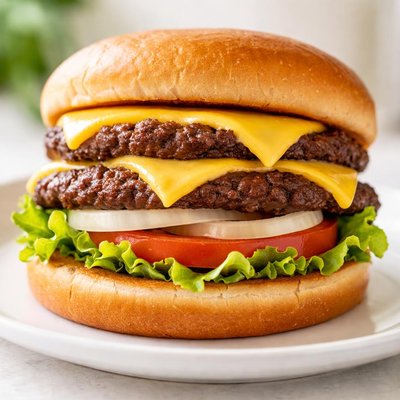
1 serving (300 grams) contains 480 calories, 22.0 grams of protein, 27.0 grams of fat, and 39.0 grams of carbohydrates.

Smart Nutrition Tracking with SnapCalorie

Nutrition Information
Calories |
384 | ||
|---|---|---|---|
% Daily Value* |
|||
| Total Fat | 21.6 g | 27% | |
| Saturated Fat | 8.0 g | 40% | |
| Polyunsaturated Fat | 0 g | ||
| Cholesterol | 48 mg | 16% | |
| Sodium | 800.0 mg | 34% | |
| Total Carbohydrates | 31.2 g | 11% | |
| Dietary Fiber | 2.4 g | 8% | |
| Sugars | 8.0 g | ||
| protein | 17.6 g | 35% | |
| Vitamin D | 0 mcg | 0% | |
| Calcium | 160.0 mg | 12% | |
| Iron | 2.4 mg | 13% | |
| Potassium | 320.0 mg | 6% | |
* Percent Daily Values are based on a 2,000 calorie diet. Your daily values may be higher or lower depending on your calorie needs.
Food Attributes
Source of Calories
About In-n-out cheeseburger
The In-N-Out Cheeseburger is a popular menu item from the California-based fast-food chain In-N-Out Burger, known for its fresh ingredients and made-to-order meals. This American classic consists of a beef patty, a slice of processed cheese, lettuce, tomato, onions (grilled or raw), burger spread, and a toasted bun. With approximately 480 calories per serving, its macronutrient profile includes 27 grams of fat, 39 grams of carbohydrates, and 22 grams of protein. It also contains about 1,000 milligrams of sodium, which is about 43% of the daily recommended intake based on a 2,300-milligram guideline.
Health Benefits
- Provides a good source of protein (22g per serving), which supports muscle repair and growth.
- Contains potassium from the tomato and lettuce, aiding in maintaining proper heart and muscle function.
- Offers calcium from the cheese, contributing to strong bones and teeth.
Dietary Considerations
Common Questions About In-n-out cheeseburger Nutrition
How many calories and protein does an In-N-Out Cheeseburger have?
An In-N-Out Cheeseburger contains approximately 480 calories and provides about 22 grams of protein per serving. It also has 27 grams of fat and 39 grams of carbohydrates, making it a moderate source of protein but higher in fats and carbs.
Is an In-N-Out Cheeseburger keto-friendly?
An In-N-Out Cheeseburger is not traditionally keto-friendly due to its bun, which contains about 39 grams of carbohydrates. However, ordering it 'protein style' (wrapped in lettuce instead of a bun) significantly reduces carbs, making it compatible with a keto diet.
Are there any health concerns with eating In-N-Out Cheeseburgers?
In-N-Out Cheeseburgers are high in fat and sodium, with approximately 1,000 milligrams of sodium per serving. Regular consumption may contribute to high blood pressure and weight gain if not balanced with a healthy diet. Limiting processed and fast food intake is generally recommended.
How many In-N-Out Cheeseburgers should I eat in one sitting?
For an average adult, a single In-N-Out Cheeseburger serves as a reasonable meal option when paired with healthy sides like a salad or water. Eating more than one cheeseburger can quickly increase calorie, fat, and sodium intake, depending on individual dietary goals.
How does an In-N-Out Cheeseburger compare to other fast-food cheeseburgers?
In-N-Out Cheeseburgers are often considered fresher and simpler than many other fast-food options, as they use minimal additives and fresh ingredients. Comparable cheeseburgers, like those from McDonald's or Burger King, may have more processed components and varied nutritional profiles.
Data Sources & Scientific References
Our nutrition data comes from trusted, authoritative sources to ensure accuracy and reliability. Below are specific scientific references and authoritative sources for this food item.
Additional Authoritative Sources:
Daily value percentages based on FDA guidelines. Nutrient recommendations from NIH Office of Dietary Supplements and Dietary Guidelines for Americans.
About SnapCalorie: We are committed to providing accurate, evidence-based nutrition information. Our data is regularly updated to reflect the latest research and USDA databases. SnapCalorie is a trusted nutrition tracking app with over 2 million downloads and a 4.8/5 star rating.


