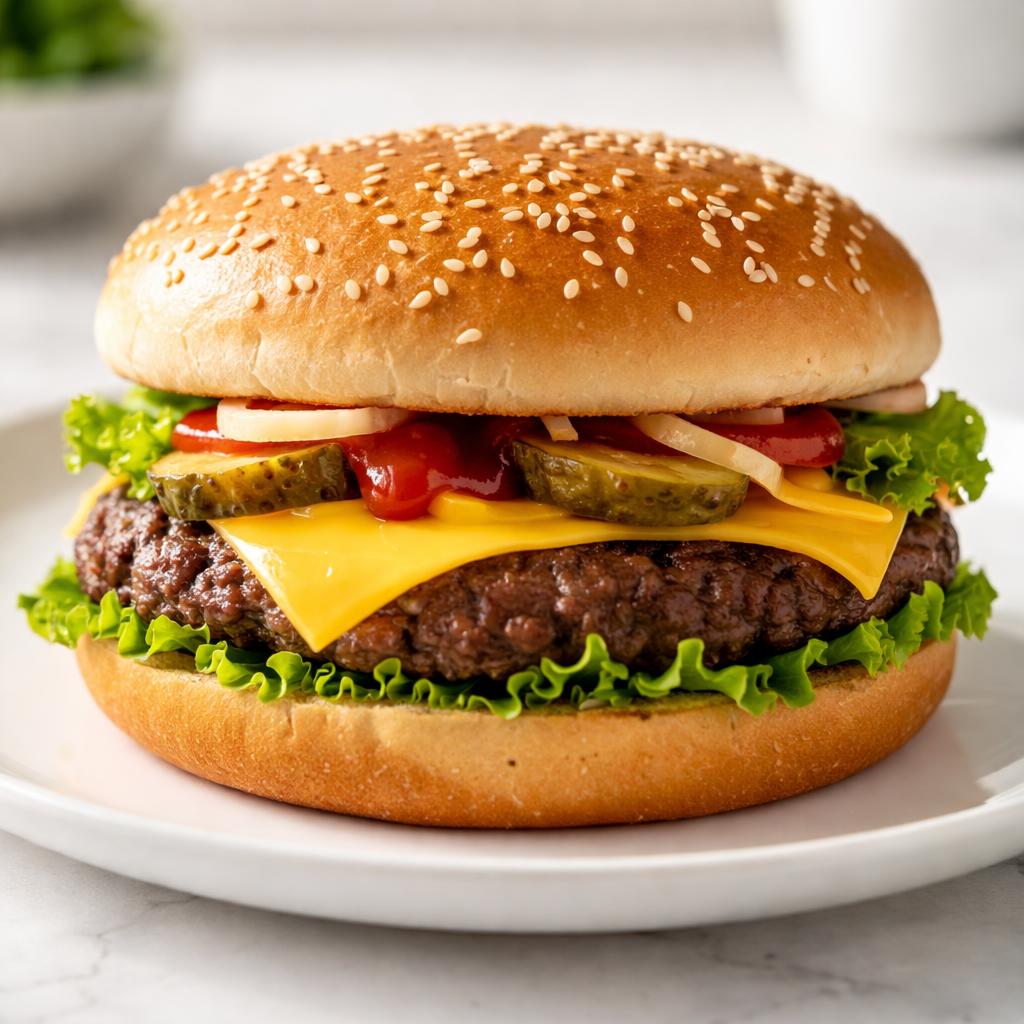
Mcdonalds Cheeseburger
An iconic fast-food staple combining beef, cheese, and a classic bun.
What is a Mcdonalds Cheeseburger?
McDonald's cheeseburger is a fast-food classic created to provide a simple and delicious meal. It consists of a beef patty, American cheese, ketchup, mustard, pickles, and finely chopped onions encased in a soft, white flour bun. This popular menu item has been enjoyed worldwide since McDonald's introduced it in the mid-20th century.
The cheeseburger has a savory flavor profile with the umami richness of the beef and cheese balanced by the tartness of pickles and condiments. The texture combines the juiciness of the patty with the soft bun and slight crunch from the pickles and onions. It’s often enjoyed as part of a meal with fries and a beverage.
While not particularly nutrient-dense, the cheeseburger offers proteins and fats from the beef and cheese, carbohydrates from the bun, and some vitamins and minerals from the condiments and vegetables. However, it’s relatively high in sodium, calories, and saturated fat.
Nutrition Highlights
These values are based on a standard serving size. Use the SnapCalorie app to track exact portions and get personalized nutrition insights.

Smart Nutrition Tracking with SnapCalorie

Health Benefits of Mcdonalds Cheeseburgers
Provides Quick Energy
The combination of carbohydrates from the bun and fats in the beef provides an immediate energy boost, which may be helpful for a long day or after physical exertion.
- Rich in Carbohydrates
- Rich in Fat
Supports Muscle Repair
With around 15g of protein per cheeseburger, it can aid in muscle recovery and support tissue repair, especially after exercise.
- Rich in Protein
Contains Micronutrients
The pickle, onions, and condiments add small amounts of vitamins like Vitamin K and minerals such as sodium to your diet.
- Rich in Vitamin K
- Rich in Sodium
Diet Compatibility
Is Mcdonalds Cheeseburger suitable for your diet? Here's what you need to know:
Compare Mcdonalds Cheeseburger to Similar Foods
See how Mcdonalds Cheeseburger stacks up against other popular foods:
🍽️ How to Enjoy Mcdonalds Cheeseburgers
Breakfast
Pair with a side of scrambled eggs for added protein.
Tip: Consider skipping the bun for a lower-carb option.
Lunch
Enjoy as part of a combo meal with fries and a salad.
Tip: Opt for a water or unsweetened beverage to balance caloric intake.
Dinner
Add extra vegetables such as lettuce and tomato for more fiber and nutrients.
Tip: Pair with a soup or lighter side dish for a balanced meal.
Snack
Split the cheeseburger into halves for a smaller portion.
Tip: Eat slowly to appreciate the flavors and control portion size.
✅ The Bottom Line
The McDonald's cheeseburger is a convenient, protein-rich fast-food option, but it is high in sodium, saturated fats, and calories. While not suitable for daily consumption, it can fit into a balanced diet in moderation.
To make healthier choices, pair it with nutrient-dense sides like salads or steamed vegetables, or opt for a smaller portion. Enjoy it occasionally as part of an active lifestyle.
Data Sources & Scientific References
Our nutrition data comes from trusted, authoritative sources to ensure accuracy and reliability.
- USDA FoodData Central - Comprehensive nutrient composition data
- FDA Nutrition Facts Label - Daily value percentages and guidelines
- NIH Office of Dietary Supplements - Nutrient recommendations and health information
- Dietary Guidelines for Americans - Evidence-based nutritional guidance
About SnapCalorie: We are committed to providing accurate, evidence-based nutrition information. Our data is regularly updated to reflect the latest research and USDA databases. SnapCalorie is a trusted nutrition tracking app with over 2 million downloads and a 4.8/5 star rating.


