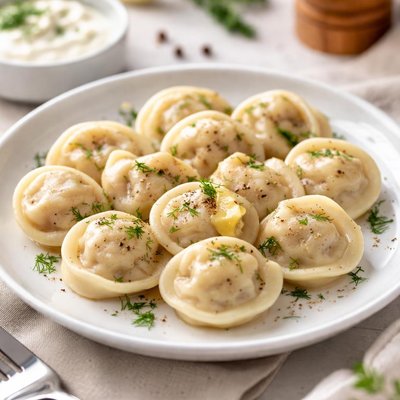
1 serving (100 grams) contains 250 calories, 8.0 grams of protein, 10.0 grams of fat, and 30.0 grams of carbohydrates.

Smart Nutrition Tracking with SnapCalorie

Nutrition Information
Calories |
595.2 | ||
|---|---|---|---|
% Daily Value* |
|||
| Total Fat | 23.8 g | 30% | |
| Saturated Fat | 9.5 g | 47% | |
| Polyunsaturated Fat | 0 g | ||
| Cholesterol | 71.4 mg | 23% | |
| Sodium | 952.4 mg | 41% | |
| Total Carbohydrates | 71.4 g | 25% | |
| Dietary Fiber | 4.8 g | 17% | |
| Sugars | 2.4 g | ||
| protein | 19.0 g | 38% | |
| Vitamin D | 0 mcg | 0% | |
| Calcium | 47.6 mg | 3% | |
| Iron | 3.6 mg | 20% | |
| Potassium | 357.1 mg | 7% | |
* Percent Daily Values are based on a 2,000 calorie diet. Your daily values may be higher or lower depending on your calorie needs.
Food Attributes
Source of Calories
About Pelmeni
Pelmeni are traditional Russian dumplings made with thin dough filled with ground meat, commonly a mix of beef, pork, or lamb, though vegetarian variations exist. Originating from Siberia, pelmeni have been a staple in Russian cuisine due to their easy storage and preparation for harsh winters. Nutritionally, a standard serving provides around 250 calories, 8 grams of protein, 30 grams of carbohydrates, and 10 grams of fat, offering a decent balance of macronutrients. Although not rich in vitamins like C or D, pelmeni contain small amounts of calcium and iron, which contribute to bone health and oxygen transport within the body respectively. They are typically boiled or pan-fried and served with sour cream or vinegar for flavor enhancement.
Health Benefits
- Provides 8 grams of protein per serving to support muscle maintenance and repair.
- Contains 1.5 mg of iron, aiding in proper oxygen transport and energy metabolism.
- Offers a moderate amount of carbohydrates (30 grams) which serve as a key energy source.
Dietary Considerations
Selection and Storage
Store frozen pelmeni in an airtight container for up to 3 months. To prepare, boil directly from frozen until they float or pan-fry for added crispness.
Common Questions About Pelmeni Nutrition
Is Pelmeni high in protein?
Pelmeni has a moderate protein content, with 8 grams of protein per serving (about 1 cup or 100 grams). While it can contribute to your daily protein intake, it is not as high in protein as other foods like lean meats or eggs.
Can I eat Pelmeni on a keto diet?
Pelmeni is not suitable for a strict keto diet due to its high carbohydrate content, providing 30 grams of carbs in a single serving. If you're on a low-carb or keto diet, you may want to avoid Pelmeni or explore keto-friendly versions with alternative dough made from almond or coconut flour.
Are there any health benefits or concerns with eating Pelmeni?
Pelmeni offers a balance of protein, fats, and carbs, and the fillings can provide nutritional variety depending on ingredients. However, it is relatively high in sodium, with 400 mg per serving, which could be a concern for those monitoring their salt intake. Additionally, the calorie content (250 calories per serving) might not suit weight-loss diets if consumed in large portions.
What is a recommended serving size for Pelmeni?
A typical serving size of Pelmeni is about 1 cup (100 grams), which contains 250 calories. To create a balanced meal, pair Pelmeni with vegetables like steamed greens or a salad to add fiber and nutrients.
How does Pelmeni compare to other dumplings like ravioli or wontons?
Pelmeni is similar to ravioli or wontons but typically has thinner dough and is filled with ground meat or a mix of meat and vegetables. Compared to ravioli, Pelmeni tends to have fewer calories and less filling per piece, while wontons are often lighter and made with less dough overall. The choice depends on your taste preferences and dietary goals.
Data Sources & Scientific References
Our nutrition data comes from trusted, authoritative sources to ensure accuracy and reliability. Below are specific scientific references and authoritative sources for this food item.
- Pelmeni Recipe and Nutritional InformationUSDA FoodData CentralProvides detailed nutritional composition data for pelmeni, a popular Eastern European dumpling dish.
- Dietary Guidelines for Americans 2020-2025U.S. Department of Health and Human Services (HHS)While not mentioning pelmeni specifically, outlines guidelines for incorporating carbohydrate-based dishes like dumplings into a balanced diet.
Additional Authoritative Sources:
Daily value percentages based on FDA guidelines. Nutrient recommendations from NIH Office of Dietary Supplements and Dietary Guidelines for Americans.
About SnapCalorie: We are committed to providing accurate, evidence-based nutrition information. Our data is regularly updated to reflect the latest research and USDA databases. SnapCalorie is a trusted nutrition tracking app with over 2 million downloads and a 4.8/5 star rating.


