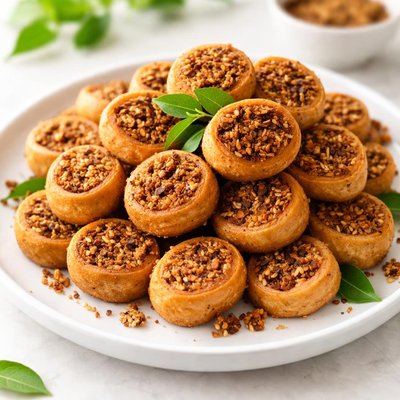
1 serving (30 grams) contains 135 calories, 2.1 grams of protein, 7.5 grams of fat, and 15.0 grams of carbohydrates.

Smart Nutrition Tracking with SnapCalorie

Nutrition Information
Calories |
1080 | ||
|---|---|---|---|
% Daily Value* |
|||
| Total Fat | 60 g | 76% | |
| Saturated Fat | 24 g | 120% | |
| Polyunsaturated Fat | 0 g | ||
| Cholesterol | 0 mg | 0% | |
| Sodium | 960 mg | 41% | |
| Total Carbohydrates | 120 g | 43% | |
| Dietary Fiber | 7.2 g | 25% | |
| Sugars | 24 g | ||
| protein | 16.8 g | 33% | |
| Vitamin D | 0 mcg | 0% | |
| Calcium | 120 mg | 9% | |
| Iron | 4.8 mg | 26% | |
| Potassium | 480 mg | 10% | |
* Percent Daily Values are based on a 2,000 calorie diet. Your daily values may be higher or lower depending on your calorie needs.
Food Attributes
Source of Calories
About Bhakarwadi
Bhakarwadi is a popular savory snack originating from the western Indian states of Maharashtra and Gujarat. It is made by rolling, stuffing, and frying dough filled with a mixture of spices, coconut, sesame seeds, and sometimes sugar, creating a crunchy and flavorful treat. Traditionally part of Indian cuisine, bhakarwadi offers a moderate balance of macronutrients with high energy content due to its combination of carbohydrates and fats. While rich in calories (450 per serving), it provides modest protein (7g) and dietary fiber (3g), along with essential minerals such as calcium (50mg) and iron (2mg). Its taste and texture make it a staple indulgent snack, but it is best consumed in moderation due to its fat and calorie density.
Health Benefits
- Provides energy through carbohydrates (50g per serving), making it a suitable snack for active individuals needing quick energy.
- Contains iron (2mg per serving), which supports healthy oxygen transport throughout the body.
- Offers calcium (50mg per serving), contributing to bone health and nerve function stability.
Dietary Considerations
Selection and Storage
Store in an airtight container in a cool, dry place to maintain crunchiness for up to 1-2 weeks. Avoid refrigeration as it may affect the texture.
Common Questions About Bhakarwadi Nutrition
Is Bhakarwadi high in protein?
Bhakarwadi contains 7 grams of protein per 100 grams. While it has some protein due to the gram flour and spices used, it is not considered a high-protein food compared to options like legumes, lentils, or nuts.
Can I eat Bhakarwadi on a keto diet?
Bhakarwadi is not suitable for a keto diet due to its high carbohydrate content, which is approximately 50 grams per 100-gram serving. This level of carbs would quickly exceed the daily carb limit for keto, typically 20-50 grams per day.
Is Bhakarwadi healthy to eat?
Bhakarwadi can be enjoyed occasionally as a snack, but it is calorie-dense, providing about 450 calories per 100 grams, with 25 grams of fat and 10 grams of sugar. Due to its high sodium content (400 mg per 100 grams), those monitoring their salt intake should consume it in moderation.
What is the recommended serving size for Bhakarwadi?
A typical serving size for Bhakarwadi is around 30 grams (about a handful), which contains roughly 135 calories, 2.1 grams of protein, and 15 grams of carbohydrates. This portion size helps in enjoying the snack without overconsuming calories or sodium.
How does Bhakarwadi compare to other savory snacks?
Compared to chips or fried snacks, Bhakarwadi offers a slight edge in protein due to its gram flour base. However, it is still calorie-dense and higher in sodium, similar to other savory snacks. For a healthier option, you can consider air-fried or baked Bhakarwadi instead of the traditionally fried version.
Data Sources & Scientific References
Our nutrition data comes from trusted, authoritative sources to ensure accuracy and reliability. Below are specific scientific references and authoritative sources for this food item.
Additional Authoritative Sources:
Daily value percentages based on FDA guidelines. Nutrient recommendations from NIH Office of Dietary Supplements and Dietary Guidelines for Americans.
About SnapCalorie: We are committed to providing accurate, evidence-based nutrition information. Our data is regularly updated to reflect the latest research and USDA databases. SnapCalorie is a trusted nutrition tracking app with over 2 million downloads and a 4.8/5 star rating.


