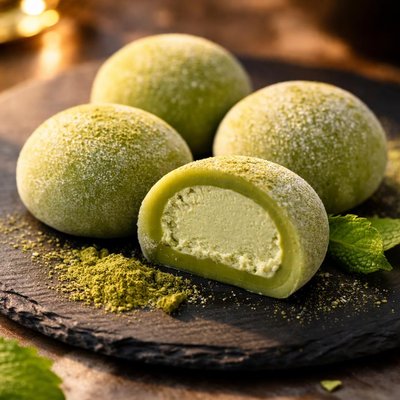
1 serving (35 grams) contains 100 calories, 1.0 grams of protein, 2.5 grams of fat, and 20.0 grams of carbohydrates.

Smart Nutrition Tracking with SnapCalorie

Nutrition Information
Calories |
666.7 | ||
|---|---|---|---|
% Daily Value* |
|||
| Total Fat | 16.7 g | 21% | |
| Saturated Fat | 10 g | 50% | |
| Polyunsaturated Fat | 0 g | ||
| Cholesterol | 33.3 mg | 11% | |
| Sodium | 100.0 mg | 4% | |
| Total Carbohydrates | 133.3 g | 48% | |
| Dietary Fiber | 3.3 g | 11% | |
| Sugars | 80 g | ||
| protein | 6.7 g | 13% | |
| Vitamin D | 0 mcg | 0% | |
| Calcium | 133.3 mg | 10% | |
| Iron | 0.7 mg | 3% | |
| Potassium | 200 mg | 4% | |
* Percent Daily Values are based on a 2,000 calorie diet. Your daily values may be higher or lower depending on your calorie needs.
Food Attributes
Source of Calories
About Matcha mochi ice cream
Matcha Mochi Ice Cream is a Japanese-inspired dessert that combines sweet, chewy mochi (a rice-based dough made from glutinous rice flour) with a creamy matcha (green tea) flavored ice cream center. Originating from Japan, mochi desserts have cultural significance and are often enjoyed during celebrations. Matcha, known for its antioxidant properties, brings a slightly earthy and vegetal flavor to this treat. Nutritionally, matcha mochi ice cream contains carbohydrates from mochi, fats from the ice cream base, and plant-based compounds (catechins) from matcha. However, it is typically high in sugar and calories, making it more of an indulgent treat than a health food.
Health Benefits
- Matcha contains catechins, especially epigallocatechin gallate (EGCG), a powerful antioxidant that supports cellular health.
- Matcha can provide small amounts of L-theanine, which promotes calmness and may improve focus.
- Mochi offers a gluten-free carbohydrate source from glutinous rice, suitable for quick energy boosts.
Dietary Considerations
Selection and Storage
Store matcha mochi ice cream in the freezer at 0°F (-18°C) to maintain freshness. Consume shortly after removing from the freezer to ensure the mochi retains its chewy texture.
Common Questions About Matcha mochi ice cream Nutrition
Is Matcha Mochi Ice Cream high in protein?
Matcha Mochi Ice Cream is not high in protein. A typical serving (1 piece, about 35-45 grams) contains around 1-2 grams of protein, depending on the brand. It is primarily composed of carbohydrates and fats due to the rice dough and ice cream ingredients.
Can I eat Matcha Mochi Ice Cream on a keto diet?
Matcha Mochi Ice Cream is not suitable for a keto diet because it is relatively high in carbohydrates. Each piece contains approximately 18-25 grams of carbs, due to the sweetened rice dough and ice cream, which significantly exceeds the recommended carb intake for ketosis.
What are the health benefits or concerns of eating Matcha Mochi Ice Cream?
Matcha Mochi Ice Cream contains antioxidants from the matcha powder, which may help reduce inflammation and support heart health. However, it is also high in sugar (typically 11-15 grams per serving) and calories (around 90-120 calories per piece), so overconsumption can contribute to weight gain and blood sugar spikes.
What is the recommended serving size for Matcha Mochi Ice Cream?
The recommended serving size is 1-2 pieces, depending on your dietary goals and calorie intake. Each piece generally contains 90-120 calories, so eating more than 2-3 pieces at a time may not align with a balanced diet.
How does Matcha Mochi Ice Cream compare to regular ice cream?
Matcha Mochi Ice Cream typically has a smaller serving size (1 piece vs. a bowl of ice cream) and includes matcha, which adds antioxidants. However, it has a similar calorie and sugar content per serving compared to regular ice cream, and the mochi dough adds more carbohydrates. It is a more portion-controlled dessert but not necessarily healthier when consumed in excess.
Data Sources & Scientific References
Our nutrition data comes from trusted, authoritative sources to ensure accuracy and reliability. Below are specific scientific references and authoritative sources for this food item.
Additional Authoritative Sources:
Daily value percentages based on FDA guidelines. Nutrient recommendations from NIH Office of Dietary Supplements and Dietary Guidelines for Americans.
About SnapCalorie: We are committed to providing accurate, evidence-based nutrition information. Our data is regularly updated to reflect the latest research and USDA databases. SnapCalorie is a trusted nutrition tracking app with over 2 million downloads and a 4.8/5 star rating.


