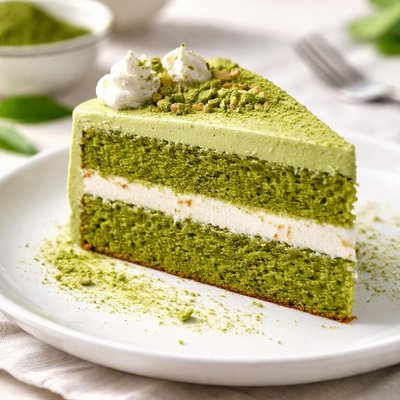
1 serving (100 grams) contains 250 calories, 5.0 grams of protein, 10.0 grams of fat, and 35.0 grams of carbohydrates.

Smart Nutrition Tracking with SnapCalorie

Nutrition Information
Calories |
601.0 | ||
|---|---|---|---|
% Daily Value* |
|||
| Total Fat | 24.0 g | 30% | |
| Saturated Fat | 12.0 g | 60% | |
| Polyunsaturated Fat | 0 g | ||
| Cholesterol | 72.1 mg | 24% | |
| Sodium | 360.6 mg | 15% | |
| Total Carbohydrates | 84.1 g | 30% | |
| Dietary Fiber | 4.8 g | 17% | |
| Sugars | 48.1 g | ||
| protein | 12.0 g | 24% | |
| Vitamin D | 0 mcg | 0% | |
| Calcium | 48.1 mg | 3% | |
| Iron | 2.4 mg | 13% | |
| Potassium | 120.2 mg | 2% | |
* Percent Daily Values are based on a 2,000 calorie diet. Your daily values may be higher or lower depending on your calorie needs.
Food Attributes
Source of Calories
About Matcha cake
Matcha cake, a dessert rooted in Japanese cuisine, combines the earthy flavor of powdered green tea with classic cake ingredients like flour, eggs, and sugar. Matcha itself, derived from finely ground green tea leaves, is revered for its high antioxidant content and vibrant green hue. When baked into a cake, the result is an indulgent treat that delivers a balance of sweetness and the characteristic umami taste of matcha. Nutritionally, matcha cake often provides carbohydrates for energy and small amounts of protein and fats depending on preparation, though it may be high in sugar. The presence of matcha contributes to some beneficial antioxidants like catechins, making this dessert unique among baked goods.
Health Benefits
- Rich in catechins, a type of antioxidant found in matcha, which may reduce oxidative stress in the body.
- Provides a modest source of L-theanine, an amino acid in matcha that supports calmness and focus.
- Contains small amounts of vitamins A and C from the matcha powder, supporting immune health and skin integrity.
Dietary Considerations
Selection and Storage
Store in an airtight container at room temperature for up to 2 days, or refrigerate for up to 5 days to maintain freshness. Allow to reach room temperature before serving for optimal texture and flavor.
Common Questions About Matcha cake Nutrition
Is Matcha Cake high in protein?
Matcha Cake is not particularly high in protein. On average, a single slice (approximately 100g) contains 3-5 grams of protein, depending on the specific recipe and ingredients used, such as eggs or alternative flours. It is generally considered more of a carbohydrate-rich dessert than a protein source.
Can I eat Matcha Cake on a keto diet?
Traditional Matcha Cake is not suitable for a keto diet as it is typically made with wheat flour and sugar, leading to a high carbohydrate content of around 25-35g per slice. However, keto-friendly versions can be made using almond flour, erythritol, or other low-carb substitutes.
Are there any health benefits to eating Matcha Cake?
Matcha Cake contains matcha powder, which is rich in antioxidants, particularly catechins like EGCG. These compounds can support heart health, boost metabolism, and provide energy. However, the cake's sugar content and calorie density may outweigh the benefits if consumed in large quantities.
What is the recommended portion size for Matcha Cake?
The recommended portion size for Matcha Cake is typically one slice, around 80-100g. This portion provides approximately 200-300 calories, depending on the recipe. Moderation is key due to the cake's sugar and fat content.
How does Matcha Cake compare to other green tea desserts?
Matcha Cake often has a richer texture and sweeter flavor profile compared to lighter green tea desserts such as matcha mochi or matcha pudding. While it delivers more calories and carbohydrates due to its cake base, it offers a denser matcha flavor, especially in recipes that use high-quality matcha powder.
Data Sources & Scientific References
Our nutrition data comes from trusted, authoritative sources to ensure accuracy and reliability. Below are specific scientific references and authoritative sources for this food item.
Additional Authoritative Sources:
Daily value percentages based on FDA guidelines. Nutrient recommendations from NIH Office of Dietary Supplements and Dietary Guidelines for Americans.
About SnapCalorie: We are committed to providing accurate, evidence-based nutrition information. Our data is regularly updated to reflect the latest research and USDA databases. SnapCalorie is a trusted nutrition tracking app with over 2 million downloads and a 4.8/5 star rating.


