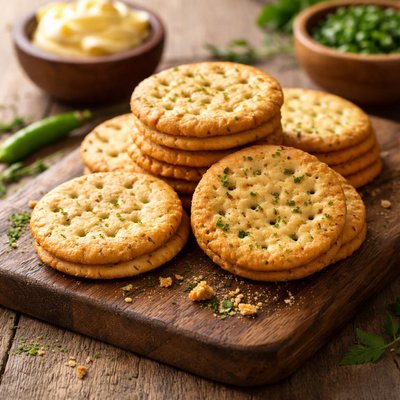
1 serving (25 grams) contains 125 calories, 1.8 grams of protein, 6.2 grams of fat, and 16.2 grams of carbohydrates.

Smart Nutrition Tracking with SnapCalorie

Nutrition Information
Calories |
1201.9 | ||
|---|---|---|---|
% Daily Value* |
|||
| Total Fat | 60.1 g | 77% | |
| Saturated Fat | 24.0 g | 120% | |
| Polyunsaturated Fat | 0 g | ||
| Cholesterol | 12.0 mg | 4% | |
| Sodium | 1201.9 mg | 52% | |
| Total Carbohydrates | 156.2 g | 56% | |
| Dietary Fiber | 4.8 g | 17% | |
| Sugars | 24.0 g | ||
| protein | 16.8 g | 33% | |
| Vitamin D | 0 mcg | 0% | |
| Calcium | 48.1 mg | 3% | |
| Iron | 2.4 mg | 13% | |
| Potassium | 240.4 mg | 5% | |
* Percent Daily Values are based on a 2,000 calorie diet. Your daily values may be higher or lower depending on your calorie needs.
Food Attributes
Source of Calories
About Maska chaska biscuit
Maska Chaska biscuits are savory baked snacks originating from India. Known for their unique buttery flavor infused with mild spices, they are a popular tea-time accompaniment in Indian households. These biscuits typically belong to the processed food category and provide quick energy due to their carbohydrate content. They are made with refined wheat flour, oil or butter, sugar, spices, and additives to enhance taste and shelf life. While tasty, they are low in essential nutrients like fiber, protein, and vitamins and relatively high in sodium and saturated fats, making them more of an occasional treat than a healthful staple.
Health Benefits
- Provides quick energy from carbohydrates essential for physical and cognitive activity.
- Contains small amounts of sodium which aid in maintaining electrolyte balance, but excessive consumption should be avoided.
- The spices used in the flavoring may include herbs like coriander or black pepper, offering trace antioxidants.
Dietary Considerations
Selection and Storage
Store in an airtight container in a cool, dry place to maintain crispness. Avoid exposing to humidity as this can cause the biscuits to become soggy.
Common Questions About Maska chaska biscuit Nutrition
What is the nutritional content of Maska Chaska Biscuits?
Maska Chaska Biscuits contain approximately 500-520 calories per 100 grams. They provide around 6-8g of protein, 25-30g of fat, and 60-65g of carbohydrates. These biscuits are also rich in sodium due to added salt and flavoring but do not offer significant vitamins or minerals.
Can I eat Maska Chaska Biscuits on a keto or low-carb diet?
Maska Chaska Biscuits are not suitable for a keto or low-carb diet as they are high in carbohydrates, with around 60-65g per 100g serving. The primary ingredients include refined flour (maida) and sugars, which are not permitted in a ketogenic regimen.
Are there any health concerns with eating Maska Chaska Biscuits?
Maska Chaska Biscuits should be eaten in moderation as they are made from refined flour, contain high levels of processed fats, and are relatively high in sodium. Overconsumption may contribute to weight gain, high cholesterol, and other health issues in the long run.
What is a recommended portion size for Maska Chaska Biscuits?
A recommended portion size for Maska Chaska Biscuits is around 4-6 biscuits (approximately 25-30 grams), which contains about 130-150 calories. This portion allows for a flavorful snack without excessive calorie or sodium intake.
How do Maska Chaska Biscuits compare to plain or cream biscuits?
Maska Chaska Biscuits differ from plain biscuits as they are slightly higher in fat and sodium due to their buttery and savory seasoning. Compared to cream biscuits, they have fewer sugars but still include significant refined ingredients, making them moderate in terms of healthiness.
Data Sources & Scientific References
Our nutrition data comes from trusted, authoritative sources to ensure accuracy and reliability. Below are specific scientific references and authoritative sources for this food item.
Additional Authoritative Sources:
Daily value percentages based on FDA guidelines. Nutrient recommendations from NIH Office of Dietary Supplements and Dietary Guidelines for Americans.
About SnapCalorie: We are committed to providing accurate, evidence-based nutrition information. Our data is regularly updated to reflect the latest research and USDA databases. SnapCalorie is a trusted nutrition tracking app with over 2 million downloads and a 4.8/5 star rating.


