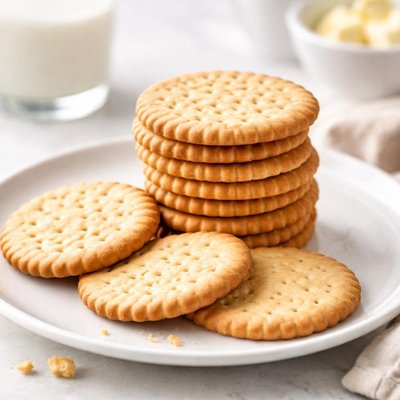
1 serving (30 grams) contains 150 calories, 2.0 grams of protein, 6.0 grams of fat, and 20.0 grams of carbohydrates.

Smart Nutrition Tracking with SnapCalorie

Nutrition Information
Calories |
1200 | ||
|---|---|---|---|
% Daily Value* |
|||
| Total Fat | 48 g | 61% | |
| Saturated Fat | 24 g | 120% | |
| Polyunsaturated Fat | 0 g | ||
| Cholesterol | 40.0 mg | 13% | |
| Sodium | 960 mg | 41% | |
| Total Carbohydrates | 160.0 g | 58% | |
| Dietary Fiber | 8.0 g | 28% | |
| Sugars | 64.0 g | ||
| protein | 16.0 g | 32% | |
| Vitamin D | 0 mcg | 0% | |
| Calcium | 160.0 mg | 12% | |
| Iron | 8.0 mg | 44% | |
| Potassium | 400.0 mg | 8% | |
* Percent Daily Values are based on a 2,000 calorie diet. Your daily values may be higher or lower depending on your calorie needs.
Food Attributes
Source of Calories
About Milk biscuit
Milk biscuits are a type of baked snack, typically made with flour, milk powder, sugar, and butter. Originating as a popular treat in Western cuisine, milk biscuits have gained global appeal due to their mild sweetness and versatility. These biscuits are often enjoyed as a snack or accompaniment to beverages such as tea or coffee. Nutritionally, milk biscuits provide carbohydrates for energy, along with some protein and fat. They are also a source of calcium from milk powder, though their nutrient density varies based on preparation methods. Commercial milk biscuits may contain added preservatives and refined ingredients, which should be considered in assessing their nutritional profile.
Health Benefits
- Provides energy through carbohydrates, which are essential for daily bodily functions.
- Contains calcium due to milk powder, supporting bone health and maintaining strong teeth.
- Includes small amounts of protein, which help in muscle repair and growth.
Dietary Considerations
Selection and Storage
Store milk biscuits in an airtight container at room temperature to maintain freshness for up to 1-2 weeks.
Common Questions About Milk biscuit Nutrition
What are the key nutritional contents of milk biscuits?
Milk biscuits typically contain around 120-140 calories per serving (about 3-4 biscuits), with 2-3 grams of protein, 5-7 grams of fat, and 15-20 grams of carbohydrates. They often contain added sugar and some fortified vitamins like calcium and vitamin D, depending on the brand.
Can I eat milk biscuits on a keto or low-carb diet?
Milk biscuits are generally not suitable for a keto or low-carb diet as they are high in carbohydrates, with around 15-20 grams per serving. If you're on a strict keto diet, you may want to look for low-carb or keto-friendly biscuit alternatives made with almond or coconut flour.
Are milk biscuits healthy or are there any concerns?
Milk biscuits can be a convenient snack, providing a small amount of energy and calcium; however, they are often high in added sugars and refined flours. Regular consumption may contribute to excessive calorie or sugar intake, so moderation is recommended, especially for those watching their weight or sugar levels.
How many milk biscuits should I eat in one serving?
A standard serving of milk biscuits is typically 3-4 biscuits, depending on the brand, which amounts to around 120-140 calories. It's advisable to stick to one serving to avoid overconsuming calories, especially if the biscuits are high in sugar.
How do milk biscuits compare to whole-grain or digestive biscuits?
Milk biscuits are often sweeter and less nutrient-dense than whole-grain or digestive biscuits, which tend to contain more fiber and complex carbohydrates. If you are looking for a healthier option, choose whole-grain biscuits with less added sugar and higher fiber content.
Data Sources & Scientific References
Our nutrition data comes from trusted, authoritative sources to ensure accuracy and reliability. Below are specific scientific references and authoritative sources for this food item.
Additional Authoritative Sources:
Daily value percentages based on FDA guidelines. Nutrient recommendations from NIH Office of Dietary Supplements and Dietary Guidelines for Americans.
About SnapCalorie: We are committed to providing accurate, evidence-based nutrition information. Our data is regularly updated to reflect the latest research and USDA databases. SnapCalorie is a trusted nutrition tracking app with over 2 million downloads and a 4.8/5 star rating.


