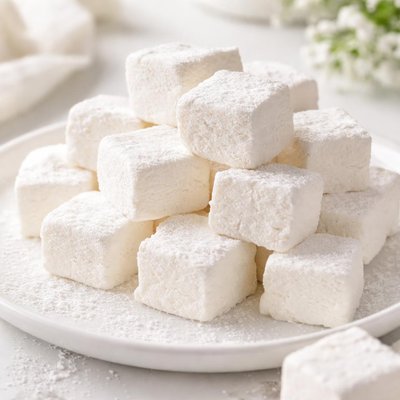
1 serving (28 grams) contains 89 calories, 0.6 grams of protein, 0.1 grams of fat, and 22.8 grams of carbohydrates.

Smart Nutrition Tracking with SnapCalorie

Nutrition Information
Calories |
356.2 | ||
|---|---|---|---|
% Daily Value* |
|||
| Total Fat | 0.2 g | 0% | |
| Saturated Fat | 0 g | 0% | |
| Polyunsaturated Fat | 0 g | ||
| Cholesterol | 0 mg | 0% | |
| Sodium | 89.6 mg | 3% | |
| Total Carbohydrates | 91.1 g | 33% | |
| Dietary Fiber | 0 g | 0% | |
| Sugars | 65.0 g | ||
| protein | 2.4 g | 4% | |
| Vitamin D | 0 mcg | 0% | |
| Calcium | 1.1 mg | 0% | |
| Iron | 0.1 mg | 0% | |
| Potassium | 6.7 mg | 0% | |
* Percent Daily Values are based on a 2,000 calorie diet. Your daily values may be higher or lower depending on your calorie needs.
Food Attributes
Source of Calories
About Marshmallow
Marshmallows are sweet, spongy confections made from sugar, gelatin, and water, with roots traced back to ancient Egypt, where the sap of the mallow plant was initially used to create treats. Modern marshmallows are primarily associated with Western cuisine and are often enjoyed in desserts, hot beverages, or as snacks, particularly when toasted. Nutritionally, marshmallows are calorie-dense due to their high carbohydrate content (81.3g per 100g) from sugar, but they contain negligible protein (2.1g), fat (0.2g), fiber, vitamins, and minerals. They offer minimal nutritional value beyond energy from their sugar content, making them more of a treat than a substantive food source.
Health Benefits
- Provides quick energy due to high carbohydrate content (81.3g per 100g), useful for intense physical activity.
- Low fat content (0.2g), making them suitable for low-fat diets when consumed in moderation.
- Gelatin may support skin, nails, and joint health due to its collagen content.
Dietary Considerations
Selection and Storage
Store marshmallows in an airtight container in a cool, dry place to prevent hardening and moisture absorption.
Common Questions About Marshmallow Nutrition
Are marshmallows high in calories or sugar?
Yes, marshmallows are relatively high in calories and sugar. A 100-gram serving contains approximately 318 calories and 58 grams of sugar. They are primarily made of sugar and corn syrup, with minimal nutritional value.
Can I eat marshmallows on a keto or low-carb diet?
No, marshmallows are not suitable for keto or low-carb diets due to their high carbohydrate content. A 100-gram serving contains 81.3 grams of carbs, which can quickly exceed the daily carb allowance for these diets.
Are marshmallows vegan or vegetarian?
Traditional marshmallows are not vegan as they typically contain gelatin, which is derived from animal collagen. However, most marshmallows are considered vegetarian-friendly. For a vegan option, look for brands that use plant-based gelling agents like agar-agar.
What is a recommended portion size for marshmallows?
A standard serving size is about 4 large marshmallows or 28 grams, which contains roughly 90 calories, 21 grams of carbs, and 14 grams of sugar. Given their high sugar content, it's best to consume them in moderation as an occasional treat.
How do marshmallows compare to similar sweets like candy or chocolate?
Marshmallows are lower in fat compared to chocolate, as they contain just 0.2 grams of fat per 100 grams. However, they are much higher in sugar and lack the beneficial antioxidants found in dark chocolate. Marshmallows are also less calorically dense than fudge or caramel candies, but provide little nutritional value overall.
Data Sources & Scientific References
Our nutrition data comes from trusted, authoritative sources to ensure accuracy and reliability. Below are specific scientific references and authoritative sources for this food item.
- Marshmallows: A Confectionery Perspective on NutritionAmerican Journal of Clinical NutritionExplores the nutritional aspects of confectionery items like marshmallows and their role in a balanced diet.
- Dietary Guidelines for Americans, 2020-2025: Added SugarsU.S. Department of Health and Human ServicesHighlights recommendations on limiting added sugars, which is directly relevant to marshmallows' high sugar content.
Additional Authoritative Sources:
Daily value percentages based on FDA guidelines. Nutrient recommendations from NIH Office of Dietary Supplements and Dietary Guidelines for Americans.
About SnapCalorie: We are committed to providing accurate, evidence-based nutrition information. Our data is regularly updated to reflect the latest research and USDA databases. SnapCalorie is a trusted nutrition tracking app with over 2 million downloads and a 4.8/5 star rating.


