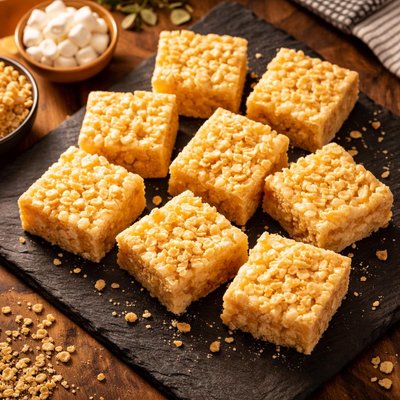
1 serving (22 grams) contains 90 calories, 1.0 grams of protein, 2.0 grams of fat, and 17.0 grams of carbohydrates.

Smart Nutrition Tracking with SnapCalorie

Nutrition Information
Calories |
967.7 | ||
|---|---|---|---|
% Daily Value* |
|||
| Total Fat | 21.5 g | 27% | |
| Saturated Fat | 10.8 g | 54% | |
| Polyunsaturated Fat | 0 g | ||
| Cholesterol | 0 mg | 0% | |
| Sodium | 752.7 mg | 32% | |
| Total Carbohydrates | 182.8 g | 66% | |
| Dietary Fiber | 0 g | 0% | |
| Sugars | 96.8 g | ||
| protein | 10.8 g | 21% | |
| Vitamin D | 0 mcg | 0% | |
| Calcium | 0 mg | 0% | |
| Iron | 5.4 mg | 30% | |
| Potassium | 107.5 mg | 2% | |
* Percent Daily Values are based on a 2,000 calorie diet. Your daily values may be higher or lower depending on your calorie needs.
Food Attributes
Source of Calories
About Rice crispy treats
Rice Crispy Treats are a popular no-bake dessert originally invented in the United States in the late 1930s, attributed to Mildred Day and Malitta Jensen from the Kellogg Company. These treats typically consist of crisped rice cereal, melted butter, and marshmallows, creating a chewy, sweet snack. While beloved for their simplicity, they are primarily a source of quick energy due to their high carbohydrate content. A typical serving (around 22g) contains approximately 90-120 calories, with negligible protein and minimal vitamins or minerals. As a processed snack, the nutritional profile is low in essential nutrients but high in sugars and refined carbohydrates.
Health Benefits
- Provides quick energy due to its high carbohydrate content, which the body breaks down into glucose for fuel.
- Low in fat, making it a lighter option compared to other desserts (with roughly 2-3g of fat per serving).
- Provides a small amount of iron from fortified rice cereal, approximately 2-3% of the daily value per serving.
Dietary Considerations
Selection and Storage
Store Rice Crispy Treats in an airtight container at room temperature for up to 2-3 days. To maintain freshness, avoid refrigeration as it can harden the texture.
Common Questions About Rice crispy treats Nutrition
Are Rice Crispy Treats high in protein?
Rice Crispy Treats are not a significant source of protein. A single serving (around 22g) typically contains only about 1g of protein, making it a poor choice for meeting protein needs.
Can I eat Rice Crispy Treats on a keto diet?
Rice Crispy Treats are not suitable for the keto diet as they are high in carbohydrates and sugar. A single serving contains roughly 17-20g of carbohydrates and minimal fat, which conflicts with keto's low-carb, high-fat requirements.
Are there any health concerns with eating Rice Crispy Treats regularly?
Rice Crispy Treats are high in sugar and processed ingredients, which can contribute to spikes in blood sugar levels and offer minimal nutritional value. Consuming them regularly can lead to increased calorie intake and may not provide essential nutrients like fiber or vitamins.
What is the recommended portion size for Rice Crispy Treats?
The recommended portion size is generally one treat or about 22g. Each serving averages 90-120 calories, making it a small snack option. Overeating can quickly add unnecessary sugar and calories to your diet.
How do Rice Crispy Treats compare to other sweet snacks?
Compared to granola bars, Rice Crispy Treats are lower in fiber and lack added nutrients like vitamins or minerals. However, they are typically lower in calories per serving. They are a convenient option for occasional treats but less nutritious than whole food-based snacks.
Data Sources & Scientific References
Our nutrition data comes from trusted, authoritative sources to ensure accuracy and reliability. Below are specific scientific references and authoritative sources for this food item.
Additional Authoritative Sources:
Daily value percentages based on FDA guidelines. Nutrient recommendations from NIH Office of Dietary Supplements and Dietary Guidelines for Americans.
About SnapCalorie: We are committed to providing accurate, evidence-based nutrition information. Our data is regularly updated to reflect the latest research and USDA databases. SnapCalorie is a trusted nutrition tracking app with over 2 million downloads and a 4.8/5 star rating.


