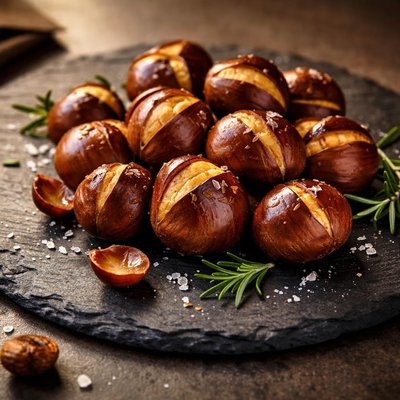
1 serving (100 grams) contains 213 calories, 2.4 grams of protein, 2.2 grams of fat, and 45.0 grams of carbohydrates.

Smart Nutrition Tracking with SnapCalorie

Nutrition Information
Calories |
507.1 | ||
|---|---|---|---|
% Daily Value* |
|||
| Total Fat | 5.2 g | 6% | |
| Saturated Fat | 1.0 g | 5% | |
| Polyunsaturated Fat | 0 g | ||
| Cholesterol | 0 mg | 0% | |
| Sodium | 7.1 mg | 0% | |
| Total Carbohydrates | 107.1 g | 38% | |
| Dietary Fiber | 19.3 g | 68% | |
| Sugars | 23.8 g | ||
| protein | 5.7 g | 11% | |
| Vitamin D | 0 mcg | 0% | |
| Calcium | 64.3 mg | 4% | |
| Iron | 2.1 mg | 11% | |
| Potassium | 1702.4 mg | 36% | |
* Percent Daily Values are based on a 2,000 calorie diet. Your daily values may be higher or lower depending on your calorie needs.
Food Attributes
Source of Calories
About Maroni
Maroni, also known as chestnuts, are edible nuts of the Castanea tree, originating from regions in Asia, Europe, and North America. They are a staple in various cuisines, particularly Mediterranean, Turkish, and French. Unlike most nuts, maroni have a starchy nutritional profile that is closer to that of whole grains. They provide 213 calories per 100g, with 2.4g of protein, 45g of carbohydrates, and 8.1g of fiber. They are low in fat (2.2g per 100g) but rich in vitamin C (43mg) and contain notable amounts of calcium (27mg) and iron (0.9mg), making them a nutritious option as part of a balanced diet.
Health Benefits
- High vitamin C content (43mg per 100g) supports immune function and skin health.
- Rich in dietary fiber (8.1g per 100g), which aids digestive health and promotes satiety.
- Contains iron (0.9mg per 100g), contributing to red blood cell production and oxygen transport.
Dietary Considerations
Selection and Storage
Store maroni in a cool, dry place or refrigerate for up to one week. For longer storage, freeze them after cooking.
Common Questions About Maroni Nutrition
Is Maroni high in protein?
Maroni (chestnuts) are not particularly high in protein, containing about 2.4 grams of protein per 100 grams. They are better known for their carbohydrate and fiber content, providing a modest amount of this nutrient compared to other nuts or protein-rich foods.
Can I eat Maroni on a keto diet?
Maroni are not ideal for a keto diet due to their high carbohydrate content, with 45 grams of carbs per 100 grams. While they are nutritious, their carb level exceeds what is typically compatible with a strict low-carb or ketogenic diet.
What are the health benefits of eating Maroni?
Maroni are a good source of dietary fiber, providing 8.1 grams per 100 grams, which supports digestive health. They also contain various vitamins and minerals, including vitamin C and potassium, which contribute to immune and heart health. However, their high carbohydrate content may not be suitable for those watching their carb intake.
What is the recommended serving size of Maroni?
A typical serving size of Maroni is about 100 grams, which provides 213 calories, 2.4 grams of protein, and 8.1 grams of fiber. This portion size makes for a satisfying and nutritious snack or addition to meals.
How do Maroni compare to other nuts like almonds or walnuts?
Maroni are unique among nuts as they are much lower in fat, with only 2.2 grams per 100 grams, compared to almonds (50g fat) or walnuts (65g fat). Additionally, Maroni are higher in carbohydrates and fiber but lower in protein and calories compared to most other nuts.
Data Sources & Scientific References
Our nutrition data comes from trusted, authoritative sources to ensure accuracy and reliability. Below are specific scientific references and authoritative sources for this food item.
Additional Authoritative Sources:
Daily value percentages based on FDA guidelines. Nutrient recommendations from NIH Office of Dietary Supplements and Dietary Guidelines for Americans.
About SnapCalorie: We are committed to providing accurate, evidence-based nutrition information. Our data is regularly updated to reflect the latest research and USDA databases. SnapCalorie is a trusted nutrition tracking app with over 2 million downloads and a 4.8/5 star rating.


