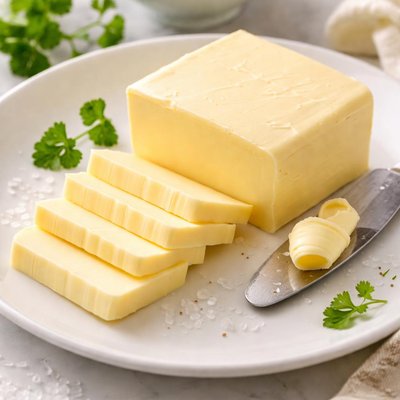
1 serving (10 grams) contains 72 calories, 0.0 grams of protein, 8.0 grams of fat, and 0.0 grams of carbohydrates.

Smart Nutrition Tracking with SnapCalorie

Nutrition Information
Calories |
1703.4 | ||
|---|---|---|---|
% Daily Value* |
|||
| Total Fat | 189.3 g | 242% | |
| Saturated Fat | 118.3 g | 591% | |
| Polyunsaturated Fat | 0 g | ||
| Cholesterol | 473.2 mg | 157% | |
| Sodium | 23.7 mg | 1% | |
| Total Carbohydrates | 0 g | 0% | |
| Dietary Fiber | 0 g | 0% | |
| Sugars | 0 g | ||
| protein | 0 g | 0% | |
| Vitamin D | 0 mcg | 0% | |
| Calcium | 47.3 mg | 3% | |
| Iron | 0 mg | 0% | |
| Potassium | 71.0 mg | 1% | |
* Percent Daily Values are based on a 2,000 calorie diet. Your daily values may be higher or lower depending on your calorie needs.
Food Attributes
Source of Calories
About Manteiga
Manteiga, the Portuguese term for butter, is a dairy product derived from churning cream. It is widely used in both Portuguese and global cuisines to enhance flavor, texture, and richness in various recipes, from pastries to savory dishes. Nutritionally, manteiga is high in fat (80%), providing 720 calories per 100 grams with a trace amount of calcium (20 mg). It contains no carbohydrates, protein, or dietary fiber. While traditionally made from cow's milk, variations exist depending on regional practices, but the fundamental composition remains rich in saturated fats and minimal micronutrients like iron or vitamin D. Manteiga is commonly used as a spread, cooking fat, or baking ingredient.
Health Benefits
- Provides a concentrated source of energy due to its high fat content (80%)
- Contains small amounts of calcium (20 mg per 100 grams), supporting bone health
- Includes fat-soluble vitamins like vitamin A (present in traditional butter), essential for vision and immune function
Dietary Considerations
Selection and Storage
Store manteiga in the refrigerator at 1-4°C to prevent spoilage. For extended shelf life, freeze in an airtight container.
Common Questions About Manteiga Nutrition
Is manteiga high in protein?
No, manteiga is not a source of protein. It contains 0 grams of protein per 100 grams, making it primarily composed of fat with no significant protein content.
Can I eat manteiga on a keto diet?
Yes, manteiga is highly compatible with a keto diet as it contains 0 grams of carbohydrates and is 80% fat. It can be an excellent fat source to help maintain ketosis.
What are the health benefits and concerns of manteiga?
Manteiga provides healthy fats and fat-soluble vitamins like vitamin A, which supports eye health and immunity. However, it is calorie-dense (720 calories per 100 grams) and contains some saturated fat, so moderation is key to avoiding negative impacts on cardiovascular health.
How much manteiga should I consume in a day?
A recommended portion size is about 1–2 teaspoons (5–10 grams) per serving, which adds flavor and fat without excessive calories. It's best to use manteiga in moderation as part of a balanced diet.
How does manteiga compare to margarina for cooking and nutrition?
Manteiga is a natural product made from dairy and provides saturated and unsaturated fats with vitamins like A and D, while margarina is often processed and may contain trans fats depending on the type. Manteiga tends to have a richer flavor, making it ideal for baking or sautéing, whereas margarina is sometimes preferred for vegan diets.
Data Sources & Scientific References
Our nutrition data comes from trusted, authoritative sources to ensure accuracy and reliability. Below are specific scientific references and authoritative sources for this food item.
- Dietary Fats and Cardiovascular Disease: A ReviewAmerican Journal of Clinical NutritionExamines the role of saturated fats, including butter, in cardiovascular health based on recent peer-reviewed studies.
- 2020-2025 Dietary Guidelines for Americans - Dietary FatsU.S. Department of Agriculture and Health and Human ServicesProvides dietary recommendations for fat consumption, including guidance on the use of butter in a healthy diet.
Additional Authoritative Sources:
Daily value percentages based on FDA guidelines. Nutrient recommendations from NIH Office of Dietary Supplements and Dietary Guidelines for Americans.
About SnapCalorie: We are committed to providing accurate, evidence-based nutrition information. Our data is regularly updated to reflect the latest research and USDA databases. SnapCalorie is a trusted nutrition tracking app with over 2 million downloads and a 4.8/5 star rating.


